
Humminbird XM 14 HW CMSI T
5.0Editor score
455 kHz and 1.1 MHz imaging
400 feet side coverage range
Built-in temperature sensor
This guide compares the top 10 Down and Side Imaging Transducer models for 2026 to help anglers select the right sonar technology for their specific boat and
Finding the right transducer can transform your fishing experience by revealing hidden structures and fish locations beneath the surface. Modern side and down imaging technology offers unprecedented clarity, allowing you to scan vast areas quickly and accurately.
We have evaluated ten leading transducers based on imaging quality, compatibility, coverage range, and build durability. Our analysis focuses on real-world performance metrics to ensure you get a device that matches your specific fishing environment and boat setup.
Each product in this list highlights key strengths and potential limitations to help you make an informed decision. Please note that prices and availability fluctuate regularly, so checking the current listing is recommended before finalizing your purchase.
5.0Editor score

4.6Editor score

4.6Editor score
The following table provides a detailed side-by-side comparison of the top 10 transducers evaluated in this guide. Review the specifications and features to identify which model aligns best with your existing fish finder hardware and fishing requirements.


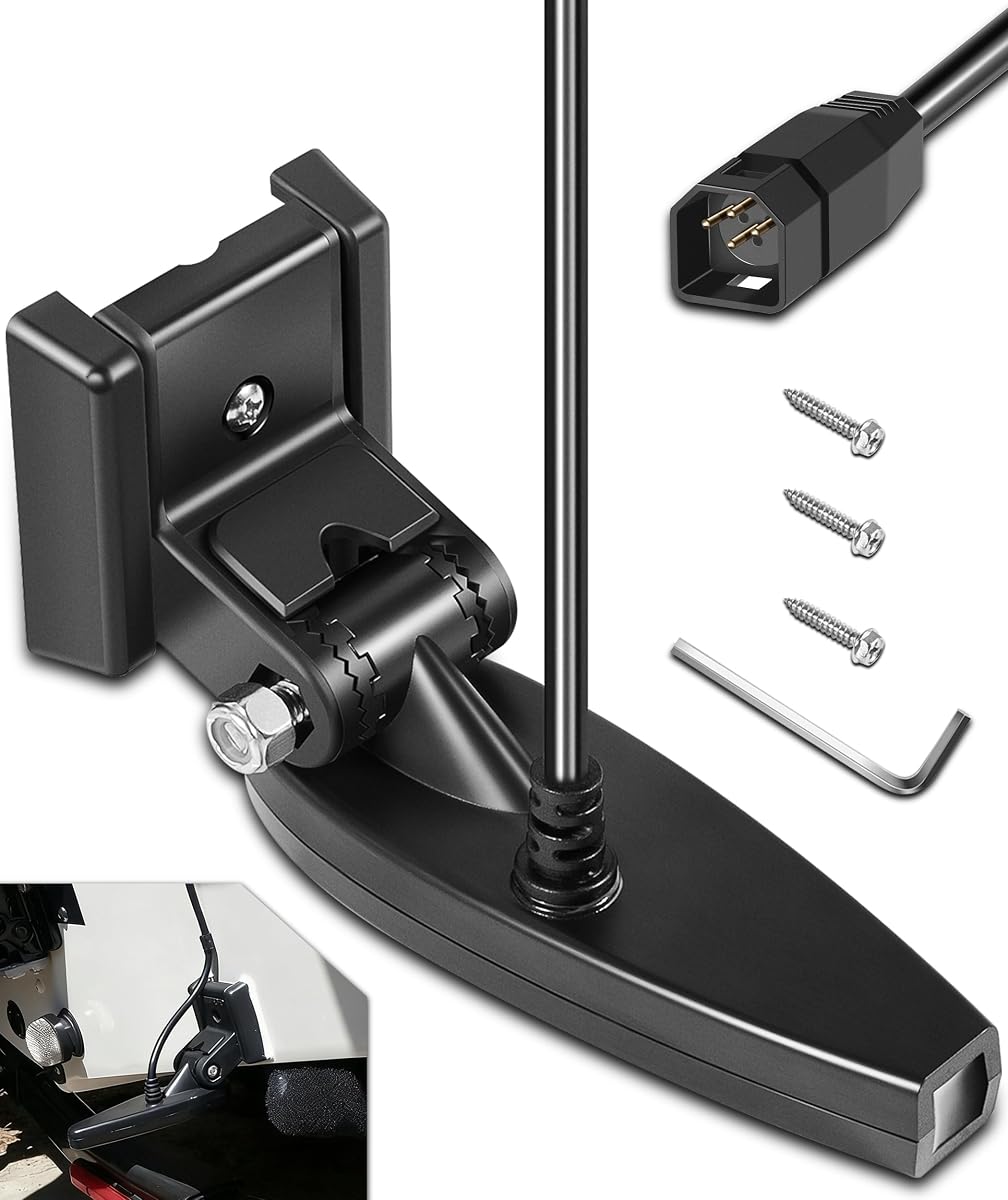

The Humminbird XM 14 HW CMSI T stands out as a premier choice for anglers seeking high-resolution underwater visualization. With a perfect five-star rating, it delivers crystal-clear views using dual-frequency MEGA Side Imaging+ technology.
We may earn a commission when you buy through this link, at no additional cost to you.
Its ability to scan up to 400 feet side-to-side allows you to cover large bodies of water efficiently. The built-in temperature sensor provides essential data for tracking fish behavior based on water conditions.
While the price reflects its premium capabilities, the investment pays off in detailed structure definition and target separation. The secure screw-on connector ensures durability during intense fishing trips.
If you own an APEX, SOLIX G3, or XPLORE model, this transducer is the ideal upgrade for maximizing your sonar performance. It consistently outperforms standard options in clarity and depth penetration.
The 1.1 MHz frequency provides unprecedented detail for identifying individual fish and subtle structure changes beneath the boat.
Integrated temperature sensing ensures you always have accurate environmental data without needing additional sensors.
We may earn a commission when you buy through this link, at no additional cost to you.
The Lowrance Active Imaging 3-in-1 Transducer offers a balanced mix of CHIRP and imaging sonar that appeals to serious anglers. Its 4.6-star rating highlights consistent performance across diverse fishing conditions and environments.
We may earn a commission when you buy through this link, at no additional cost to you.
FishReveal technology combines CHIRP and DownScan to help you distinguish fish from rocks or weeds instantly. This clarity saves time and increases catch rates by reducing guesswork while navigating structure.
The support for Medium and High CHIRP frequencies alongside 455/800kHz imaging provides flexibility for different depths. However, ensuring your display unit is compatible is critical for full functionality.
Best suited for Lowrance HDS LIVE or Elite FS owners, this unit delivers unmatched range and detail. It is a top recommendation for those prioritizing target identification over basic depth readings.
FishReveal makes it easy to recognize targets on the screen without toggling between different sonar modes constantly.
Supporting multiple frequencies allows you to switch between broad coverage and high detail based on current needs.
We may earn a commission when you buy through this link, at no additional cost to you.
For budget-conscious anglers, the Humminbird 710200-1 provides essential Side and Down Imaging capabilities without breaking the bank. Its 4.6-star rating reflects solid performance for entry-level to mid-range fishing setups.
We may earn a commission when you buy through this link, at no additional cost to you.
This transducer is designed specifically for HELIX models, ensuring seamless integration with existing fish finder displays. It delivers clear views of the bottom and sides, helping you locate structure efficiently.
While it lacks the high-frequency capabilities of premium models, it covers the basics effectively. The transom mount is straightforward to install and holds well in moderate conditions.
Ideal for casual fishermen using older HELIX units, this model offers excellent value. It proves you do not need to spend hundreds to get functional imaging on the water.
Achieve functional side and down views at a fraction of the cost of advanced high-frequency transducers.
Designed specifically for HELIX units, ensuring reliable performance without complex configuration steps.
We may earn a commission when you buy through this link, at no additional cost to you.
The Humminbird XM 14 20 MSI T delivers strong MEGA Side and Down Imaging for XPLORE and SOLIX users. With a 4.3-star rating, it offers reliable performance for those needing standard imaging features.
We may earn a commission when you buy through this link, at no additional cost to you.
It covers up to 125 feet on each side of the boat, providing good coverage for locating fish-holding structures. The DualBeam PLUS sonar ensures you have 2D capabilities alongside the imaging modes.
Installation is straightforward with the included 20-foot cable and temperature sensor. However, compatibility is restricted to specific Humminbird models, so verify your unit before purchasing.
This unit is a practical option for anglers who need both side imaging and traditional sonar. It balances cost and features effectively for mid-range fishing applications.
Get both MEGA imaging and standard 2D sonar in one transducer for versatile fishing scenarios.
Comes with all necessary hardware including a temperature sensor and ample cable length for setup.
We may earn a commission when you buy through this link, at no additional cost to you.
This complete package includes the Helix 7 G4 GPS unit along with the necessary MEGA Side Imaging transducer. With a 4.5-star rating, it appeals to users wanting a ready-to-fish system right out of the box.
We may earn a commission when you buy through this link, at no additional cost to you.
The inclusion of AutoChart Live allows you to create maps of depth contours while boating, which is a significant advantage for exploring new waters. The enhanced GPS navigation ensures you can mark waypoints easily.
Although it is pricier than standalone transducers, the all-in-one nature saves time on setup. The keypad control is reliable even in wet conditions, ensuring consistent operation during storms.
For those starting fresh or upgrading their entire electronics, this bundle is a robust choice. It combines navigation and advanced sonar imaging into a single cohesive unit.
AutoChart Live lets you build custom maps of your local lake, helping you navigate shallow or deep areas safely.
Combining GPS with imaging helps you locate fish and mark their spots efficiently for return trips.
We may earn a commission when you buy through this link, at no additional cost to you.
The Humminbird XNT 9 HW SI T is designed specifically for the HELIX 7 G4 models, offering CHIRP Side and Down Imaging. It holds a 4.5-star rating for its reliability in providing clean sonar returns.
We may earn a commission when you buy through this link, at no additional cost to you.
By using Dual Spectrum CHIRP technology, it improves target separation and reduces clutter on the screen. This is particularly useful when fishing in areas with heavy weed growth or rocky bottoms.
Installation is straightforward with the included bracket and hardware. The 20-foot cable provides flexibility for routing the transducer to your preferred location on the boat.
If you already own a compatible HELIX unit, this transducer is a logical upgrade. It brings modern CHIRP imaging capabilities to an existing setup without needing a new display.
CHIRP Sonar provides wider frequency ranges for better target separation and reduced noise on your display.
Clean returns help you distinguish individual fish from dense structure or debris more effectively.
We may earn a commission when you buy through this link, at no additional cost to you.
This Lowrance unit offers SideScan and DownScan with CHIRP technology for refined detail. With a 4.2-star rating, it delivers consistent imaging performance across various water conditions and depths.
We may earn a commission when you buy through this link, at no additional cost to you.
It supports a wide range of Lowrance and Simrad displays, making it versatile for boat owners. The Med/High CHIRP ensures you can adjust frequencies based on your target depth.
Note that a 9-Pin connector is used, so you might need an adapter for older units. The cable is only six feet, which requires careful planning for mounting locations.
Ideal for anglers seeking detailed structure scans with established Lowrance ecosystems. It provides excellent image quality for the price, provided you have the right hardware to support it.
The Active Imaging technology reveals details in rocks and timber that standard sonars often miss entirely.
Switch between SideScan and DownScan instantly to adapt to changing fishing scenarios while moving.
We may earn a commission when you buy through this link, at no additional cost to you.
While primarily a mounting kit, this accessory ensures your Lowrance transducer stays secure in rough water. Its 4.1-star rating indicates satisfaction among users who need reliable hardware to keep sensors stable.
We may earn a commission when you buy through this link, at no additional cost to you.
It supports Side and Down Scan capabilities at 455/800kHz frequencies. This is crucial for maintaining high-resolution imaging when boat motion might otherwise disrupt the sonar signal.
Compatible with Elite Ti and GO series displays, it integrates seamlessly into existing setups. The design helps protect your investment by preventing transducer damage from impact.
Buy this if you are upgrading a transducer on a hull that requires specific fitting. It ensures your imaging remains clear and steady even in choppy conditions.
Secure mounting prevents movement that can cause image distortion or sensor damage in rough seas.
High-quality brackets reduce the risk of losing expensive transducers during heavy weather or docking.
We may earn a commission when you buy through this link, at no additional cost to you.
The Humminbird XNT 9 DI T focuses heavily on Down Imaging and Dual Beam Sonar to provide clear bottom views. With a 4.5-star rating, it is a trusted option for anglers prioritizing vertical structure scans.
We may earn a commission when you buy through this link, at no additional cost to you.
It uses a 75-degree and 45-degree beam angle to produce crisp details directly beneath the boat. This helps you identify fish-holding cover and individual species more effectively than standard sonars.
The bracket includes impact-release features to protect the transducer from accidental hits. You also get a temperature sensor and a generous 20-foot cable for installation flexibility.
If you need strong Down Imaging without the cost of side imaging features, this is an excellent choice. It works with many legacy HELIX models, extending the life of older fish finders.
High-resolution Down Imaging lets you see rocks, logs, and fish directly under the hull without scanning.
The impact-release design ensures your transducer is protected from damage if it hits an obstacle.
We may earn a commission when you buy through this link, at no additional cost to you.
Rounding out our list, the Humminbird XNT 9 DI T offers basic Down Imaging and DualBeam PLUS at a very accessible price. Its 4.6-star rating suggests users are satisfied with its performance for simple fish-finding tasks.
We may earn a commission when you buy through this link, at no additional cost to you.
It works well for locating fish directly below your boat without complex setup. The 20-foot cable allows for easy routing even on larger boats with restricted access to the stern.
While it lacks the advanced side scanning of newer models, it remains effective for depth and cover detection. It is a practical choice for small boats or budget-conscious owners.
Consider this if you only need to know what is directly under you. It provides clear, readable images for the price, making it a great entry-level option.
Get reliable imaging technology without spending a fortune on premium features you might not use.
Perfect for beginners who want to see fish locations clearly without complex electronics.
We may earn a commission when you buy through this link, at no additional cost to you.
Choosing the right transducer depends on your fish finder model, typical water depths, and specific fishing needs. This guide outlines the key factors to consider before making a purchase.
The most critical step is verifying that the transducer is compatible with your specific fish finder unit. Manufacturers like Humminbird and Lowrance use proprietary connectors and protocols. Check your manual or the manufacturer's website to ensure the transducer will communicate correctly with your display.
Always confirm your model number before buying to avoid returning incompatible equipment.
Mounting types vary between transom, trolling motor, and in-hull installations. Transom mounts are the most common for DIY setups. If you have a motor already or a transom with obstacles, a trolling motor mount might be better. In-hull mounts require the transducer to be behind fiberglass or wood.
Select the mount type that fits your hull structure best for signal transmission.
Higher frequencies like 800kHz provide better detail but less depth. Lower frequencies like 455kHz offer greater depth penetration. MEGA Side Imaging and Active Imaging often use dual frequencies to balance detail and range. Consider the typical depth of your fishing spots.
Higher frequencies are best for shallow waters, while lower frequencies serve deep water scenarios.
Side imaging scans areas to the left and right of the boat, while down imaging looks beneath. Check the maximum range in feet for each mode. Faster scanning speeds are important if you move quickly or fish large bodies of water to keep the image stable.
Ensure the coverage range matches the size of the waters you frequent.
CHIRP sends multiple frequencies at once, providing better target separation than standard sonar. This helps distinguish fish from weeds or rocks. Some transducers combine CHIRP with imaging. Look for Dual Spectrum or Multi-frequency CHIRP for versatility.
Prioritize CHIRP if you fish in areas with heavy structure or vegetation.
Transducers face harsh conditions including impacts and UV exposure. Look for units with impact-release mounts or durable housings. A sturdy bracket prevents damage when docking or hitting submerged objects. Read reviews for real-world durability feedback.
Invest in a robust build to protect your investment from physical damage.
Cable length determines where you can place the transducer relative to your display. Most come with 20-foot cables, but smaller boats may need less. Longer cables can be coiled if unused, but shorter ones limit routing options. Check the connector type for ease of installation.
Ensure the cable length is sufficient for your boat's length and layout.
Prices vary significantly from basic models to high-end systems. Consider whether you need advanced features like MEGA imaging or if standard side imaging suffices. A higher upfront cost might offer better long-term value through improved catch rates.
Balance your budget with the features you actually need for your style of fishing.
Proper installation is key to getting clear images. Mount the transducer flat on the hull, ensuring it is parallel to the waterline. Avoid mounting near propellers or strakes to prevent air bubbles from disturbing the sonar signal.
Calibrate the settings on your display after installation. Adjust the sensitivity and range to match your depth. If the screen is too cluttered, lower the sensitivity. If images are faint, increase it. Keep the water temperature sensor clean for accurate readings.
Maintain your transducer by rinsing it with fresh water after saltwater use to prevent corrosion. Check the cable for cracks or fraying regularly. Remove the transducer during winter storage if you live in freezing conditions to avoid cracks from ice expansion.
Side imaging scans a wide area to the left and right of the boat to locate structure and fish horizontally. Down imaging looks directly beneath the boat to show depth, bottom contours, and fish vertically. Using both together gives a complete picture of the underwater environment.
Generally, transducers are brand-specific due to proprietary connectors and signal protocols. While adapters sometimes exist, they are not reliable for high-resolution imaging. Always choose a transducer that is explicitly listed as compatible with your display model.
Not necessarily, but some transducers have adjustable positions. If you are fishing in very shallow or very deep water, ensure your transducer depth allows for a clear signal. Modern transducers often auto-adjust based on depth, but placement still matters for accuracy.
Check the display for clear signals and water temperature readings. If you see excessive noise or no bottom return, recheck the mounting angle and cable connections. Ensure the transducer face is clean and free of marine growth or debris.
MEGA Side Imaging uses higher frequencies like 1.1 MHz to provide more detailed images of structure. It allows you to identify specific types of wood or rocks rather than just shapes. If detail is a priority, MEGA is worth the extra investment over standard imaging.
Yes, but you need to ensure the transducer does not interfere with the motor or prop. Some users use temporary mounts or specific adapters for inflatables. Check the mounting hardware to ensure it fits your boat's hull type securely.
Longer cables can slightly degrade signal quality if not shielded properly, but modern cables handle this well. If you have a very long run, check the manufacturer's recommendations. Most standard 20-foot cables are sufficient for small to medium boats without issues.
Static often comes from electrical interference or air bubbles. Check that all connections are tight and away from alternators or other electronics. If the boat is moving fast, slowing down can reduce noise. Clean the transducer face to ensure no debris is causing scattering.
We hope this guide has clarified the differences between the top models available in 2026. Whether you choose the premium Humminbird XM 14 HW CMSI T for detail or the budget-friendly Lowrance option for value, finding the right fit depends on your unique needs.
Prioritize compatibility and imaging clarity to get the most out of your fish finder. A high-quality transducer can significantly improve your efficiency and success on the water. Consider your typical fishing environment before finalizing your selection.
Remember to check current prices and availability as these can fluctuate frequently. Investing in the right equipment today ensures you have reliable technology for years of successful fishing. We wish you fair winds and great catches on your next trip.