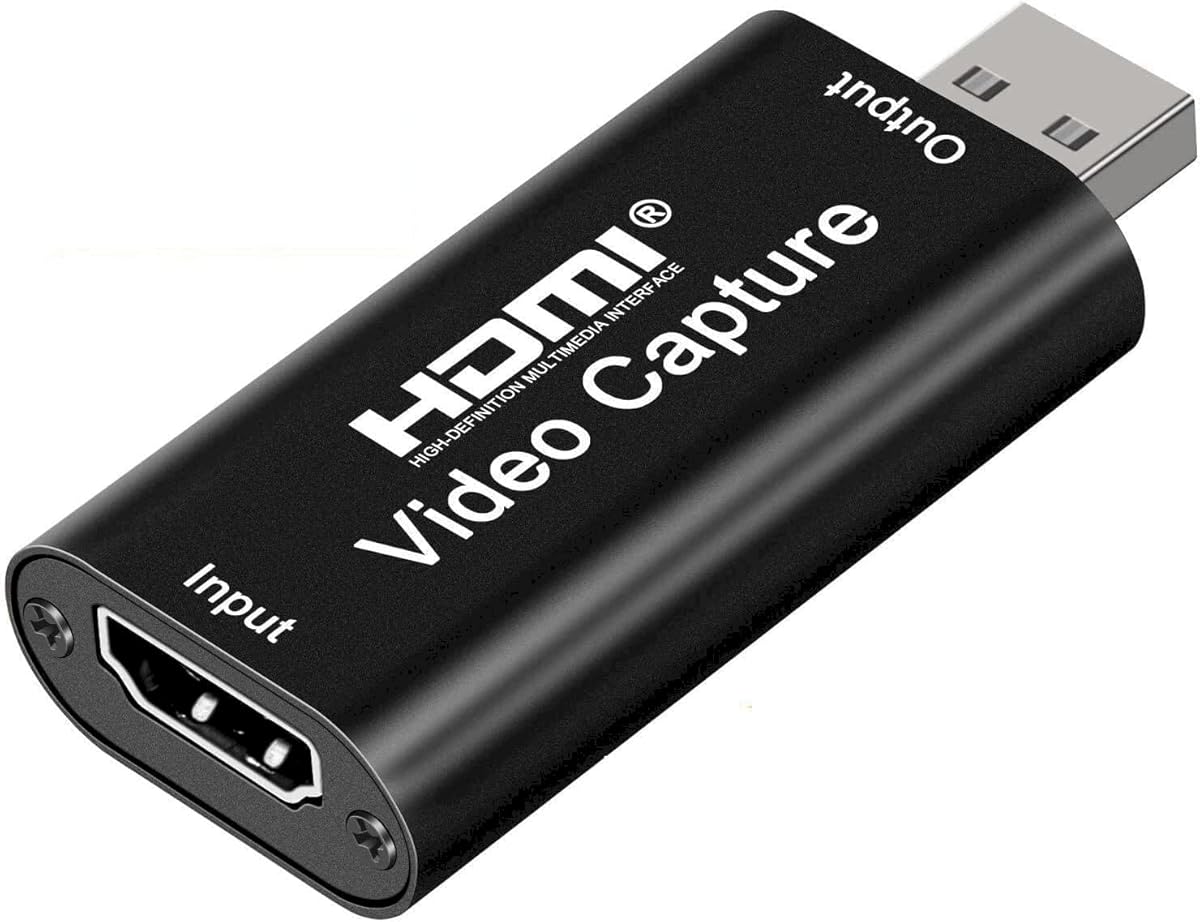
Audio Express AXHDCAP
4.4Editor score
1080P30 capture
Plug and play
Compact design
Low cost
This guide compares the top ten external HDMI video capture cards for streaming, gaming, and recording, evaluating performance, compatibility, and features to
External HDMI video capture cards bridge the gap between gaming consoles and cameras with your computer. They enable high-quality streaming and recording without taxing your system resources. Choosing the right device ensures smooth performance and crisp visuals for your content.
We evaluated ten leading models based on resolution support, latency, and build quality. Our analysis covers budget options alongside premium tools designed for professional creators. Each product offers unique strengths suited to different streaming and recording needs.
Each pick highlights key features, pros, and cons to guide your decision. Note that prices and availability fluctuate frequently across retailers. Always verify current details before purchasing to ensure you get the best value for your setup.
4.4Editor score
4.5Editor score

4.7Editor score
The following table provides a side-by-side comparison of all ten selected capture cards. It highlights key specifications like resolution support, interface types, and special features to help you quickly identify the best fit for your workflow.


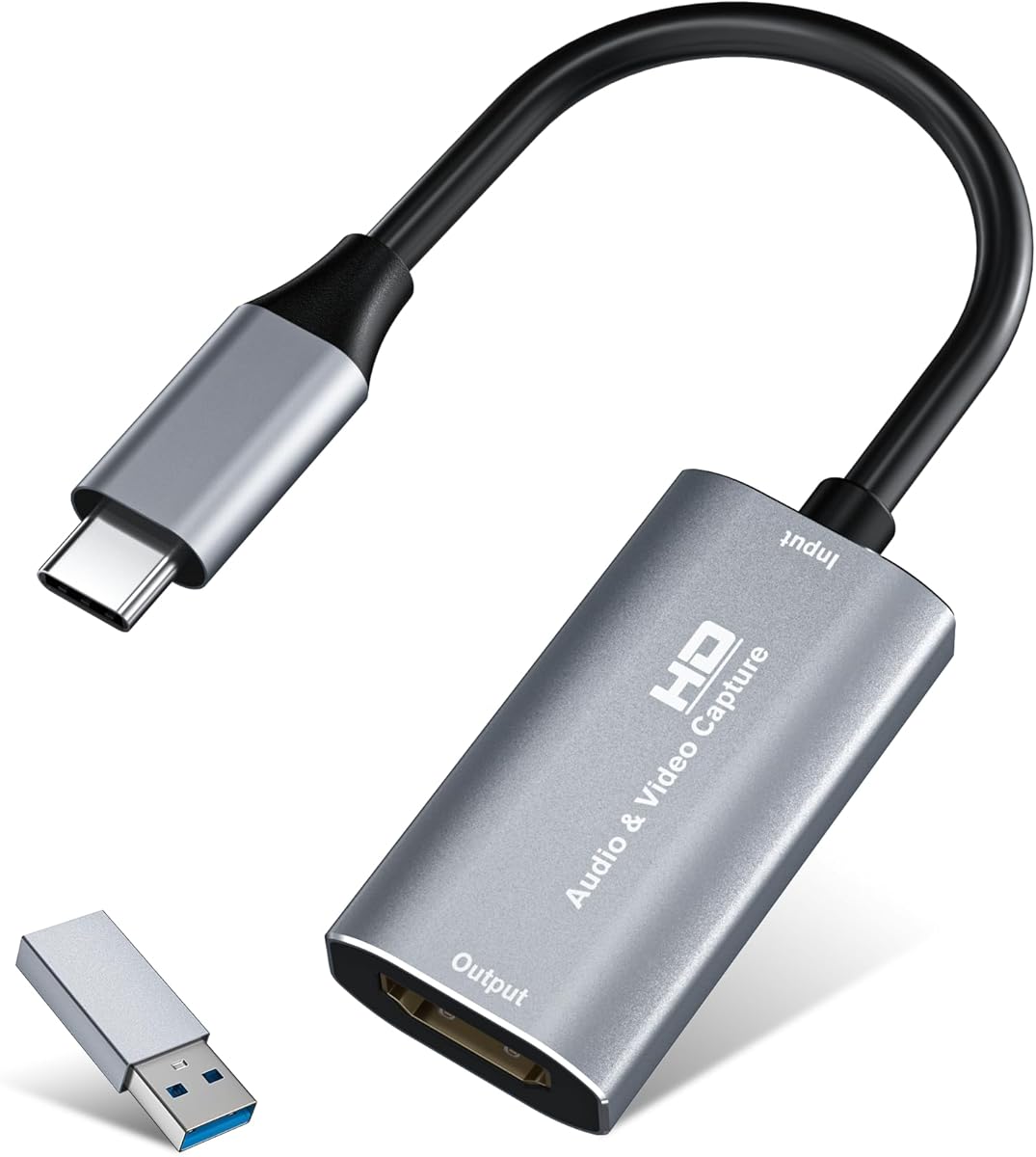


The Rybozen Capture Card stands out as a reliable option for streamers on a budget. It offers solid 1080P60 performance and works seamlessly with major platforms like OBS and Twitch. Its plug-and-play design makes it easy to set up without drivers.
We may earn a commission when you buy through this link, at no additional cost to you.
Key strengths include its HDMI loop-out feature, which allows zero-latency monitoring while streaming. The mic-in port is a nice addition for commentary without extra gear. It supports a wide range of consoles and cameras, making it versatile for different setups.
Trade-offs include the lack of true 4K120 support and a somewhat basic plastic build. However, for most streaming needs, these are acceptable compromises. The device prioritizes function over form, delivering consistent performance for the price.
This card is ideal for casual streamers or educators needing affordable HD capture. If you require high-end 4K features, look elsewhere. For everyday streaming, it delivers reliable value and simplicity.
The device is automatically recognized as a webcam upon connection, simplifying initial configuration for users.
Integrated microphone input allows direct commentary, removing the need for separate audio adapters.
We may earn a commission when you buy through this link, at no additional cost to you.
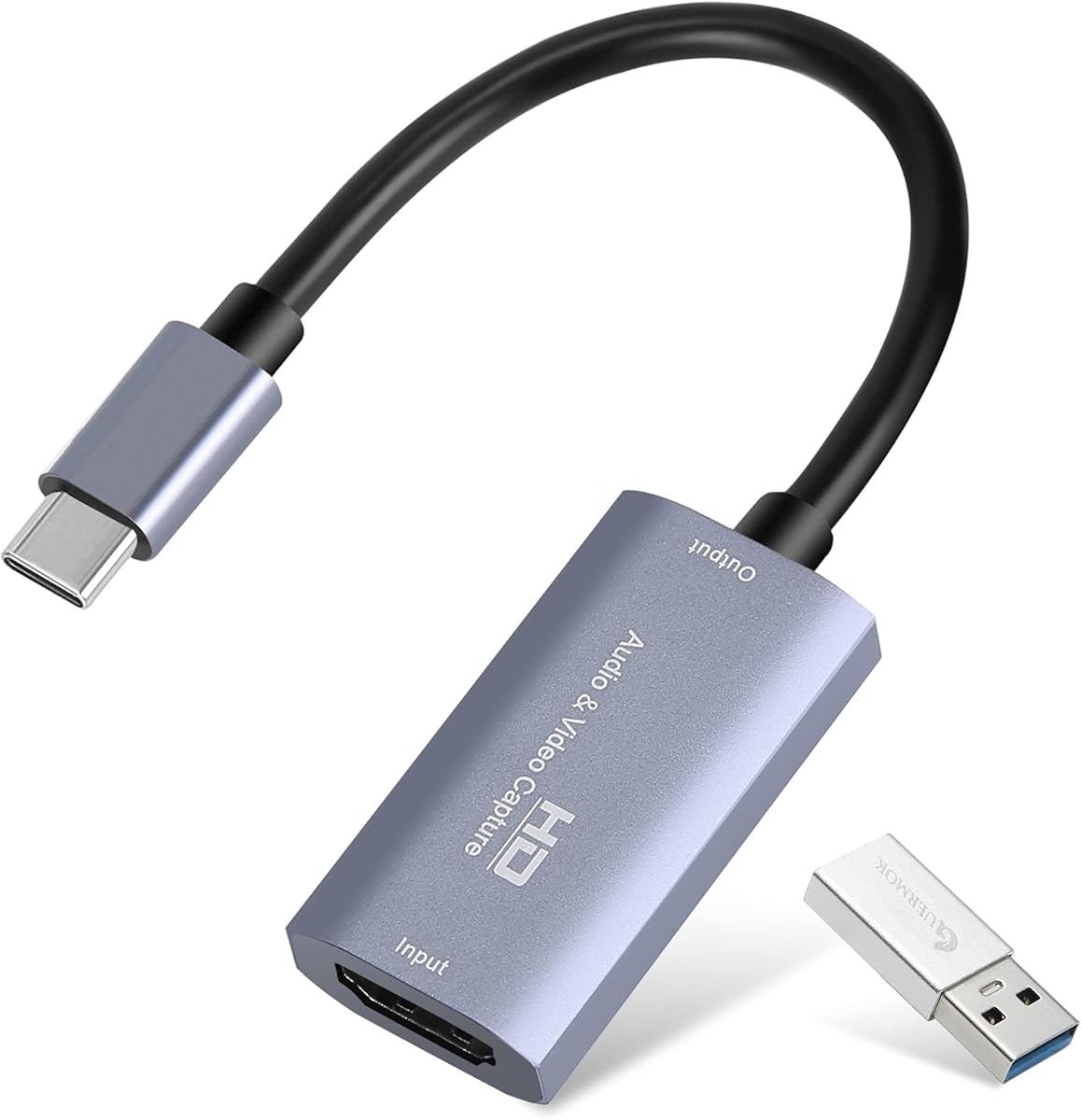
The Guermok Video Capture Card is designed for modern devices with USB-C connectivity. It supports 2K30 output and 1080P60, offering a balance between clarity and performance. Its aluminum body helps manage heat during extended use.
We may earn a commission when you buy through this link, at no additional cost to you.
Strengths lie in its low latency and compact form factor, making it great for travel streaming. The dual USB ports ensure compatibility with older and newer systems alike. It works well with platforms like Twitch and YouTube.
Users may face occasional audio issues requiring an OBS restart. The one-way signal flow limits some advanced setups. Despite this, the build quality and portability make it a strong contender for mobile creators.
Choose this for laptop or tablet setups where space is limited. It is particularly useful for users prioritizing modern connectivity. For stationary rigs, other options might offer more robust features.
Supports both USB-A and USB-C interfaces to adapt to a wide variety of host devices.
Aluminum alloy construction aids in passive cooling to prevent overheating during long sessions.
We may earn a commission when you buy through this link, at no additional cost to you.
The acer USB 3.0 HDMI Capture Card focuses on visual fidelity with YUY2 technology. It ensures richer colors and lifelike streaming compared to compressed formats. The inclusion of a mic-in port simplifies commentary.
We may earn a commission when you buy through this link, at no additional cost to you.
It supports 4K input but outputs at 1080P60, which is ideal for most streaming platforms. The device is small, lightweight, and works without drivers. It pairs well with OBS, Zoom, and major social platforms.
While it lacks USB-C and true 4K output, the color accuracy compensates for many users. Some may prefer higher resolutions. However, for detailed video quality at 1080P, it performs admirably.
This is a great choice for creators valuing color depth. It suits teachers or streamers needing quick setup. Prioritize color accuracy over resolution with this model.
Uses YUY2 technology to deliver richer, more lifelike colors compared to standard MJPEG formats.
No drivers or external power needed, making it ideal for fast streaming setups anywhere.
We may earn a commission when you buy through this link, at no additional cost to you.
The Video Capture Card Silver offers dual-channel audio, allowing separate game and mic tracks. This is a significant advantage for editing. It supports 2K30 and 1080P60 recording with a sleek silver finish.
We may earn a commission when you buy through this link, at no additional cost to you.
Its aluminum alloy shell ensures stable heat dissipation. The USB-C and 3.0 ports provide flexibility. It works with almost all modern OS and devices, including Switch and PS5.
Some tablet users need to enable OTG settings. The build is simple but functional. For audio flexibility and modern connectivity, it offers good value for mixed setups.
Best for users needing separated audio tracks. It suits mobile streamers with tablets. Ensure your device supports OTG for full functionality.
Dual-channel audio allows for distinct game and microphone tracks during recording.
Includes both USB-C and USB 3.0 ports for broad host device compatibility.
We may earn a commission when you buy through this link, at no additional cost to you.
The Audio Express AXHDCAP is one of the most affordable options available. It supports 4K input but records at 1080P30. This makes it perfect for static setups or low-frame-rate needs.
We may earn a commission when you buy through this link, at no additional cost to you.
Its simplicity is its strength; no drivers are needed. It works with Windows, Mac, and Linux. The small form factor makes it easy to carry. It is ideal for video conferencing or basic streaming.
The USB 2.0 limit restricts high-frame-rate recording. This may not suit fast-action gaming. However, for the price, it offers reliable HD performance and basic flexibility.
Choose this for budget-conscious users or stationary meetings. It is not for high-speed gaming. For simple needs, it delivers consistent results.
One of the lowest-cost options without sacrificing essential HD capture features.
Compatible with Windows, macOS, and Linux for broad usability across systems.
We may earn a commission when you buy through this link, at no additional cost to you.
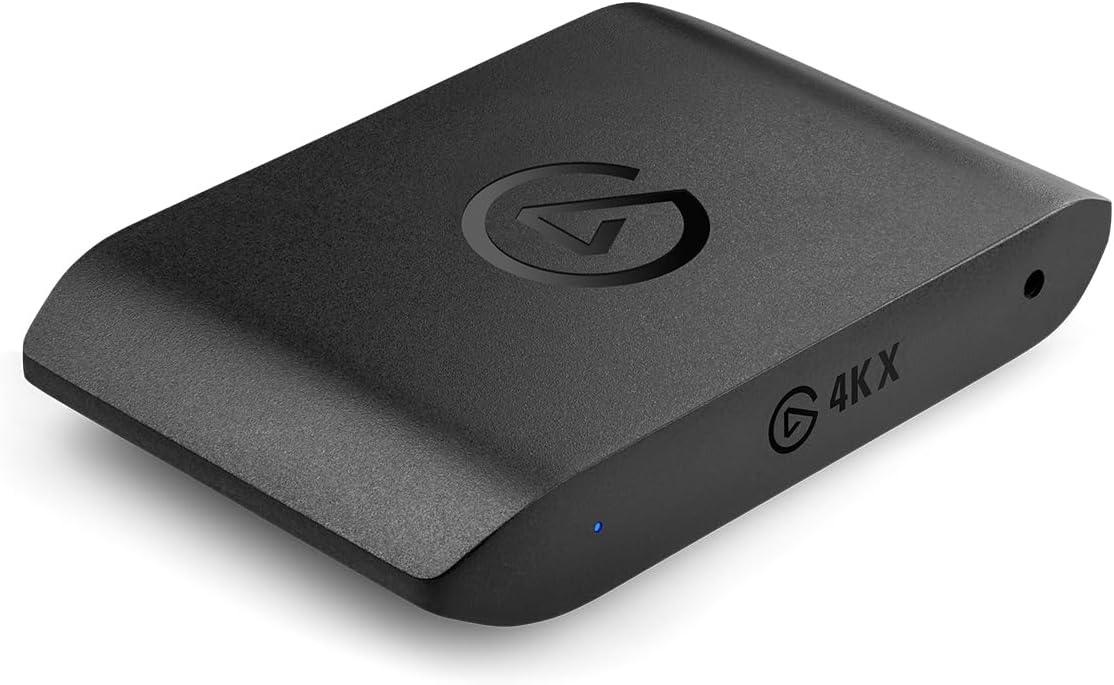
The Elgato 4K X Capture Card is a premium tool for top-tier streaming. It supports HDMI 2.1, 4K144 capture, and VRR passthrough. This ensures smooth gameplay and high fidelity.
We may earn a commission when you buy through this link, at no additional cost to you.
Built for professionals, it offers zero latency and flawless synchronization. It works seamlessly with OBS, Twitch, and Teams. The build quality reflects its premium price. It is ideal for next-gen console streaming.
Cost may be prohibitive for casual users. Overkill for simple 1080P needs. However, for demanding setups, it offers unmatched performance.
Choose for high-end gaming and professional broadcasts. It justifies the price with features. If you need 4K60+, this is the tool.
Supports HDMI 2.1, VRR passthrough, and up to 4K144 capture for ultra-smooth visuals.
Ultra-low latency and seamless app integration ensure perfect sync for professional broadcasts.
We may earn a commission when you buy through this link, at no additional cost to you.
The UGREEN 2K Capture Card provides a balance between quality and compatibility. It offers 2K30 output and 4K input. The aluminum casing ensures durability. It works with major consoles and systems.
We may earn a commission when you buy through this link, at no additional cost to you.
Its USB-A and C interfaces offer maximum flexibility. The 5 Gbps speed ensures low latency. It supports many streaming tools. It is reliable for gaming and video calls.
Users must turn off HDCP for consoles. Output limited to 2K. For most, these are minor. The performance is consistent and solid.
Ideal for hybrid setups needing multiple interfaces. Great for users valuing stability. Offers reliable results for streaming needs.
Features both USB-A and USB-C ports to support a wide range of host devices.
Aluminum alloy casing and high-speed data transfer ensure stable signal transmission.
We may earn a commission when you buy through this link, at no additional cost to you.
The UGREEN 4K Loop Out allows real-time preview with its loop-out feature. This eliminates latency for gaming. It supports 2K30 capture. The aluminum body ensures durability. It works with most modern platforms.
We may earn a commission when you buy through this link, at no additional cost to you.
Key strength is local loop-out for zero-latency monitoring. Dual interfaces offer flexibility. It supports MJPEG and YUY2. Windows 7 needs drivers. iPhone data unsupported.
For real-time play, loop-out is invaluable. Minor OS limitations exist. Overall, solid performance for serious gaming.
Best for gamers needing instant feedback. Prioritize latency-free preview. Reliable for long-term use.
Features 4K loop-out for real-time, zero-latency monitoring on external displays.
Supports both MJPEG and YUY2 formats for flexibility in compression and clarity.
We may earn a commission when you buy through this link, at no additional cost to you.
The Magewell USB Capture HDMI Gen 2 is a professional-grade device. It uses FPGA processing to reduce CPU load. It supports 1080p60 with 4:4:4 color. It is built for 24/7 operation.
We may earn a commission when you buy through this link, at no additional cost to you.
Strengths include extreme stability and reliability. No drivers needed. Ideal for broadcast or high-demand environments. It works on Windows, Mac, and Linux. It is backed by a 3-year warranty.
High cost may deter casual users. Output limited to 1080p60. For professional use, it is unmatched. It is trusted in many industries.
Choose for mission-critical reliability. Justifies the price for pros. The standard for professional capture.
FPGA-based video processing handles tasks on-device to reduce CPU load.
Designed for 24/7 operation with thermal protection and a 3-year warranty.
We may earn a commission when you buy through this link, at no additional cost to you.
The VIXLW Cam Link 4K turns DSLR cameras into high-quality webcams. It supports 4K60 and 1080p120. Its low latency is great for live calls. It works without drivers.
We may earn a commission when you buy through this link, at no additional cost to you.
It offers stunning image quality. Ideal for precision recording. It supports many devices. However, DSLR batteries drain fast. Some cameras may have compatibility issues.
For DSLR users, it is a strong tool. Battery limits continuous use. Still, image quality wins. Best for short sessions.
Choose for high-quality camera streaming. Great for creators using DSLRs. Consider external power.
Connects DSLR and camcorders to PC/Mac to transform them into pro webcams.
Supports smooth 1080p120 or 4K60 for detailed and fluid video capture.
We may earn a commission when you buy through this link, at no additional cost to you.
Selecting the right capture card involves balancing resolution, latency, and connectivity. This guide breaks down the key factors to consider before purchasing.
Ensure the card supports your source device and desired output. 1080P60 is standard for most streams, while 4K is ideal for high-detail work. Check input versus output limits carefully as they often differ.
Prioritize resolution that matches your needs without overpaying. Most viewers see 1080P so 4K input is a plus but not always essential.
USB 3.0 is the baseline; USB-C is preferred for modern laptops. USB 2.0 is cheaper but limits frame rates. Ensure your computer has enough ports or use adapters.
Choose a card that matches your host interface. USB-C hubs can save ports but may limit bandwidth if not powered.
Low latency is vital for gaming and live interaction. Look for chips optimized for fast processing. Some cards offer loop-out to monitor gameplay in real-time without lag.
Test latency if possible. For live games, zero-latency monitoring can prevent input delay.
Metal bodies help dissipate heat. Continuous use can cause throttling in plastic units. Ensure the device is robust enough for extended sessions.
Invest in aluminum or sturdy builds. Overheating can lead to dropped frames or disconnections.
Plug-and-play cards reduce setup time. Some require drivers or specific apps. Ensure compatibility with OBS, Zoom, or your preferred software.
Prefer driver-free devices for simplicity. Some high-end cards offer more control but need extra setup.
Check for audio pass-through or separate mic inputs. Some cards handle game and mic audio separately. This helps in post-production.
If you need mixed audio, ensure the card supports channel separation. Otherwise, use external mixers.
Entry-level cards cost less but may limit resolution or frame rates. Premium cards offer better features but at a higher price. Determine your needs to avoid overspending.
Balance cost with required features. Basic streaming can be done on budget cards while pros need premium tools.
Ensure the card works with your devices like Switch, PS5, Xbox, or DSLR. Some require HDCP to be disabled. OS support for Windows and Mac is standard.
Verify specific console or camera compatibility. HDCP issues can block signals on some devices.
Connect the capture card to your computer via USB 3.0 or USB-C. Insert the HDMI cable from your source device into the input port. If your card has a loop-out, connect another HDMI cable to a monitor for zero-latency viewing.
Open your streaming software and select the capture card as the video source. Configure resolution and frame rate settings in the software. If audio is missing, check the input settings in your system or streaming app.
Keep the device in a well-ventilated area to prevent overheating. Avoid using long HDMI cables to reduce signal loss. If issues arise, try reconnecting the USB port or restarting the streaming software.
Most capture cards are compatible with consoles like PS5 and Xbox Series X, provided HDCP is disabled. Always check the manufacturer's compatibility list. Some consoles may need firmware updates to work properly.
4K input means the card accepts high-resolution signals, but output depends on USB bandwidth. Many budget cards accept 4K but output 1080P or 2K. This preserves quality for editing.
Most cards work with any software like OBS or VLC. Some require drivers for specific functions. Generally, plug-and-play cards are recognized automatically as video devices.
Yes, capture cards allow you to use external cameras in Zoom or Teams. They enhance video quality compared to built-in webcams. Ensure the software detects the device as a video source.
This may be due to incorrect input selection, HDCP issues, or cable problems. Check that your source is outputting video and cables are secure. Try restarting the streaming software.
Loop-out allows you to see your game directly on a monitor without latency. This prevents input delay while streaming. It is essential for fast-paced gaming.
Our top picks cover various needs from budget streaming to professional production. The Elgato 4K X leads in performance while Audio Express offers value. Magewell ensures reliability for 24/7 use.
Focus on latency, interface type, and resolution when deciding. Choose a card that matches your devices and platform needs. High-end features may not be necessary for all users.
Prices and availability change often. Check current listings to ensure you get the best deal. Verify compatibility before purchasing to avoid returns.