
Handheld Fish Finder Portable Fishing Kayak
4.2Editor score
Portable handheld design
Battery powered operation
200 kHz sonar frequency
Finding the right tool to locate fish without breaking the bank is a common goal for anglers. A good cheap fishfinder provides essential sonar data like depth and structure while maintaining affordability. These devices help you save time and increase your chances of a successful trip on any body of water.
We evaluated ten highly rated models based on their performance features user interface, and overall value. Our analysis focuses on clarity of display, sonar accuracy, portability, and ease of installation. This list covers everything from compact handheld units to more advanced mounted systems with GPS capabilities.
Each pick highlights specific strengths tailored to different fishing environments and budget constraints. You will see detailed breakdowns of what makes each unit stand out in its category. Please note that product prices and availability can change frequently so always verify current listings before purchasing.
4.2Editor score
4.6Editor score

4.7Editor score
As an Amazon Associate we earn from qualifying purchases.
This side-by-side comparison outlines the key specifications and capabilities of each model to help you quickly identify the best fit for your needs.


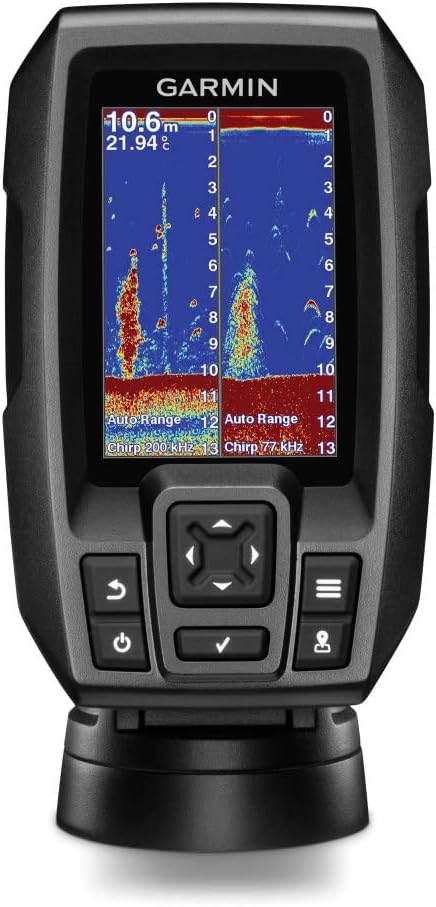
The Garmin Striker 4 stands out as a highly capable device for anglers seeking essential features without a steep price tag. With a solid 4.6 star rating it delivers reliable performance across various water conditions. Its standout quality is the integration of ClearVu scanning sonar which provides near photographic images of the underwater environment.
We may earn a commission when you buy through this link, at no additional cost to you.
This model uses Chirp sonar to send a continuous sweep of frequencies resulting in crisper fish arches and better target separation. The dedicated buttons make operation straightforward even for beginners. The waypoint map allows you to mark brush piles and docks easily ensuring you can return to productive spots later.
While the 3.5 inch display is compact it remains readable in sunlight and includes a classic flasher format for ice fishing enthusiasts. The device draws minimal power and is built to withstand splashes thanks to its IPX7 rating. These trade-offs are acceptable for a unit designed for simplicity and portability.
If you need a dependable fishfinder with GPS capabilities for navigating and marking spots this model is an excellent choice. It balances performance and affordability effectively making it a top pick for casual and serious anglers alike.
ClearVu scanning sonar gives you detailed representations of objects structure and fish for a clearer view below.
A simple interface with dedicated buttons ensures you can focus on fishing rather than complicated menu settings.
We may earn a commission when you buy through this link, at no additional cost to you.
The Lowrance Eagle Fish Finder prioritizes visibility and ease of use for anglers who spend long hours on the water. Its 4-inch IPS portrait screen stays clear in bright sunlight and offers wide viewing angles which is crucial for daytime fishing. The Auto-Tuning Sonar feature simplifies setup by automatically optimizing settings for the current conditions.
We may earn a commission when you buy through this link, at no additional cost to you.
The included 200 kHz Bullet Skimmer transducer provides broad coverage ideal for kayaks and small boats. You can view fish icons with depth and use zoom to get a closer look without needing an audible alarm. The twist-lock connector makes installing and removing the display simple saving time during transport.
Some users may find that advanced mapping features like C-MAP require additional purchases. The screen size is compact compared to larger models which could limit detail for those who prefer high resolution visuals. However these limitations are often outweighed by the device reliability and ease of setup.
For anglers who value a clear display and minimal adjustment time this fishfinder offers a practical solution. It is particularly well-suited for those who fish in varying light conditions and need a reliable tool that works right out of the box.
Auto-Tuning Sonar automatically provides optimized settings so you can focus on finding fish rather than tweaking knobs.
A twist-lock connector makes connecting and removing the display simple even in tight spaces or limited mounting areas.
We may earn a commission when you buy through this link, at no additional cost to you.
This handheld fish finder is designed for maximum portability making it ideal for kayak anglers or those fishing from docks. It runs on four AAA batteries and provides roughly four to five hours of continuous use. The device detects water depth and fish location with a 200 kHz frequency and displays data on a compact LCD screen.
We may earn a commission when you buy through this link, at no additional cost to you.
You can toss the transducer into the water and turn on the unit to see real-time depth and fish information. It includes a neck strap so you can wear it while managing your gear on a moving kayak. Settings such as sensitivity and fish alarm can be saved even when the device is turned off.
The unit requires slow speeds below five miles per hour when on a kayak to ensure accurate readings. Battery life is decent but may require carrying spares for extended trips. These constraints are reasonable given the low price point and the convenience of not needing a mounted system.
If you need an affordable and lightweight solution for casual fishing this model delivers essential data without complexity. It is a practical choice for beginners or those who want a backup device for shore and ice fishing scenarios.
Its lightweight design and included neck strap allow you to take it anywhere from a kayak to a dock easily.
Using 200 kHz sonar it detects depth from 3 feet up to 328 feet with a 45 degree beam angle.
We may earn a commission when you buy through this link, at no additional cost to you.
The Garmin STRIKER Vivid 4cv offers a significant upgrade with its vibrant color display and advanced sonar capabilities. Rated 4.7 stars it provides an intuitive user experience with vivid color palettes that help distinguish fish and structure easily. The included GT20 transducer supports both traditional CHIRP and CHIRP ClearVü scanning sonar.
We may earn a commission when you buy through this link, at no additional cost to you.
High-sensitivity GPS allows you to mark waypoints and view your boat speed which adds navigation value. Built-in Quickdraw contours mapping lets you create personalized lake charts as you fish. The tilt/swivel bailmount bracket included ensures you can adjust the viewing angle to suit your seating position.
While this model is more expensive than basic units the clarity of the color screen and mapping features justify the cost for many anglers. You will need a reliable power source which may mean adding a dedicated battery if your boat does not have one. The investment pays off in improved target identification.
For those who want premium visuals and navigation tools without moving to a high-end system this unit is a strong contender. It bridges the gap between entry-level and advanced fishfinders making it a smart choice for serious recreational anglers.
New vivid scanning sonar color palettes make it easier to distinguish fish and structure at a glance.
Built-in Quickdraw Contours mapping allows you to create custom lake charts while you are on the water.
We may earn a commission when you buy through this link, at no additional cost to you.
The Humminbird PiranhaMAX 4 is known for its robust Dual Beam Sonar which gives you a choice between narrow and wide beams. This feature helps identify fish and structure with great detail or coverage depending on your needs. The device includes a tilt and swivel mount that lets you adjust the viewing area angle quickly.
We may earn a commission when you buy through this link, at no additional cost to you.
It comes with an XNT 9 28 transom-mount transducer ready for installation on most boats. The display is compact and clear enough for basic fishing tasks though it lacks color. A limited warranty provides peace of mind regarding the durability of the unit and its components.
The lack of color and advanced GPS may limit users who want detailed mapping or high contrast visuals. However for those focused purely on finding fish and structure the dual beam options are highly effective. The setup is straightforward and the mount allows for flexible viewing angles.
This model is a reliable workhorse for anglers who prioritize sonar accuracy over fancy features. It offers a solid balance of performance and simplicity making it a trusted choice for freshwater and saltwater fishing.
Choose from a narrow and a wide beam for great detail or a generous coverage area depending on conditions.
A tilt and swivel mount lets you adjust the viewing area angle quickly to avoid glare or find a better spot.
We may earn a commission when you buy through this link, at no additional cost to you.
The LUCKY Kayak Portable Fish Depth Finder is designed specifically for anglers who need a compact tool for small craft. It displays approximate fish location and water depth alongside data on weeds and bottom structure. The transducer can be attached to the hull or handheld and it is compatible with both fresh and salt water.
We may earn a commission when you buy through this link, at no additional cost to you.
A backlight ensures visibility in sunshine or darkness so you can check readings anytime. The device features five levels of sensitivity adjustment making it versatile in clear or turbid water. Fish alarms alert you when schools pass by and the unit can run for hours on a single set of batteries.
It lacks GPS navigation and requires manual attention to place the transducer for accurate readings. These limitations are typical for portable units in this price range. The lightweight design ensures it does not add much bulk to your existing gear or tackle box.
This fishfinder is a cost-effective option for kayak anglers who want more than just a depth sounder. It provides essential data to locate fish and structure without needing a complex or expensive setup on your boat.
Five levels of sensitivity adjustment makes fishing possible both in clear water or turbid environments.
The package includes a neck strap so you can wear it around your neck when busy on the kayak or boat.
We may earn a commission when you buy through this link, at no additional cost to you.
The Humminbird Helix 5 Chirp GPS G3 brings high-end mapping capabilities to a more accessible segment. It features Dual Spectrum CHIRP sonar that delivers detailed views of fish arches and structure with both wide and narrow modes. Enhanced GPS navigation includes coverage of over ten thousand lakes and coastlines out of the box.
We may earn a commission when you buy through this link, at no additional cost to you.
AutoChart Live creates maps of depth contours and bottom hardness while you boat giving you real-time mapping capabilities. The menu system is operated by softkey controls allowing reliable use in any weather. This level of integration helps you plan routes and locate new fishing spots effectively.
The cost is higher than basic units and the features may be complex for casual anglers. However for those who want to explore new waters the mapping tools are invaluable. The system is designed to be user-friendly once you take time to learn the interface.
If you plan to fish frequently and want to build your own lake maps this unit offers exceptional value. It combines precision sonar with robust navigation making it a comprehensive tool for serious recreational anglers.
AutoChart Live creates maps of depth contours and bottom hardness while boating with eight hours of recording time.
Equipped with Humminbird Basemap this chartplotter includes coverage of 10,000 plus lakes and coastlines.
We may earn a commission when you buy through this link, at no additional cost to you.
This wireless sonar model eliminates the need to drill holes in your boat hull by using a castable sensor. The sensor can be tethered to your fishing line and cast up to 262 feet away from the handheld unit. It detects water depth temperature and fish size with a 105 degree beam angle.
We may earn a commission when you buy through this link, at no additional cost to you.
The handheld unit features a clear color display with two background colors selectable for bright sunlight or night reading. Both receiver and sensor are rechargeable providing a convenient alternative to disposable batteries. The unit also offers Work and Simulation modes for testing without casting into water.
The depth limit of 164 feet may be restrictive for deep water fishing. You must ensure the sensor is charged before heading out as battery status can be tricky to monitor. Despite these points the wireless freedom it offers is a major plus for shore and kayak fishing.
For anglers who prefer a setup without mounting hardware this unit provides a practical solution. It delivers essential data with the added benefit of casting the sensor to different spots on the water.
No need to drill hole in your boat hull to install the sensor any more with this wireless setup.
Tether it with your fishing line and cast it onto water as far as you want to explore different areas.
We may earn a commission when you buy through this link, at no additional cost to you.
This wireless fishfinder features a 2.4 inch colorful LCD screen that displays fish icons depth and water temperature clearly. The sensor is rechargeable and supports 147 feet of depth detection with a 90 degree detective angle. An attractive lamp on the sensor automatically turns on when it touches water to potentially attract fish.
We may earn a commission when you buy through this link, at no additional cost to you.
You will receive alarms when fish pass by the sensor and the unit shows size and depth data. The device is designed for user-friendly operation with support for 21 operating languages. It is suitable for a wide range of environments including ice fishing and river or sea fishing.
The depth limit is lower than some wired options and the sensor light may draw unwanted attention in certain scenarios. However the rechargeable nature reduces long term costs for batteries. The display is compact enough for one-handed use on the boat or dock.
This model is a solid choice for those who want a modern look with wireless convenience. It balances essential features with a rechargeable design that makes it a convenient tool for various fishing styles.
Portable fish finder 2.4 inches colorful LCD Screen shows fish size icon with depth and water temperature clearly.
The attractive lamp sensor and automatic alarm show and emit alerts when fish pass by the coverage place.
We may earn a commission when you buy through this link, at no additional cost to you.
This wireless model comes with two functional airwave frequencies allowing you to fine tune sonar readings without complexity. It displays water depth temperature fish size and bottom contour on a clear LED display. Both the receiver and sensor are rechargeable and work about six hours on a single charge.
We may earn a commission when you buy through this link, at no additional cost to you.
You can mount the sensor on your boat or fishing rod or float it to access different areas. The display offers a white and black background selectable for better visibility in various lighting conditions. It is a great partner for ice fishing and lake kayak or boat fishing.
Fish icons may not display if the sensor floats in shallow water under one meter depth. The sensor must be put into water to check the power status properly. These nuances are minor and do not detract from the overall utility of the device.
For anglers seeking a versatile wireless option with dual frequency capabilities this unit delivers strong performance. Its rechargeable design and flexible mounting options make it suitable for a wide range of fishing environments.
Equipped with 2 functional airwave frequencies so you can fine tune its sonar readings without complexity.
You can mount the sensor on boat or fishing rod with string or float it to accessible area easily.
We may earn a commission when you buy through this link, at no additional cost to you.
Choosing the right fishfinder involves weighing several factors to ensure you get the performance you need without overspending.
The display is your primary window into the water so its size and clarity matter. Larger screens offer better detail but may reduce portability while smaller screens are easier to mount in compact spaces. Look for bright high-contrast screens that remain readable in direct sunlight to avoid squinting during midday fishing.
Sonar frequency determines how much detail you get versus how wide of an area you can cover. Higher frequencies provide better detail for structure while lower frequencies offer wider coverage for finding fish schools. Many models use CHIRP technology which sweeps frequencies to improve target separation and create clearer fish arches on the screen.
Consider how you intend to transport and install the device especially if you fish from a kayak or small boat. Handheld units offer maximum freedom but require manual handling while mounted systems provide stable views and integrated data. Ensure the mounting hardware included fits your boat or deck setup to avoid additional costs.
GPS capabilities allow you to mark waypoints and create routes which is invaluable for returning to productive spots. Some models include built-in map data while others require separate subscriptions or SD cards. If navigation is a priority look for a unit with a clear waypoint map and the ability to save your routes.
Power options vary from disposable batteries to rechargeable internal packs or 12V connections. Long runtime is critical for all-day trips and rechargeable batteries reduce ongoing costs. Check the estimated usage hours and whether the unit supports a save mode to extend power when not in constant use.
Angling environments are often wet so a device with a high water rating is essential to prevent damage. Look for ratings like IPX7 which mean the unit can withstand immersion in water for short periods. Durable construction and quality buttons also contribute to longevity in harsh conditions.
A complicated interface can distract from fishing so intuitive controls and clear menus are vital. Dedicated buttons for common functions save time compared to navigating deep menu structures. Review the user guide or online demos to ensure the learning curve fits your experience level.
While looking for cheap fishfinders consider the overall value including features and longevity. A slightly higher price might offer features that save you time or improve your catch rate significantly. Compare what is included such as transducers and mounting kits to avoid hidden costs after purchase.
Before heading out ensure the battery is fully charged or fresh batteries are installed to avoid interruptions. Check the transducer is securely attached and free from debris which can interfere with sonar readings. Set the sensitivity based on water clarity to filter out noise while keeping fish targets clear on the display.
CHIRP sonar sends a continuous sweep of frequencies instead of a single pulse which creates crisper fish arches and better target separation. This technology provides more detailed views of structures and fish schools on the display. Standard sonar uses a single frequency which can result in broader but less detailed readings.
Many fishfinders come with a compatible transducer included in the box so check the product listing before buying. Some models require specific transducers that match their sonar technology and connector types. If you are replacing a unit verify compatibility to avoid purchasing incompatible accessories.
Most modern fishfinders are designed to work in both fresh and saltwater environments. Ensure the transducer and unit are rated for saltwater use to prevent corrosion over time. Look for waterproof ratings such as IPX7 to ensure durability near the ocean.
Entry-level units often detect up to 500 feet in freshwater and less in saltwater due to density differences. Advanced models can reach over 1,000 feet depending on the frequency and water conditions. Always check the maximum depth rating of the specific model you are considering.
Handheld units offer portability and ease of use for kayaks or shore fishing but require manual handling. Mounted fishfinders provide stable views and continuous power but are fixed to the boat. Your choice depends on how you fish and whether you prioritize flexibility or consistency.
Rinse the transducer with fresh water after every use to remove algae and dirt that can block signals. Use a soft cloth to wipe the face gently and avoid abrasive materials that can scratch the surface. Ensure all connectors are dry before storing the unit for the day.
This guide has covered ten top-rated cheap fishfinder models ranging from compact handhelds to feature-rich units with GPS. Each option offers unique strengths whether you prioritize portability sonar clarity or mapping capabilities for your trips.