
ESP32-S3-Nano Microcontroller
5.0Editor score
16MB Flash and 8MB PSRAM
Low Cost High Performance Board
Arduino and MicroPython Compatible
This guide compares the top Arduino Nano ESP32 boards and alternatives for IoT, wireless connectivity, and embedded projects to help you choose the right board.
The Arduino Nano ESP32 represents a significant leap in compact microcontroller design, merging the ease of the Arduino ecosystem with the powerful ESP32-S3 capabilities. This combination offers developers and hobbyists access to dual-core processing, native Wi-Fi, and Bluetooth without the complexity of larger boards. Whether you are building smart home devices, wearables, or industrial sensors, choosing the right variant is crucial for project success and efficiency.
To compile this list, we evaluated ten distinct boards based on processor performance, wireless range, power efficiency, and ecosystem compatibility. We considered official Arduino releases alongside third-party alternatives that offer similar or enhanced features at different price points. Each entry was analyzed for its suitability in various applications ranging from educational prototyping to commercial deployment scenarios requiring robust connectivity.
Each product pick in this guide highlights specific strengths such as USB-C integration, MicroPython support, or advanced security features. We provide detailed breakdowns of specifications and real-world use cases to help you align your technical requirements with the hardware capabilities. Please note that product availability and pricing fluctuate frequently, so verify current details before making your final purchasing decision.
5.0Editor score

4.6Editor score

4.7Editor score
The following table provides a side-by-side technical comparison of the ten selected microcontroller boards. We highlight key specifications such as processor architecture, memory capacity, and unique interface options to help you distinguish between official offerings and third-party alternatives.


The Arduino Nano ESP32 stands out as the premier choice for developers seeking a balance of official Arduino support and powerful wireless capabilities. Rated highly for its dual-core ESP32-S3 processor, this board delivers exceptional performance for complex IoT tasks while maintaining the familiar Arduino IDE workflow. Its modern USB-C interface ensures reliable power and fast data transfer, making it a versatile option for both prototyping and deployment.
We may earn a commission when you buy through this link, at no additional cost to you.
Key strengths include native support for MicroPython alongside traditional C++ development, allowing users to choose their preferred language based on project needs. The board features robust Wi-Fi and Bluetooth 5.0 connectivity, enabling seamless integration with cloud platforms and mobile apps. Additionally, the inclusion of Human Interface Device (HID) profiles opens up possibilities for creating custom keyboards or controllers without extra hardware.
While the price is slightly higher than generic alternatives, the quality assurance and secure boot features justify the investment for professional applications. The only notable trade-off is the limited number of analog input pins compared to larger boards, but this is rarely a bottleneck for compact designs. Its compact form factor and rich feature set make it suitable for wearable technology and smart sensors.
This board is ideal for engineers and hobbyists who need reliable performance and official support for their projects. Whether you are building a smart home hub or an industrial sensor node, the Nano ESP32 provides the stability and connectivity required. We recommend this model for users prioritizing ease of use and long-term project viability.
Support for both MicroPython and C++ allows developers to switch languages easily for different project stages.
Built-in Wi-Fi and Bluetooth enable seamless communication with mobile apps and cloud services without external modules.
We may earn a commission when you buy through this link, at no additional cost to you.
The ESP32-S3-Nano microcontroller offers incredible value for users needing high-performance features at a budget-friendly price point. With a perfect rating, this board delivers the power of the ESP32-S3R8 chip including 16MB of flash memory and 8MB of PSRAM. This substantial memory allows for complex applications like voice recognition and machine learning tasks that require significant local storage and processing speed.
We may earn a commission when you buy through this link, at no additional cost to you.
Its compatibility with both Arduino and MicroPython provides flexibility for developers with varying skill levels. The board supports Arduino IoT Cloud, allowing users to monitor and control projects remotely through a dedicated app. Additionally, the HID support enables the board to emulate keyboards and mice, which is a unique feature for this price range that enhances interactive project possibilities.
The main consideration is that this is a third-party board, which may lack the formal support and documentation found with official Arduino products. However, the technical specifications are robust enough to handle most standard development needs without issues. For hobbyists and students, this board provides an affordable entry point into advanced embedded development.
We recommend this model for projects where cost efficiency is critical without sacrificing computational power. It is particularly well-suited for rapid prototyping where multiple units might be needed for testing. If you require a reliable board for basic IoT tasks with ample memory, this is an excellent choice.
With 8MB PSRAM and 16MB flash, you can store large datasets and run complex scripts without external storage.
Support for Arduino IoT Cloud makes it easy to visualize sensor data and control devices remotely over the web.
We may earn a commission when you buy through this link, at no additional cost to you.
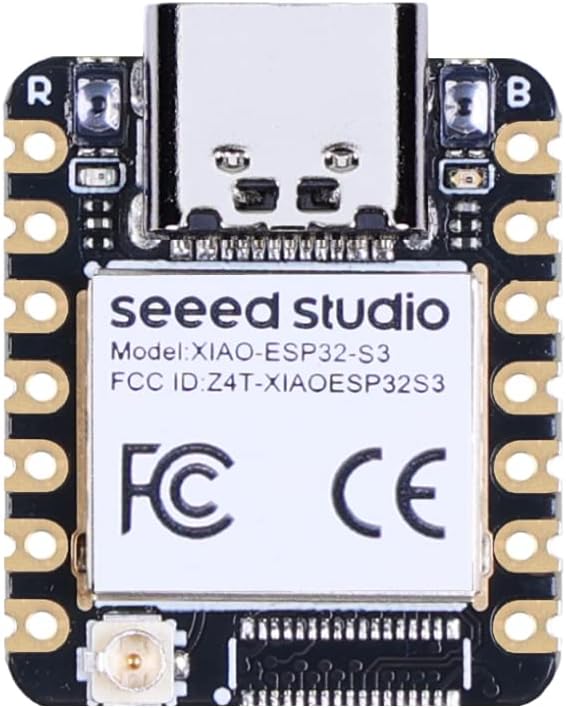
The Seeed Studio XIAO ESP32S3 is engineered for applications where space is at a premium, such as wearable devices and portable sensors. Its thumb-sized design ensures it can be integrated into small enclosures or worn comfortably on the body. The board supports efficient power management with a lithium battery charge management capability, making it ideal for battery-operated projects.
We may earn a commission when you buy through this link, at no additional cost to you.
Performance-wise, it offers the same powerful ESP32-S3 dual-core processor as larger boards, ensuring no compromise on processing speed. The RF performance is particularly impressive, supporting up to 100 meters of communication when using an external U.FL antenna. This range is significant for outdoor IoT deployments and remote monitoring stations.
The power consumption models are optimized for longevity, featuring a deep sleep mode that drops power usage to as low as 14 microamps. This efficiency allows for extended battery life in low-data-rate applications. However, the small size means that soldering headers might be necessary for beginners, which can be a hurdle compared to pre-soldered options.
This board is perfect for makers building smartwatches, fitness trackers, or compact environmental monitors. If your project requires a small footprint and long battery life without sacrificing connectivity, the XIAO is a top contender. Its breadboard-friendly design also helps in prototyping despite the compact form factor.
The compact 21×17.5mm size allows for easy integration into wristbands and small enclosures.
Ultra-low deep sleep modes ensure that battery life is maximized for unattended long-term operation.
We may earn a commission when you buy through this link, at no additional cost to you.
The ESP32-P4-NANO represents a specialized evolution in microcontroller design, focusing on high-performance image and voice processing. It utilizes a RISC-V dual-core processor alongside an ESP32-C6 module for Wi-Fi 6 connectivity. This configuration provides a unique blend of performance and efficiency, making it suitable for advanced edge AI applications and industrial automation.
We may earn a commission when you buy through this link, at no additional cost to you.
One of its standout features is the inclusion of rich human-machine interfaces such as MIPI-CSI and MIPI-DSI. These allow for direct connection to high-resolution displays and camera modules, bypassing the need for additional controllers. With 32MB PSRAM and 16MB Nor Flash, the board has ample memory for handling complex data streams and graphics rendering.
The board also includes hardware-level security features such as secure boot and flash encryption. This ensures that proprietary firmware remains protected, which is critical for commercial products. However, these advanced capabilities come with a higher power draw and complexity compared to standard microcontrollers. Users must be prepared for a steeper learning curve when configuring these interfaces.
This board is ideal for projects involving computer vision, smart displays, or industrial controllers that require secure and robust performance. If you need a board that can handle video input and high-speed data processing locally, the ESP32-P4-NANO is a strong candidate. Its Ethernet support also adds to its versatility for industrial IoT applications.
Native MIPI interfaces allow direct connection to advanced display and camera hardware for rich visual feedback.
Hardware accelerators and secure boot ensure that your applications remain secure and reliable in the field.
We may earn a commission when you buy through this link, at no additional cost to you.
The Waveshare ESP32-S3 Mini development board offers excellent value by providing a pack of three modules at a competitive price. Each board features the ESP32-S3FH4R2 chip with a 240MHz clock speed and supports both Wi-Fi and Bluetooth 5.0. This makes it ideal for prototyping multiple nodes or creating distributed sensor networks without significant cost.
We may earn a commission when you buy through this link, at no additional cost to you.
The design includes castellated GPIO pins which allow the module to be soldered directly onto carrier boards. This is useful for custom PCB design and compact embedded products where a standard breakout header would take up too much space. The onboard ceramic antenna provides adequate connectivity for short-range indoor applications.
Power efficiency is a key consideration with this module, as it supports flexible clock settings and independent power supply options. This allows developers to tailor energy consumption to specific scenarios, extending battery life for portable devices. However, the lack of a larger external antenna might limit range compared to boards with external connectors.
We recommend this option for students and hobbyists who need multiple units for experiments or for small production runs of custom hardware. If you are designing your own PCB and need a cost-effective ESP32-S3 module with high speed, this pack provides the flexibility and quantity needed. It is a practical choice for iterative development.
The castellated edges allow for direct soldering onto custom carrier boards for sleek product integration.
Getting three boards in one package saves money and allows for distributed testing and development.
We may earn a commission when you buy through this link, at no additional cost to you.
The ELEGOO ESP-32 Super Starter Kit is designed to take users from zero to hero with a complete set of components and detailed tutorials. Instead of focusing solely on a single board, this kit includes over 35 modules such as sensors, displays, and motors. This comprehensive approach allows beginners to explore a wide range of electronics projects without needing to source additional hardware.
We may earn a commission when you buy through this link, at no additional cost to you.
The included online tutorials offer step-by-step instructions and code examples for over 30 projects. This educational focus is invaluable for students and hobbyists who want to learn the fundamentals of electronics and coding in a structured way. The kit is compatible with the Arduino IDE, ensuring that programming remains accessible and well-supported.
While the ESP-32 board in this kit uses an older Bluetooth 4.2 standard, the trade-off is worth it for the sheer volume of learning material and components provided. It is an all-in-one solution that covers the basics of IoT and automation. The quality of components is reliable, and the support team is responsive to any troubleshooting needs.
This kit is perfect for educational settings or individuals who want a hands-on learning experience with guided projects. If you want to build weather stations, smart home controllers, or interactive gadgets right out of the box, this set provides everything needed. It is a practical investment for anyone starting their electronics journey.
Detailed code examples and circuit diagrams help bridge the gap between theory and practical application.
Access to dozens of sensors and actuators lets you build diverse projects without extra shopping.
We may earn a commission when you buy through this link, at no additional cost to you.
The Arduino Nano 33 IoT is a mature option for secure connectivity in industrial and home automation environments. It features an ARM Cortex-M0+ processor and integrates a u-blox NINA-W102 module for Wi-Fi and Bluetooth Low Energy. The standout feature is the inclusion of a Secure Element which provides hardware-level encryption for cloud communication.
We may earn a commission when you buy through this link, at no additional cost to you.
This board is ideal for projects where data privacy is critical, such as home security systems or industrial monitoring. The security chip ensures that data transmitted to the cloud is encrypted and tamper-proof. Additionally, the pre-soldered headers make it easy to connect to breadboards and external components without soldering hassles.
While the processor is less powerful than the ESP32-S3 variants, it is highly efficient for low-power tasks and offers reliable performance. The 256KB flash memory is sufficient for many IoT applications though it may be limiting for complex custom software. For standard cloud-connected projects, this capacity is often adequate.
We recommend this board for developers who prioritize security and stability over raw performance. If you are building a commercial product that requires secure encryption and robust support, the Nano 33 IoT is a proven choice. Its reliability makes it a standard for many professional deployments.
The ATECC608A Secure Element ensures that your data remains private during transmission and storage.
The mature design and official support make this board a reliable choice for critical IoT deployments.
We may earn a commission when you buy through this link, at no additional cost to you.
The ESP-WROOM-32 development board is a classic choice that has powered countless IoT projects worldwide. It features a dual-core processor with integrated Wi-Fi and Bluetooth 4.2, providing reliable connectivity for a wide range of applications. This board is known for its stability and compatibility with various development environments including Arduino IDE.
We may earn a commission when you buy through this link, at no additional cost to you.
It supports multiple network modes such as AP, STA, and AP+STA which allows for flexible network configurations. This means you can set the board to act as a Wi-Fi hotspot or connect to an existing network easily. The low power consumption design ensures it can run for reasonable periods on battery power if optimized correctly.
Buying a three-pack makes this option particularly cost-effective for users needing multiple nodes for testing or deployment. While it lacks the advanced features of newer ESP32-S3 chips, it remains a solid workhorse for basic automation tasks. Its widespread usage means there is a vast amount of online support and library compatibility available.
We recommend this board for simple IoT projects where cost and reliability are key factors. If you do not need the latest Bluetooth standards and just want a dependable controller for sensors or actuators, this is a safe choice. It is excellent for educational use and quick prototyping.
Support for AP and STA modes allows the board to act as a server or client in network setups.
Purchasing multiple boards at a low price allows for scaling projects without budget strain.
We may earn a commission when you buy through this link, at no additional cost to you.
The ELEGOO 3PCS ESP-32 Dev Boards pack combines the reliability of the classic ESP32 with modern conveniences like USB-C interfaces. Each board supports a dual-core processor running up to 240MHz, providing enough speed for most sensor and automation tasks. The inclusion of USB-C simplifies connections and power delivery compared to older micro-USB options.
We may earn a commission when you buy through this link, at no additional cost to you.
One of the key advantages of this board is support for Over-the-Air (OTA) updates. This feature allows you to update firmware wirelessly over Wi-Fi, which is crucial for deployed devices that are not easily accessible physically. The power management features include dynamic clock scaling which helps in balancing performance with battery life.
The high rating reflects the quality of the components and the value provided by the three-pack pricing. It offers a seamless experience for developers who want to update devices remotely without physical access. While the Bluetooth standard is older, the Wi-Fi capabilities remain robust for most IoT scenarios.
This pack is highly recommended for developers who need to deploy multiple devices and manage them remotely. The OTA support saves significant time on maintenance and allows for iterative improvements in the field. For users building smart home or industrial monitoring networks, this board offers practical advantages.
OTA functionality allows you to fix bugs and deploy new features without touching the physical device.
USB-C ports ensure that your devices use a modern standard that is reversible and durable.
We may earn a commission when you buy through this link, at no additional cost to you.
The Arduino UNO R4 WiFi is a premium evolution of the classic UNO board, combining the stability of a Renesas RA4M1 microcontroller with the connectivity of the ESP32-S3. This dual-core architecture allows for high-speed processing alongside robust wireless communication. It is designed for advanced projects that require specific industrial interfaces and high-precision analog output.
We may earn a commission when you buy through this link, at no additional cost to you.
Notable features include support for CAN bus which is essential for automotive and industrial systems. It also offers a built-in 12×8 LED matrix for immediate visual feedback without external displays. The inclusion of a Qwiic connector simplifies the connection of I2C sensors and peripherals significantly. This reduces wiring complexity and speeds up prototyping.
For projects requiring high-quality analog signal generation, the 12-bit DAC and OP-AMP are invaluable tools. These components allow for precise control of analog devices like motors or audio outputs. The board supports USB-C for power and programming which aligns with modern development standards. The only downside is the slightly higher cost and physical footprint compared to Nano boards.
This board is ideal for professional engineers and advanced hobbyists building complex systems like automotive controllers or smart robotics. The combination of industrial connectivity and analog precision makes it unique in the market. If you need a board that can handle both high-speed logic and precise analog tasks efficiently, the UNO R4 WiFi is the top choice.
The CAN bus support allows for reliable communication in demanding environments like automotive or factory floors.
Qwiic connectors make it easy to plug in I2C sensors without soldering or complex wiring.
We may earn a commission when you buy through this link, at no additional cost to you.
Selecting the right microcontroller requires balancing performance needs with specific project requirements such as connectivity and power efficiency. This guide outlines the critical factors to consider before making your purchase.
The choice between ARM Cortex and ESP32-S3 cores impacts how your device handles tasks. ESP32-S3 offers dual-core processing which is ideal for handling Wi-Fi alongside complex logic. ARM Cortex processors like in the Nano 33 IoT provide stability but may lack raw speed for advanced applications.
Prioritize the processor that matches your workload complexity to ensure smooth operations.
Wi-Fi and Bluetooth capabilities vary across boards. Newer models like the UNO R4 support Wi-Fi 6 and Bluetooth 5.0 which offer better range and power efficiency. Older boards might support only Bluetooth 4.2 which is adequate for basic tasks but less future-proof.
Choose a board that supports the latest standards if you plan to connect many devices.
Flash and RAM sizes determine how much code and data your board can store locally. High memory capacity is essential for applications involving machine learning or large data sets. Boards with 16MB flash allow for complex custom applications without external storage.
Ensure the memory meets your application requirements to avoid performance bottlenecks.
For battery-operated projects, power consumption is a critical factor. Look for boards that offer deep sleep modes and low-power configurations. Efficient power management can extend battery life from days to years depending on usage patterns.
Select boards with advanced power features to maximize longevity in portable devices.
The physical interfaces like USB-C, GPIO, and CAN bus define how you connect peripherals. USB-C is now standard for ease of use. Industrial projects may require CAN bus or Ethernet support for robust communication networks.
Match the board interfaces to your sensor and motor requirements before buying.
Secure boot and encryption capabilities are vital for commercial products. Official Arduino boards often include secure elements that hardware level encryption. Third-party boards may lack these features making them less suitable for secure environments.
Always verify security specifications when building for public or critical deployments.
Support for environments like Arduino IDE or MicroPython is crucial for development speed. Official boards have extensive library support. Some third-party boards may require specific drivers or configurations that add complexity.
Choose a board that fits your preferred coding language and tools.
While official boards offer reliability third-party alternatives often provide better value for money. Multi-packs from reputable brands can lower the cost per unit for prototyping. Evaluate whether you need the official branding or if a generic board meets your needs.
Balance cost savings with long-term support requirements when selecting a board.
Begin by connecting the board to your computer using a high-quality USB-C cable. Most modern Arduino boards are compatible with the Arduino IDE which supports the necessary drivers. Install the board support package through the IDE preferences to enable programming.
Ensure you place the board on a flat static-free surface during development. Avoid exposing the pins to excessive force when connecting wires to prevent physical damage. For battery projects always use a regulated power supply to protect the internal components.
Update firmware regularly to benefit from security patches and performance improvements. For boards supporting OTA updates configure the initial connection via USB and switch to wireless for future updates. Store unused boards in a dry environment to prevent corrosion on the metal contacts.
The Nano ESP32 uses the ESP32-S3 chip which provides faster processing and newer Bluetooth versions than the ARM Cortex chip in the Nano 33 IoT. It also supports MicroPython which the older model does not.
Yes the Arduino Nano ESP32 supports both C++ via the Arduino IDE and MicroPython for easier scripting and rapid prototyping. This dual support makes it flexible for developers of all skill levels.
Yes it is suitable for commercial projects due to its secure boot and encryption features. Always review the licensing terms of any libraries you use when deploying for commercial use.
Most boards including the Nano ESP32 do not include a USB-C cable in the package. You will need to source a standard USB-C to USB-A or USB-C cable for power and programming.
The power consumption varies based on active sleep mode but it is optimized for low energy use. Deep sleep modes allow it to run for extended periods on small batteries.
The typical indoor range is around 20 to 50 meters depending on obstacles. Outdoor range can extend up to 100 meters or more if using external antennas.
Choosing the right board involves balancing power connectivity and ease of use. The Arduino Nano ESP32 leads our top pick due to its official support and versatile MicroPython compatibility. For budget-conscious users the ESP32-S3-Nano offers excellent performance per dollar.
When selecting a board consider whether you need industrial features like CAN bus or simple IoT connectivity. If you require a secure environment prioritize boards with hardware encryption. For hobbyists the ELEGOO kits provide the best value with included components and tutorials.
Remember that prices and availability change regularly so always check the current status before purchasing. We recommend verifying the latest firmware support for your chosen model to ensure longevity.