
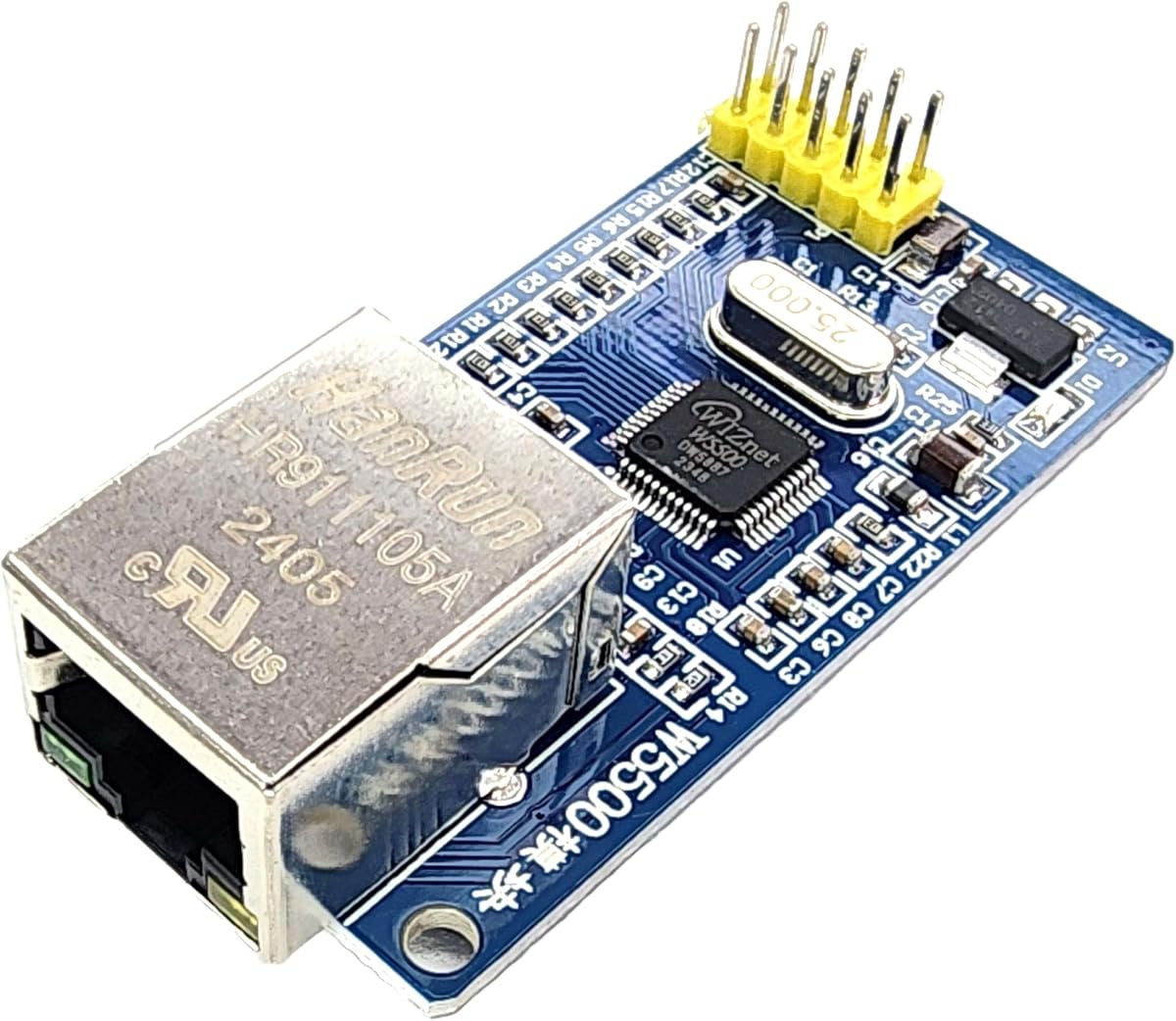
HiLetgo ENC28J60 Ethernet LAN Network Module
4.3Editor score
25MHZ crystal oscillator included
HR911105A isolation transformer
Requires 3.3V power supply only
This guide compares the top Arduino Lan Ethernet Module options for reliability speed and ease of use helping you choose the right wired networking solution
Connecting microcontrollers to networks is essential for modern IoT and automation projects. An Arduino Lan Ethernet Module provides a stable wired connection ensuring reliable data transmission without the interference common in wireless setups.
We evaluated ten leading modules based on chip performance compatibility and user feedback. Each option was assessed for network stability ease of integration and support for standard protocols like TCP and UDP across various microcontroller platforms.
This list highlights specific strengths and trade-offs to help you decide quickly. Product availability and pricing can change over time so please verify current details on the manufacturer or retailer page before making your final purchase decision.
4.3Editor score

4.2Editor score
5.0Editor score
This side by side comparison outlines the key specifications and networking capabilities of each module to help you identify the best fit for your specific microcontroller and project requirements.



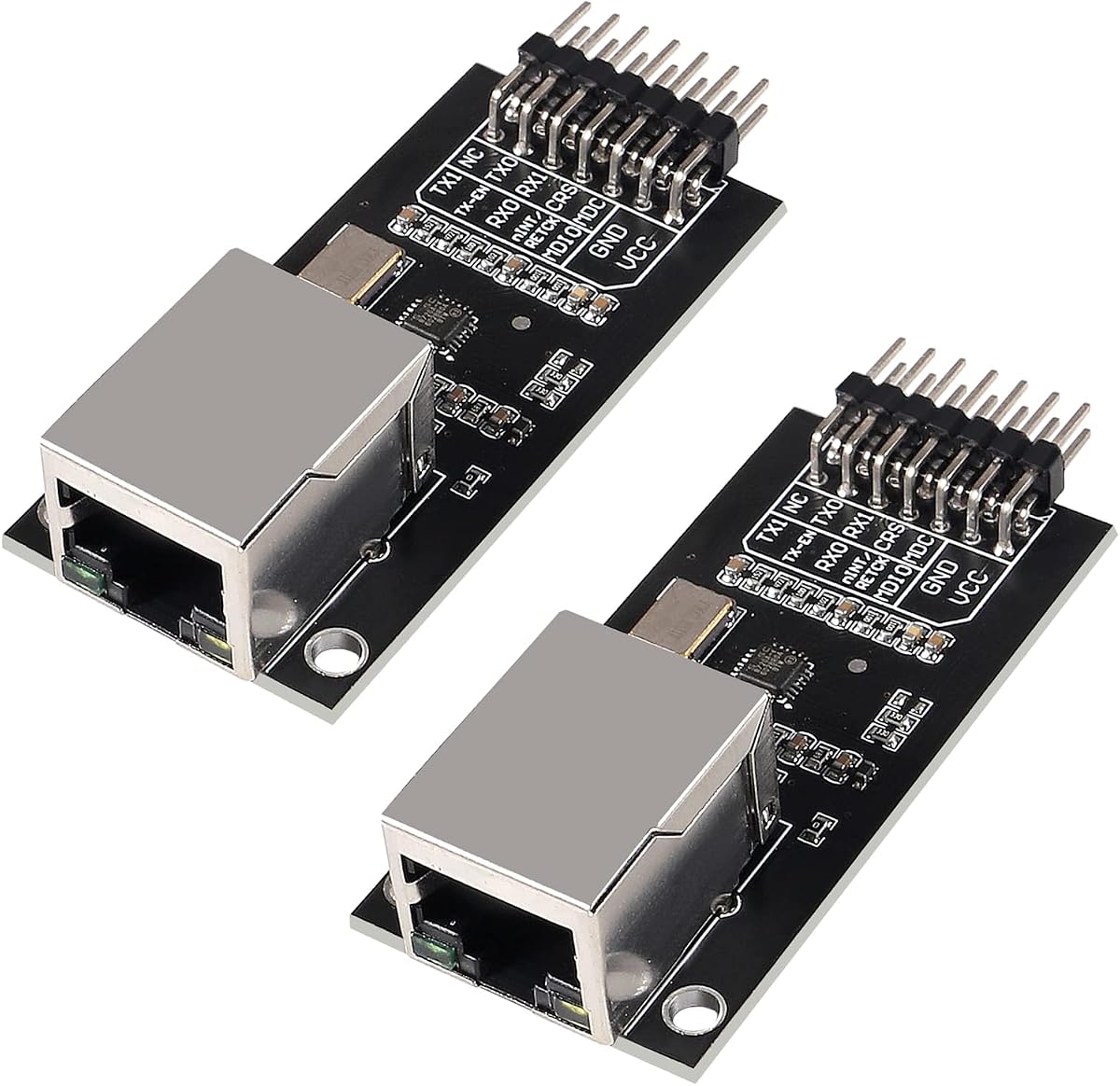

This module stands out for its reliability and performance in demanding network tasks. With a 4.2 rating from verified users it offers a solid foundation for building connected devices that require stable data exchange over LAN.
We may earn a commission when you buy through this link, at no additional cost to you.
The W5500 chip provides a hardware TCP IP stack which reduces the load on the microcontroller. This means your Arduino or STM32 can handle other tasks while the module manages network connections efficiently.
One trade off is that the 3.3V logic requires level shifters when connecting to 5V boards. This adds complexity to the wiring but ensures signal integrity and prevents damage to the module.
If you need a proven module for industrial or high traffic IoT projects this is an excellent choice. Its dual pack option makes it cost effective for bulk deployment across multiple prototype boards.
The integrated stack handles packet framing and error checking internally. This frees up CPU cycles on your microcontroller for application logic rather than network overhead.
Supporting eight independent sockets allows concurrent connections. You can manage multiple client and server roles simultaneously without complex software threading.
We may earn a commission when you buy through this link, at no additional cost to you.
This module focuses on compact design without sacrificing performance. It maintains the robust W5500 chip but optimizes the layout for smaller enclosures. Users appreciate its stability when powered correctly with sufficient current.
We may earn a commission when you buy through this link, at no additional cost to you.
The module requires a dedicated 3.3V supply capable of delivering over 200mA. This ensures the module does not brownout during data bursts. Proper power regulation is key to consistent network uptime.
Some users find the lack of breakout headers challenging for quick prototyping. You may need to solder wires directly or use a breadboard adapter. This adds a step to setup but keeps the module compact.
Ideal for space constrained projects where size matters more than ease of hookup. It delivers reliable networking for embedded systems that need to fit into tight industrial panels or consumer enclosures.
Ensure your power source can supply at least 200mA at 3.3V. Undersupplying power can lead to intermittent connection drops during high traffic periods.
The TTL level SPI interface works directly with 3.3V microcontrollers. For 5V boards you will need a level shifter on the MOSI MISO and SCK lines.
We may earn a commission when you buy through this link, at no additional cost to you.
This pack offers excellent value for teams or educators needing multiple modules. Each unit features the same reliable W5500 chip ensuring consistent performance across all boards. It simplifies large scale deployment of networked sensors.
We may earn a commission when you buy through this link, at no additional cost to you.
The module uses a standard SPI interface and requires a clean 3.3V supply. Keeping the power stable is crucial since the module does not have onboard voltage regulation. A dedicated regulator works best.
Because it is sold in bulk documentation can be sparse. You may need to refer to general W5500 datasheets for pinouts and initialization sequences. This is manageable for experienced hobbyists.
Choose this if you are building a fleet of devices or running a workshop. The cost savings per unit are significant compared to buying singles. Just ensure you have a power setup for all units.
Using identical modules across a project ensures uniform behavior. This simplifies debugging and maintenance since every node runs the same hardware configuration.
Connect each module to a regulated 3.3V source. Avoid sharing power rails with high current devices that might cause voltage drops during Ethernet activity.
We may earn a commission when you buy through this link, at no additional cost to you.
This module promises industrial grade performance with a powerful PHY chip. It supports high speed SPI and offers dual voltage operation for broader compatibility. However user feedback suggests inconsistent quality control.
We may earn a commission when you buy through this link, at no additional cost to you.
The hardware includes 32KB of TX RX buffers which is great for buffering large data streams. This helps maintain throughput even when the microcontroller is busy processing other tasks.
The low rating indicates some users receive defective units or face setup difficulties. You might need to test all units upon arrival to ensure they function correctly. This adds time to your initial setup.
If you can verify the units work this offers strong technical specs. It is best suited for advanced users who can troubleshoot hardware issues. Beginners might prefer a more consistently rated alternative.
The embedded PHY supports auto negotiation for speed and duplex. This ensures the best connection speed with your router or switch without manual configuration.
Large buffers prevent packet loss during high traffic. This is critical for applications like video streaming or large file transfers where data integrity matters.
We may earn a commission when you buy through this link, at no additional cost to you.
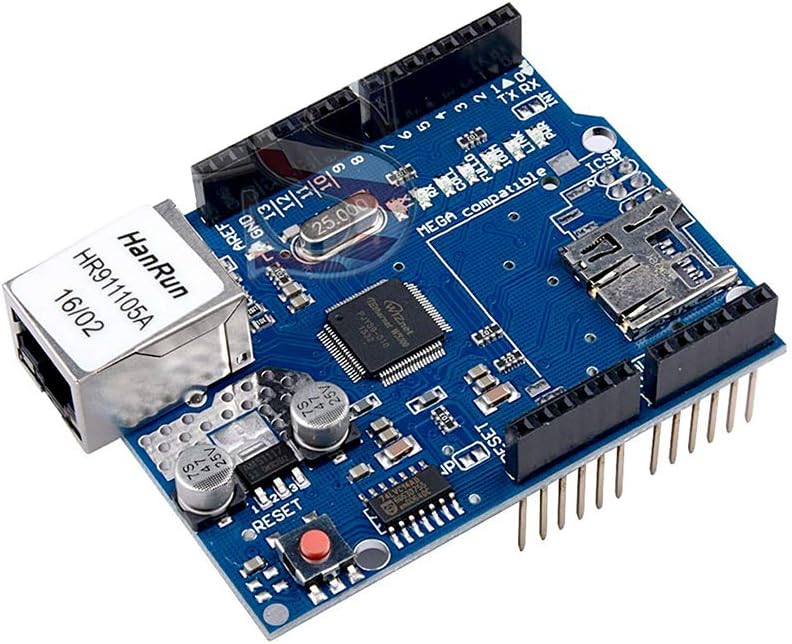
This shield simplifies connectivity with a plug and play design. It fits directly onto Uno and Mega boards. The added SD card slot allows for local data logging without extra wiring.
We may earn a commission when you buy through this link, at no additional cost to you.
The W5100 chip is well supported by standard Arduino Ethernet libraries. This makes coding straightforward for beginners. You can connect to the web in minutes using the sample code.
However the W5100 is an older chip with fewer sockets than modern options. It may not support multiple concurrent connections efficiently. This limits complex multi client applications.
Choose this if you prioritize ease of use over advanced features. It is perfect for simple web servers or basic IoT tasks. The SD slot adds versatility for offline data storage needs.
The shield stacks directly on top of the board. This eliminates wiring errors and saves time during prototyping phases.
The onboard slot allows direct file storage. This is useful for logging sensor data locally before uploading to a server.
We may earn a commission when you buy through this link, at no additional cost to you.
This module offers an entry point into Ethernet networking at a low cost. It features the ENC28J60 chip which is widely supported across various microcontrollers. Users often buy this for simple projects.
We may earn a commission when you buy through this link, at no additional cost to you.
The board includes a 25MHZ crystal for timing accuracy. This helps maintain stable data transmission speeds. The isolation transformer protects the module from electrical noise.
One limitation is the requirement for 3.3V power only. Connecting to 5V logic requires a level shifter. Also the throughput is lower than W5500 options.
Ideal for students or hobbyists on a budget. It works well for basic web servers or status monitors. Avoid it for high data rate applications where speed is critical.
This module offers a low price for basic needs. It removes barriers for those learning about networking concepts.
The onboard crystal ensures accurate timing. This reduces data errors compared to modules that rely on external clocks.
We may earn a commission when you buy through this link, at no additional cost to you.
This five pack has a high rating reflecting consistent quality. Each unit follows standard IEEE 802.3 protocols. It is reliable for classroom use or distributed projects.
We may earn a commission when you buy through this link, at no additional cost to you.
The module works with 3.3V supplies. You will need to ensure your power source is steady. The isolation transformer adds robustness against power fluctuations.
While the speed is modest it suffices for many simple tasks. The high rating suggests most units work perfectly out of the box.
Great for setting up a network of sensors. Each unit can be programmed independently. The bulk pack saves money over buying individually.
Meeting IEEE standards ensures interoperability. You can connect these modules to any standard Ethernet switch or router.
Having five units lets students work in groups. It supports hands on learning without breaking the budget.
We may earn a commission when you buy through this link, at no additional cost to you.
This module is designed for modern microcontrollers like ESP32. It has a perfect rating and supports full size RJ45. It simplifies wiring for IoT enthusiasts.
We may earn a commission when you buy through this link, at no additional cost to you.
It supports TCP and UDP protocols seamlessly. The tutorials provided online make setup easier. You can connect and start testing quickly.
The module lacks onboard level shifters so be mindful of logic levels. Ensure your microcontroller outputs match the module inputs.
Top choice for ESP32 projects requiring wired stability. It handles internet tasks efficiently. Use it when reliability is more important than size.
This module pairs well with ESP32 hardware. It complements the wireless capabilities with a solid wired backup.
Many online guides help with setup. This reduces frustration for new users setting up a network.
We may earn a commission when you buy through this link, at no additional cost to you.
This module uses the LAN8720 PHY which is fast and efficient. It supports Auto MDIX which simplifies cabling. It is suited for embedded web servers.
We may earn a commission when you buy through this link, at no additional cost to you.
The low power design is beneficial for battery projects. It operates on 3.3V single supply. This simplifies power circuit design.
Setting it up requires more effort than shield options. You need to manage the MAC interface manually. This might be too technical for beginners.
Best for engineers needing specific power specs. The performance is good for web serving. Ensure your microcontroller can handle the MAC interface.
Auto MDIX detects cable types automatically. You do not need to worry about crossover or straight through cables.
Ultra low power consumption extends battery life. This makes it suitable for portable networked devices.
We may earn a commission when you buy through this link, at no additional cost to you.
This module offers a reliable alternative to HiLetgo. It features the same ENC28J60 chip with high user ratings. It works well for general purpose networking.
We may earn a commission when you buy through this link, at no additional cost to you.
The 25MHZ crystal ensures timing precision. The HR911105A transformer protects your circuit. It is a safe choice for basic Ethernet.
It requires careful power handling to avoid brownouts. Ensure your supply is clean. The DIP package makes it robust.
Great for those wanting a trusted unit. It is affordable and easy to integrate. Use it for simple web interfaces or sensors.
The DIP style package is durable. It resists mechanical stress better than some surface mount alternatives.
High user ratings indicate satisfaction. This suggests consistent performance across batches of units.
We may earn a commission when you buy through this link, at no additional cost to you.
Selecting the right Ethernet module requires understanding your power needs compatibility and speed requirements.
The chipset determines how fast and stable your connection will be. Modern chips like W5500 offer hardware TCP IP stacks which reduce microcontroller load and improve speed. Older chips like ENC28J60 are cheaper but rely more on the processor for network handling.
Look for a chipset that matches your project complexity. High traffic needs benefit from advanced hardware stacks while simple status checks work with basic options.
Most modules use 3.3V logic but some microcontrollers operate at 5V. Ensure you have a level shifter if the module and board use different voltages. This prevents damage and ensures clean data signals.
Always check the power supply requirements before connecting. A stable regulated source is necessary to avoid random disconnections during use.
SPI is the most common interface for these modules. It is simple to wire and supports fast data rates. Confirm that your microcontroller has available SPI pins before purchasing.
Avoid interfaces that require excessive pins or slow timing. A clean SPI setup simplifies debugging and improves response time.
The number of simultaneous sockets affects how many connections you can manage. W5500 chips typically offer eight sockets allowing multiple clients. This is crucial for server applications needing many users.
If you only need one connection this factor is less important. But for multi device projects high socket counts provide flexibility.
The PHY handles the physical layer communication over wires. A good PHY ensures reliable signal transmission even in noisy environments. Look for auto negotiation features that match your router speed.
Industrial grade PHYs are better for harsh conditions. They reduce packet loss and maintain speed consistency.
Modules vary in size from tiny boards to shields. If you are building a portable device choose a compact module. If you need a prototyping shield larger sizes with headers are better.
Consider the enclosure space you have. A smaller module leaves room for batteries and other components.
Some modules draw significant current during data bursts. Ensure your power supply can handle peak loads. Brownouts can occur if the power is underspecified.
Use a dedicated regulator for Ethernet modules. This isolates the noise from the microcontroller power line.
Good documentation saves time when writing code. Check if the manufacturer provides a datasheet and sample code. Community support can help resolve unexpected issues.
Choose brands with active forums or online resources. This helps when you need to troubleshoot connection problems.
Start by connecting the power rails correctly. Ensure 3.3V modules get clean power and use level shifters for 5V logic lines. Check the polarity of the power pins to prevent permanent damage.
Install the correct library in your Arduino IDE. Most modules work with standard Ethernet libraries but some need specific drivers. Verify the pin mapping matches your wiring.
Test with a simple web server sketch. This confirms connectivity and data flow. Use a tool like Postman to verify the server responses on your computer.
For Arduino Uno the W5500 modules are best because they support higher speeds and multiple connections. The ENC28J60 works but uses more CPU resources. Ensure you use a level shifter for 5V logic compatibility.
Yes if you connect to a 5V board like Uno or Mega. The module uses 3.3V logic so a level shifter prevents damage. For 3.3V boards like ESP32 it is not needed.
Common issues include wrong pin wiring unstable power or IP conflicts. Check your DHCP settings and ensure the ethernet cable is plugged in. Verify the pin connections match the library requirements.
Yes these modules work well with ESP32. They use SPI which ESP32 supports easily. Ensure you use the 3.3V supply and verify the pin mapping for ESP32 specific libraries.
W5500 is faster and supports more simultaneous connections. It also has a more efficient hardware stack. W5100 is older and simpler but sufficient for basic tasks.
Most need around 200mA at peak usage. Ensure your power supply can provide this current. Undersupplying current can cause brownouts and connection drops.
Ethernet is more stable and faster for constant data transfer. WiFi is easier to set up but can be unstable in noisy environments. Choose based on your reliability needs.
Some do if the board cannot supply enough current. Using a dedicated 3.3V supply ensures stability. Always check the current specs before relying on board power.
This guide highlighted ten options ranging from entry level to industrial grade. The HiLetgo 2pcs W5500 stands out for its balance of features and performance. The ENC28J60 options provide budget friendly alternatives.
When choosing focus on your specific power and logic requirements. Compatibility with your microcontroller is just as important as speed. Always ensure you have the right level shifters and regulators ready.
Verify prices and availability before buying as they change over time. Check customer reviews for the latest feedback. This ensures you get a working module that fits your project needs perfectly.