
Askar 71F Flat-Field Telescope
4.9Editor score
71mm aperture ED glass
Quadruplet air-spaced APO
Self-flattened OTA design
Lightweight 2.5kg
This guide compares the top apochromatic refractors for 2026, evaluating optical performance, portability, and features to help you choose the right telescope
Apochromatic refractors are specialized telescopes designed to minimize chromatic aberration, offering crisp and color-accurate views. They are essential for serious astronomers and photographers seeking high quality images of deep sky objects without color fringing.
We compared ten top rated models based on optical quality, build materials, and versatility for both visual observation and imaging. Our analysis focuses on triplet designs, ED glass usage, and accessory compatibility to ensure you get the best value for your specific needs.
Each pick highlights unique strengths, from budget friendly entry points to premium imaging tools. Note that specifications and availability can change, so always verify current details before purchasing to ensure you select the perfect instrument for your stargazing journey.
4.9Editor score

4.5Editor score
5.0Editor score
This side-by-side comparison evaluates the key specifications and features of the ten selected apochromatic refractors to help you understand their differences at a glance.


The SVBONY SV550 AP0 Telescope stands out as a top choice for enthusiasts seeking high quality apochromatic performance. With an 80mm aperture and triplet design, it delivers crisp views of celestial targets like nebulae and star clusters. Its strong rating reflects user satisfaction with the optical clarity and build quality.
We may earn a commission when you buy through this link, at no additional cost to you.
This model utilizes an air-spaced triplet optical design with S-FPL51 low-dispersion ED glass to effectively eliminate chromatic aberration. The result is bright, high-contrast images ideal for exploring galaxies. Additionally, the magnesium alloy dual-speed focus mount reduces weight and minimizes vignetting on full-frame cameras.
While the telescope offers exceptional optical performance, it does not include a mount or tripod, requiring users to source these separately. However, the extreme extinction measures inside the barrel ensure minimal stray light, making the trade-off worthwhile for serious observers.
If you prioritize optical quality and portability for deep sky imaging, this APO OTA is a highly recommended choice. It balances performance and price effectively, making it suitable for both visual observation and advanced astrophotography setups.
The triplet apochromatic optics structure ensures blue-edge chromatic aberration is minimized for sharp imaging.
Multiple light barriers inside the focusing seat and lens barrel meet the ultimate pursuit of extinction.
We may earn a commission when you buy through this link, at no additional cost to you.
The SVBONY SV503 offers a larger 102mm aperture, allowing for more light gathering and detailed views of faint objects. Its high rating indicates strong performance in both visual observation and astrophotography. The built-in field rotator and dual-speed focuser make it convenient for precise imaging.
We may earn a commission when you buy through this link, at no additional cost to you.
Equipped with S-FPL51 ED glass, this telescope significantly minimizes color fringing for true-to-life color accuracy. The FMC coating improves light transmission, while the aluminum retractable hood blocks stray light and prevents dew formation. These features enhance the overall viewing experience significantly.
The increased aperture comes with added weight, necessitating a robust mount for stability. However, the 90mm focus travel provides flexibility for accessories like filter wheels. This makes it a versatile choice for those needing more light grasp without excessive bulk.
For observers seeking a balance of aperture and portability, the SV503 is an excellent option. Its features cater well to photographers who need critical focus control and stable field rotation for composition.
The smooth dual-speed focuser paired with a 360-degree field rotator simplifies camera alignment.
A larger 102mm aperture allows for better visibility of fainter deep-sky objects.
We may earn a commission when you buy through this link, at no additional cost to you.
The Askar 71F is an affordable and versatile choice for those entering apochromatic imaging. Its quadruplet air-spaced design offers excellent correction in a compact package. The high rating reflects its value proposition for photographers seeking a flat-field system without expensive add-ons.
We may earn a commission when you buy through this link, at no additional cost to you.
Weighing only 2.5kg, this OTA is incredibly portable and easy to mount on various tripods. The self-flattened design reduces the need for separate flatteners, simplifying setup. CNC processed barrel and matte paint reduce stray light for clearer images.
The smaller 71mm aperture limits light grasp compared to larger models, but it excels in portability. The ability to rotate the focus 360 degrees aids in framing. This makes it a practical tool for quick setup sessions.
If you prioritize cost-effective performance and portability, the Askar 71F is a top contender. It is an excellent starter telescope for astrophotographers looking for quality optics without breaking the bank.
Weighing only 2.5kg, this telescope is easy to carry and set up for spontaneous sessions.
The quadruplet APO design delivers high quality imaging at an accessible price point.
We may earn a commission when you buy through this link, at no additional cost to you.
This bundle combines the SVBONY SV550 OTA with the SV209 field flattener, creating a complete imaging solution. The 1.0X flattener ensures corrected fields for deep sky targets. The perfect rating highlights the satisfaction with this comprehensive kit for serious photography.
We may earn a commission when you buy through this link, at no additional cost to you.
The package includes an M63 extension tube and M48 adapter ring to maintain standard back focal length. The magnesium alloy focus seat reduces weight while providing stable focusing. The 180mm hollow dovetail plate increases stability and accessory diversity.
While the bundle offers excellent convenience, the total cost is higher than buying the OTA alone. However, the included flattener often costs significant if purchased separately. The lightweight design also makes it easier to manage during transport.
For photographers who want a ready-to-go package without extra sourcing, this bundle is ideal. It addresses field curvature directly and supports both half-frame and full-frame cameras effectively.
The included field flattener ensures sharp stars across the entire sensor area without vignetting.
The 180mm dovetail plate provides a stable base for mounting cameras and accessories.
We may earn a commission when you buy through this link, at no additional cost to you.
Explore Scientific is renowned for optical quality, and the ED80 reflects this with FCD1 HOYA extra-low dispersion glass. The air-spaced triplet design virtually eliminates chromatic aberration for stunning views. While the rating is solid, the focus is on consistent performance and brand trust.
We may earn a commission when you buy through this link, at no additional cost to you.
Proprietary enhanced multi-layer coatings on all optical surfaces ensure bright, high-contrast views. The front cell features push-pull adjustments for precise collimation, ensuring tight stars. The USA-based support team offers reliable service for any issues.
The price point is higher than budget alternatives, but the optical glass justifies the cost. The compact 480mm focal length makes it highly portable for travel. This makes it suitable for photographers needing a reliable workhorse.
If you value brand reliability and superior glass quality, the ED80 is a strong choice. It delivers exceptional views and durability, making it a trusted tool for both visual and imaging users.
Genuine FCD1 HOYA extra-low dispersion glass provides excellent color correction and clarity.
Push-pull adjustments allow users to achieve the tightest stars for precise imaging.
We may earn a commission when you buy through this link, at no additional cost to you.
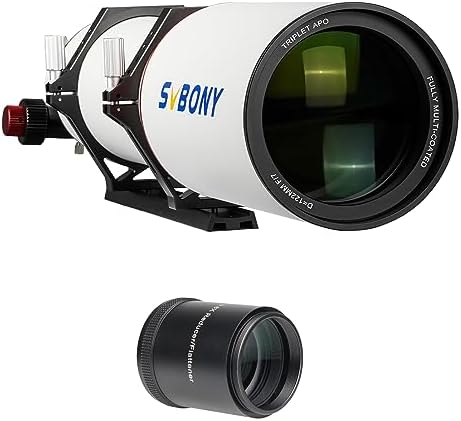
This model features a larger 122mm aperture which gathers significantly more light for detailed images. The triplet apochromatic lens structure reduces chromatic aberration and enhances sharpness. While it lacks a rating, the specs suggest high potential for deep sky photography.
We may earn a commission when you buy through this link, at no additional cost to you.
The inclusion of a comfortable carrying handle on the dovetail base makes moving this large-aperture telescope easy. The 203mm guide scope mount bracket facilitates easy installation of accessories. It is designed for travel and observation comfort.
The higher limiting magnitude allows viewing of fainter deep sky objects. However, as a larger scope, it requires a stable mount to utilize its capabilities. This is a trade-off for the increased light gathering power.
For observers needing more light without a huge system, the 122mm offers a balanced solution. Its portability features like the handle make it surprisingly easy to manage during transport.
A 122mm aperture allows for detailed images of deep sky objects and fainter targets.
The portable handle and carrying case compatibility make moving the OTA convenient.
We may earn a commission when you buy through this link, at no additional cost to you.
This premium bundle includes both a field flattener and a focal reducer for wide-field imaging. The 122mm aperture paired with the 0.8X reducer creates an ideal setup for deep sky objects. The perfect rating indicates user satisfaction with this high-performance kit.
We may earn a commission when you buy through this link, at no additional cost to you.
The field flattener corrects curvature defects improving edge quality for shooting targets. The triplet structure ensures clarity and sharpness. The extinction measures minimize light reflection for better contrast in images.
While the price is high, the included optical elements save significant money over separate purchases. The weight makes it less portable, but the optical performance justifies it. This is a dedicated setup for serious photographers.
If you need a wide-field imaging system with maximum correction, this bundle is a top choice. It offers a complete solution for capturing large deep sky targets with minimal distortion.
The 0.8X focal reducer allows for a wider field of view with corrected curvature.
Internal light barriers and coatings ensure high-contrast images for deep sky photography.
We may earn a commission when you buy through this link, at no additional cost to you.
This kit bundles the 122mm aperture OTA with a focal reducer and carrying handle for convenience. The triplet apochromatic structure ensures high clarity and sharpness. It offers a robust solution for those needing more light gathering in a portable design.
We may earn a commission when you buy through this link, at no additional cost to you.
The inclusion of the 0.8X focal reducer helps manage field curvature and speed up imaging. The comfortable carrying handle and dovetail base make moving the large telescope easy. It is designed for travel and observation convenience.
While specific ratings are not yet available, the component quality aligns with other successful models. The larger aperture is a major advantage for deep sky imaging. This kit simplifies setup for photographers.
For those wanting a larger aperture with essential accessories included, this kit provides value. It balances performance with practicality for advanced observing and imaging tasks.
The included focal reducer and handle simplify setup and transport for field use.
The 122mm aperture offers significant light gathering for detailed deep sky views.
We may earn a commission when you buy through this link, at no additional cost to you.
This kit combines the 80mm OTA with a specific field flattener to correct field curvature. The fully multilayer coated lens ensures bright and clear images. The SV209 flattener addresses fringe field curvature for better image quality.
We may earn a commission when you buy through this link, at no additional cost to you.
The carrying handle improves safety and ease of installation. The compact design makes it suitable for transport. The high transmission coatings reduce internal reflections for sharper results.
While this is a smaller aperture, the included flattener makes it excellent for specific targets. It is a convenient package for those who need field correction without extra work. The inverted image is normal for eyepiece use.
For photographers needing reliable field correction on a budget, this kit is a solid choice. It balances optical performance with practical features for easy deployment.
The SV209 field flattener ensures sharp edges across the entire sensor area.
Fully multilayer coated lenses reduce reflections for brighter and clearer views.
We may earn a commission when you buy through this link, at no additional cost to you.
This bundle includes the 122mm APO OTA along with a guide scope and telescope camera for full tracking. The camera features a 1.23-megapixel CMOS sensor optimized for autoguiding. It simplifies the setup for those needing guided imaging without buying parts separately.
We may earn a commission when you buy through this link, at no additional cost to you.
The compact and highly sensitive camera allows tight tracking of faint guide stars. Compatible with mainstream auto guiding systems, it works with common mounts. The 122mm aperture ensures detailed views of deep sky objects.
While the camera resolution is modest, it serves well for guiding. For main imaging, users may prefer a dedicated sensor. This bundle is best for those starting guided astrophotography.
If you want a complete guided system out of the box, this kit offers great convenience. It provides the essential components needed to begin tracking and imaging deep sky targets effectively.
The included guide scope and camera allow for accurate tracking of celestial targets.
The high peak QE of 80% ensures reliable tracking even with faint guide stars.
We may earn a commission when you buy through this link, at no additional cost to you.
Selecting the right apochromatic refractor depends on your specific imaging and observing needs. Understanding the key factors ensures you invest in a telescope that delivers the best results.
The optical design determines how well the telescope corrects chromatic aberration. Triplets with ED glass are preferred for high-contrast images with minimal color fringing. Air-spaced designs help reduce internal reflections and thermal issues.
Look for S-FPL51 or FCD1 HOYA glass for superior correction. Triplets generally outperform doublets for deep sky imaging.
Aperture affects light-gathering power and resolution. Larger apertures like 100mm+ allow better views of faint objects. Smaller apertures around 70mm-80mm offer portability and affordability.
Choose an aperture that balances your needs for detail with the weight you can manage during transport.
Focal ratio determines the image scale and exposure time. Lower ratios like f/6 are faster for deep sky imaging while higher ratios like f/7 suit planetary detail. Consider what targets you plan to image most frequently.
Select a ratio that matches your camera sensor and desired image framing.
A reliable focuser is crucial for sharp images. Dual-speed focusers allow precise adjustments for critical focus. Weight and stiffness matter when carrying heavy cameras or filters.
Ensure the focuser is sturdy enough to hold your equipment without slipping.
Back focus determines how many accessories you can attach between the scope and camera. Standard lengths like 55mm allow flexibility for flattener and reducers. Check if the scope requires extra extension tubes.
Choose models with sufficient back focus for your planned configuration.
Many refractors require a separate flattener to correct field curvature. Bundles that include one save money and ensure compatibility. Verify if the provided flattener works with your camera size.
Always check if your chosen scope needs a flattener for edge-to-edge sharpness.
Weight and size are key for travel observers. Lighter scopes are easier to carry but may sacrifice aperture. Consider the total weight including mount and accessories.
Prioritize models with comfortable handles and compact designs if you travel often.
The tube material and finish impact durability and thermal stability. Aluminum or magnesium alloys provide strength without excessive weight. Internal baffling reduces stray light for better contrast.
Look for models with high-quality coatings and stable construction for long-term use.
Begin by allowing the telescope to reach thermal equilibrium with the outside air. This ensures the lens and tube settle for sharper views without distortion from internal heat gradients.
Attach your camera or eyepiece carefully to avoid scratching the optical surfaces. Use a field flattener if provided to ensure sharp stars across the entire field of view.
Store the telescope in a dry place to prevent dew and fungal growth on the lens. Regularly check collimation and clean the exterior gently without touching the glass surfaces.
An apochromatic refractor uses specialized ED glass and triplet lens designs to eliminate chromatic aberration. This results in sharper images with true colors, whereas standard refractors often show color fringing around bright objects.
Yes, most refractors produce curved fields that blur stars at the edges. A field flattener corrects this curvature to ensure sharp images across the entire sensor. Bundles often include one for convenience.
Absolutely. These telescopes are designed to perform well for both visual observation and astrophotography. Their color correction benefits both naked-eye viewing and capturing detailed photos of celestial objects.
Air-spaced optics prevent internal reflections and reduce thermal stress on lens elements. This design helps maintain sharp focus and minimizes stray light inside the optical path for clearer views.
Back focus determines how many accessories you can connect between the telescope and camera. Adequate back focus allows for flexible setups including filter wheels and focal reducers without extra extensions.
Most refractors come with a dovetail plate for mounting on a mount but without a focuser. It is often more flexible to choose a model with your preferred focuser included or sold separately.
Beginners often start with 70mm to 80mm apertures as they are lightweight and easy to manage. Larger apertures provide more detail but require more stable mounts and careful setup.
Keep the lens cap on when not in use and store in a dry environment. Avoid touching the glass and clean only with approved optics cleaning tools to prevent scratches and damage.
The ten models reviewed offer diverse options for every level of enthusiast. Whether you prioritize portability or maximum aperture, there is an apochromatic refractor that fits your needs.
Consider your primary goals such as deep sky imaging or planetary observation when making a selection. Opt for models with ED glass and reliable focuser designs for the best results.
Always verify current availability and accessories before purchasing since bundles and prices may change. Investing in the right telescope will enhance your stargazing experience significantly.