
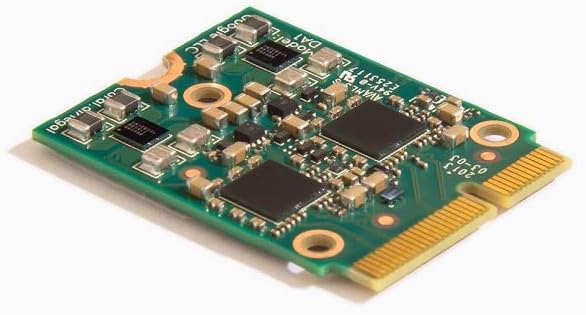
G650-04686-01 Coral M.2 Accelerator B+M Key
5.0Editor score
High-speed ML inferencing
Works with Debian Linux
Supports TensorFlow Lite
This comprehensive guide compares the top M2 accelerator cards for AI inference and edge computing, helping you choose the right hardware for your specific
M2 accelerator cards are essential components for modern computing systems that require enhanced artificial intelligence processing capabilities without relying on cloud resources. These compact devices plug directly into your motherboard to provide dedicated hardware acceleration for machine learning tasks, video analytics, and complex computational workloads efficiently.
We evaluated ten leading M2 accelerator cards based on their processing power, compatibility with existing systems, energy efficiency, and overall value for developers and enterprise users alike. Our analysis focuses on real-world performance metrics, software support ecosystems, and the ability to handle demanding inference workloads across various operating environments effectively.
Each selection in this guide highlights specific strengths and ideal use cases to help you match the right accelerator to your project requirements. Please note that product availability and pricing can change frequently, so verify current details with the retailer before making your final purchasing decision today.
5.0Editor score

4.3Editor score

4.6Editor score
This detailed comparison table allows you to quickly assess the key specifications and capabilities of each M2 accelerator card side by side to make an informed decision for your specific computing requirements.


The MX3 M.2 AI Accelerator stands out as a top contender for users seeking high-performance edge computing capabilities in a compact form factor. With a solid rating reflecting user satisfaction, it delivers exceptional efficiency for computer vision workloads while maintaining low power requirements suitable for embedded environments.
We may earn a commission when you buy through this link, at no additional cost to you.
Its flexible integration capabilities allow seamless connection via the standard M.2 M-key slot, making it compatible with a range of modern systems including the Raspberry Pi 5 with appropriate HAT support. The comprehensive software development kit simplifies deployment, ensuring developers can quickly optimize models without complex configuration hurdles or extensive rewrites.
While the MX3 offers impressive performance, it primarily targets Linux-based ecosystems which may limit accessibility for Windows-only environments without additional virtualization layers. However, this trade-off is acceptable for most edge AI projects where Linux dominates the landscape and efficiency is prioritized over broad OS compatibility.
Developers and system integrators focused on AI vision tasks should consider this card for its balance of power and efficiency. It represents a reliable choice for production deployments where consistent performance and energy savings are critical metrics for long-term operational success and cost management.
The included SDK provides tools that reduce setup time and simplify model optimization for faster time-to-market on edge devices.
Optimized power usage ensures the card runs efficiently even in thermally constrained enclosures without needing active cooling fans.
We may earn a commission when you buy through this link, at no additional cost to you.
This accelerator card leverages two Google Edge TPU units to deliver substantial machine learning inference capabilities within a small physical footprint. It achieves a peak performance of 8 TOPS while maintaining an impressive energy efficiency rating that makes it suitable for battery-powered or thermally constrained applications.
We may earn a commission when you buy through this link, at no additional cost to you.
The dual Edge TPU design allows for parallel processing of multiple models or streams, significantly boosting throughput compared to single accelerator solutions. This architecture supports TensorFlow Lite models compiled for Edge TPU, enabling rapid deployment of pre-trained models without extensive custom engineering or heavy compute overhead.
Despite its strengths, the card relies on TensorFlow Lite compatibility which restricts flexibility for users needing broader framework support like PyTorch or ONNX directly. Additionally, the PCIe Gen2 interface may limit maximum data transfer rates compared to newer Gen3 or Gen4 alternatives in high bandwidth scenarios.
Projects requiring high-volume inference tasks with strict power budgets will benefit most from this dual-core architecture. It is particularly well-suited for edge devices where thermal management is challenging and efficiency is paramount for continuous operation without overheating concerns.
Running two TPUs simultaneously allows handling multiple vision streams without sacrificing latency or requiring multiple separate cards.
Delivering 2 TOPS per watt ensures minimal heat generation even under sustained peak workloads for extended periods.
We may earn a commission when you buy through this link, at no additional cost to you.
This Coral M.2 Accelerator offers one of the best entry points into dedicated edge AI hardware with its perfect customer rating and reliable performance. It delivers 4 TOPS of compute power using an efficient Edge TPU coprocessor that executes models like MobileNet v2 at impressive frame rates for real-time tasks.
We may earn a commission when you buy through this link, at no additional cost to you.
The card integrates seamlessly with Debian-based Linux systems, requiring minimal configuration to get started. Support for TensorFlow Lite means developers can compile existing models quickly, while AutoML Vision Edge facilitates the creation of custom classification tasks without needing extensive machine learning expertise or resources.
While it provides solid value, it lacks the dual TPU capability of higher-end options, which might limit scaling for heavy multi-stream workloads. However, for most standard inference applications, the balance of cost and capability makes it an attractive choice for budget-conscious developers and hobbyists.
Users looking for a reliable and affordable solution for prototyping or light production deployments should find this accelerator highly suitable. Its strong community support and clear documentation ensure that implementation challenges are minimized for teams new to edge computing environments.
Pre-built drivers and support for Debian systems streamline setup and reduce time spent on configuration issues.
AutoML Vision Edge simplifies the process of building accurate custom models without deep coding knowledge.
We may earn a commission when you buy through this link, at no additional cost to you.
While primarily designed for storage and networking, this QNAP expansion card provides a versatile platform that can host M.2 NVMe SSDs for high-performance caching alongside network acceleration. It is ideal for environments where data throughput and storage expansion are just as critical as compute power for efficient workflows.
We may earn a commission when you buy through this link, at no additional cost to you.
The inclusion of a 10GbE port allows for rapid data transfer to connected systems, ensuring that storage bandwidth does not become a bottleneck. Compatibility with QNAP QTS, QuTS hero, Windows, and Linux OS makes it a flexible addition to diverse infrastructure setups without requiring hardware replacements.
It lacks dedicated AI acceleration silicon compared to other products on this list, meaning it is not optimized specifically for machine learning inference tasks. However, for users seeking to upgrade server performance through storage and networking improvements, this card offers exceptional value and robust feature integration.
System administrators managing NAS or server infrastructure will appreciate the dual focus on speed and connectivity. It serves as a practical upgrade path for improving overall system responsiveness and data handling capabilities without significant architectural changes to existing hardware.
Connecting NVMe SSDs for caching drastically improves read/write speeds for frequently accessed datasets.
The 10GbE port ensures network bottlenecks are minimized during large file transfers or backups.
We may earn a commission when you buy through this link, at no additional cost to you.
This adapter card targets users requiring maximum storage density and speed, leveraging the latest PCIe 5.0 interface to deliver unprecedented bandwidth for data-heavy applications. It accommodates up to four M.2 NVMe drives in a single slot, making it a powerful tool for workstations needing extensive local storage resources.
We may earn a commission when you buy through this link, at no additional cost to you.
The native support for mainstream operating systems ensures broad compatibility with both Intel and AMD platforms as well as ARM architectures. This flexibility allows deployment in diverse environments without specialized configuration, ensuring that the hardware can be integrated into existing systems with minimal friction.
Although it lacks dedicated AI accelerators, its sheer storage bandwidth can support datasets that feed into high-end CPU or GPU processing pipelines. Users focused on raw storage throughput will find this card unmatched in its class, particularly for content creation or data analytics workflows.
It is recommended for systems equipped with PCIe 5.0 slots that need to maximize data transfer capabilities. While not an AI accelerator itself, it complements high-performance computing setups by removing storage bottlenecks that often limit overall system efficiency and speed.
Supporting PCIe 5.0 ensures the card remains relevant as next-generation drives become more widely available.
Hosting four drives in one slot saves PCIe lanes for other critical components like GPUs.
We may earn a commission when you buy through this link, at no additional cost to you.
This adapter board transforms a single PCIe slot into a dual-TPU workstation, allowing you to double your inference capacity without occupying multiple motherboard slots. It is designed specifically for Coral M.2 Accelerator cards, providing a structured way to scale edge AI power within standard PC form factors.
We may earn a commission when you buy through this link, at no additional cost to you.
The integrated heatsink ensures that both TPU modules remain within safe operating temperatures during sustained loads, preventing thermal throttling and maintaining consistent performance. Its lane splitter design enables the use of two accelerators simultaneously on a single x4 PCIe slot, optimizing motherboard resource usage effectively.
Scaling requires purchasing two separate Coral accelerators, which may increase initial costs, but it offers a flexible path to higher throughput without needing a full system upgrade. This makes it an excellent option for users who have already invested in Coral hardware and need to expand capacity quickly.
For teams running multiple models or high-volume video analytics, this adapter provides a cost-effective way to multiply processing power. It balances performance gains with hardware conservation, making it a practical solution for developers who need more compute without replacing their entire workstation.
The heatsink design keeps both accelerators cool enough to avoid performance drops during continuous inference tasks.
Using one slot for two cards frees up PCIe lanes for other expansion cards like GPUs or network adapters.
We may earn a commission when you buy through this link, at no additional cost to you.
This ASUS card delivers massive storage bandwidth through four PCIe 5.0 M.2 slots, making it ideal for high-performance workstations that demand fast access to large datasets. Its server-grade PCB design and robust thermal solution ensure stability and reliability under heavy loads.
We may earn a commission when you buy through this link, at no additional cost to you.
The integrated cooling solution includes a large heatsink and active fan to keep NVMe drives at optimal temperatures, preventing thermal throttling during extended operations. This attention to thermal management makes it a reliable choice for environments where sustained high-speed transfers are required without system slowdowns.
Support for RAID functions allows users to create bootable arrays across multiple drives for improved redundancy or performance. While it does not include AI-specific hardware, its bandwidth capabilities can significantly benefit data pipelines that feed into AI models running on other system components.
Users building professional workstations or servers should consider this card for its combination of speed, cooling, and reliability. It provides a solid foundation for data-heavy tasks where storage performance directly impacts overall workflow efficiency and processing times.
Active fan cooling prevents overheating that can reduce drive performance during long periods of heavy data transfer.
RAID support enables users to balance speed and data redundancy according to their specific project requirements.
We may earn a commission when you buy through this link, at no additional cost to you.
The Hailo-8 module delivers industry-leading AI processing power with 26 TOPS, making it a top choice for demanding inference workloads on edge devices. Its ability to process multiple streams simultaneously while maintaining low power consumption ensures it remains practical for continuous deployment in various environments.
We may earn a commission when you buy through this link, at no additional cost to you.
Support for major frameworks like TensorFlow, ONNX, PyTorch, and Keras provides flexibility for developers who need to run diverse models without extensive conversion efforts. Linux and Windows compatibility further broadens its utility, enabling use across a wider range of project configurations and system architectures.
The premium performance comes with a higher cost, but the efficiency and throughput justify the investment for professional applications where accuracy and speed are critical. Users should ensure their workflow benefits from the high TOPS rating to maximize the return on this hardware investment.
Advanced users and enterprise teams requiring high-fidelity AI inference will find this module unmatched in its class. It represents a significant step up in capability, offering the raw power needed for complex computer vision and sensor fusion tasks at the edge.
Support for multiple AI frameworks means you can deploy models from various sources without heavy modification.
High TOPS with low power ensures sustained high-speed processing without thermal issues or high energy costs.
We may earn a commission when you buy through this link, at no additional cost to you.
This Coral module brings reliable machine learning acceleration to embedded systems with a compact A+E key interface. It offers 4 TOPS of performance using an Edge TPU, making it ideal for applications needing efficient object detection or classification without large power draws.
We may earn a commission when you buy through this link, at no additional cost to you.
Its wide OS support includes Linux Debian and Windows 10, which simplifies deployment for developers working across different platforms. Industrial-grade reliability ensures it can handle harsh environmental conditions, making it suitable for field deployments in factories or outdoor monitoring systems.
The power-efficient design supports 2 TOPS per watt, minimizing energy use and heat generation. While it does not match the raw power of multi-TPU solutions, its stability and broad compatibility make it a trustworthy option for consistent edge inference tasks.
Embedded developers building custom hardware or IoT devices will find this module highly compatible with their needs. It provides a proven path to adding AI capabilities to existing systems without needing significant redesigns or specialized operating systems.
Built to withstand wider temperature ranges ensures reliable operation in challenging environments without failure.
Supporting both Linux and Windows makes it easier to integrate into diverse projects without custom drivers.
We may earn a commission when you buy through this link, at no additional cost to you.
This adapter board is designed exclusively for Coral M.2 Accelerator modules with dual TPU configurations, providing a stable platform for high-performance inference. It features dedicated slots that ensure proper alignment and secure connections for reliable operation in production environments.
We may earn a commission when you buy through this link, at no additional cost to you.
The bidirectional Gen2 bandwidth supports efficient data flow between the card and the host system, ensuring that inference tasks are not slowed by interface bottlenecks. The included stainless steel mounting screw ensures the PCB remains fixed and vibration-resistant, which is critical for industrial or mobile use cases.
While limited to PCIe Gen2 speeds, this adapter focuses on reliability and compatibility with the Coral ecosystem. It simplifies the installation process and ensures that your hardware investment is protected with secure mounting and optimized slot design for consistent performance.
Teams deploying Coral TPUs for production should prioritize this adapter for its robust design and specialized fit. It eliminates the guesswork of wiring and mounting, ensuring that your inference workload remains stable and secure under varying operating conditions.
The stainless screw prevents accidental dislodging during transport or in high-vibration environments.
Slots are tailored for Coral modules to ensure maximum reliability without signal interference.
We may earn a commission when you buy through this link, at no additional cost to you.
Selecting the right M2 accelerator card requires understanding your specific workload needs, system compatibility, and power constraints.
Processing power is measured in TOPS (Tera Operations Per Second) and determines how many AI operations the card can perform in a second. Higher TOPS are crucial for complex models or high-resolution video streams, while lower TOPS may suffice for simple classification tasks.
Choose a card with enough TOPS to handle your largest model without lag or dropped frames.
M2 cards come in various key configurations like B-key, M-key, or A+E key, which dictate which slots they can physically and electrically connect to. Always check your motherboard or device specifications before purchasing to ensure a physical fit.
Ensure the card key matches your system slot to prevent installation issues or compatibility errors.
Different accelerators support different AI frameworks such as TensorFlow Lite, ONNX, PyTorch, or Keras. Some are optimized for specific frameworks, while others offer broader compatibility. If you already have a trained model, ensure the accelerator can run it without heavy conversion.
Prioritize cards that support the framework your models use to reduce development time and complexity.
Edge devices often have limited power supplies or battery constraints. Look for accelerators that offer high performance per watt to avoid overheating or the need for additional cooling fans.
Select units with low wattage consumption to ensure stable performance without straining your power system.
High-performance chips generate heat during sustained workloads. Cards with integrated heatsinks or active cooling fans will maintain consistent performance by preventing thermal throttling during long tasks.
Ensure the card has adequate cooling solutions for your enclosure and ambient temperature conditions.
Most M2 accelerators work best on Linux systems, particularly Debian or Ubuntu, though some offer Windows support. Verify that your target operating system has official drivers and SDK support to avoid compatibility hurdles.
Choose a card with drivers for your OS to simplify installation and ensure long-term support.
PCIe generation (Gen2, Gen3, Gen5) affects data transfer speed between the accelerator and the CPU. Faster interfaces prevent bottlenecks when feeding large datasets to the AI processor.
Opt for cards with PCIe Gen3 or higher if your system supports it to maximize data throughput.
Consider whether you might need to add more accelerators later. Some systems support dual TPU configurations through adapters or lane splitting, allowing you to scale inference power without replacing the motherboard.
Plan for future needs by selecting hardware that supports multi-device setups or upgrade paths.
Begin by verifying that your system supports the required M2 key and PCIe lane configuration. Install the card into the slot until it clicks securely and fasten it with the appropriate mounting screws to prevent movement.
Install the latest drivers and SDK from the manufacturer's website to ensure optimal compatibility with your operating system. Follow the official documentation to compile and deploy your models for the specific accelerator hardware.
Monitor thermal performance using provided tools during initial tests. Ensure airflow around the card is sufficient, and clean dust from heatsinks regularly to maintain efficiency and prevent overheating during long-term use.
Many M2 accelerators primarily support Linux but some provide Windows drivers for basic functionality. Always check the manufacturer's documentation for official OS support before purchasing to ensure you can run your software stack.
Yes, using adapter cards or PCIe lane splitting, you can install multiple accelerators. However, ensure your motherboard provides enough PCIe lanes to support all devices without bottlenecks affecting performance.
M2 slots are compact interfaces typically used for SSDs and accelerators on the motherboard. PCIe slots are larger expansion slots for full-length cards. M2 accelerators use the M2 interface but still communicate over PCIe lanes.
No, an M2 accelerator is designed to handle AI tasks independently. It can reduce the load on your main CPU or GPU, making it useful for systems without dedicated graphics cards.
Check your motherboard manual for M2 slot keys (B, M, or A+E) and PCIe version. Also ensure your OS has the necessary drivers installed for the specific accelerator model you are considering.
Yes, especially under load, but most come with heatsinks to manage heat. Proper ventilation in your case or device is critical to ensure they do not overheat or trigger thermal throttling during operations.
No, these are designed for machine learning inference not graphics rendering. They do not support gaming workloads or graphics APIs like DirectX or OpenGL.
TensorFlow Lite is a lightweight version of TensorFlow designed for mobile and edge devices. Many M2 accelerators are optimized to run these models efficiently for fast AI inference.
We have explored ten powerful M2 accelerator cards that offer diverse solutions for edge AI and inference needs. Whether you need the high performance of the Hailo-8 or the budget-friendly Coral options, each card brings unique advantages tailored to specific workloads.
Prioritize compatibility with your current hardware and software stack to ensure smooth integration. Choosing the right form factor and framework support will save you significant time during development and deployment phases.
Prices and availability are subject to change rapidly in the hardware market. Always verify current pricing and stock levels with your retailer before making a final purchase to ensure you get the best value available today.