
Canon EF 75-300mm f/4-5.6 III
4.7Editor score
Affordable entry-level option
Lightweight portable design
Wide compatibility with DSLRs
This guide compares the top Camera Lens for Long Distance Wildlife to help you choose the right telephoto zoom for capturing sharp images of birds and animals
Capturing wildlife requires powerful optics that bring distant subjects closer without sacrificing clarity. A good telephoto lens offers the reach and stability needed for sharp images in natural settings.
We evaluated ten top-rated lenses based on zoom range, image stabilization, autofocus speed, and build quality. Each option suits different camera systems and budget levels for outdoor photographers.
Every pick highlights key features and trade-offs to match your specific shooting style. Note that availability and pricing vary by retailer and may change over time.
4.7Editor score
4.7Editor score

4.0Editor score
The following table presents a side-by-side overview of all ten lenses. Review each model's focal range, mount type, and stabilization features to find the best fit for your wildlife photography needs.



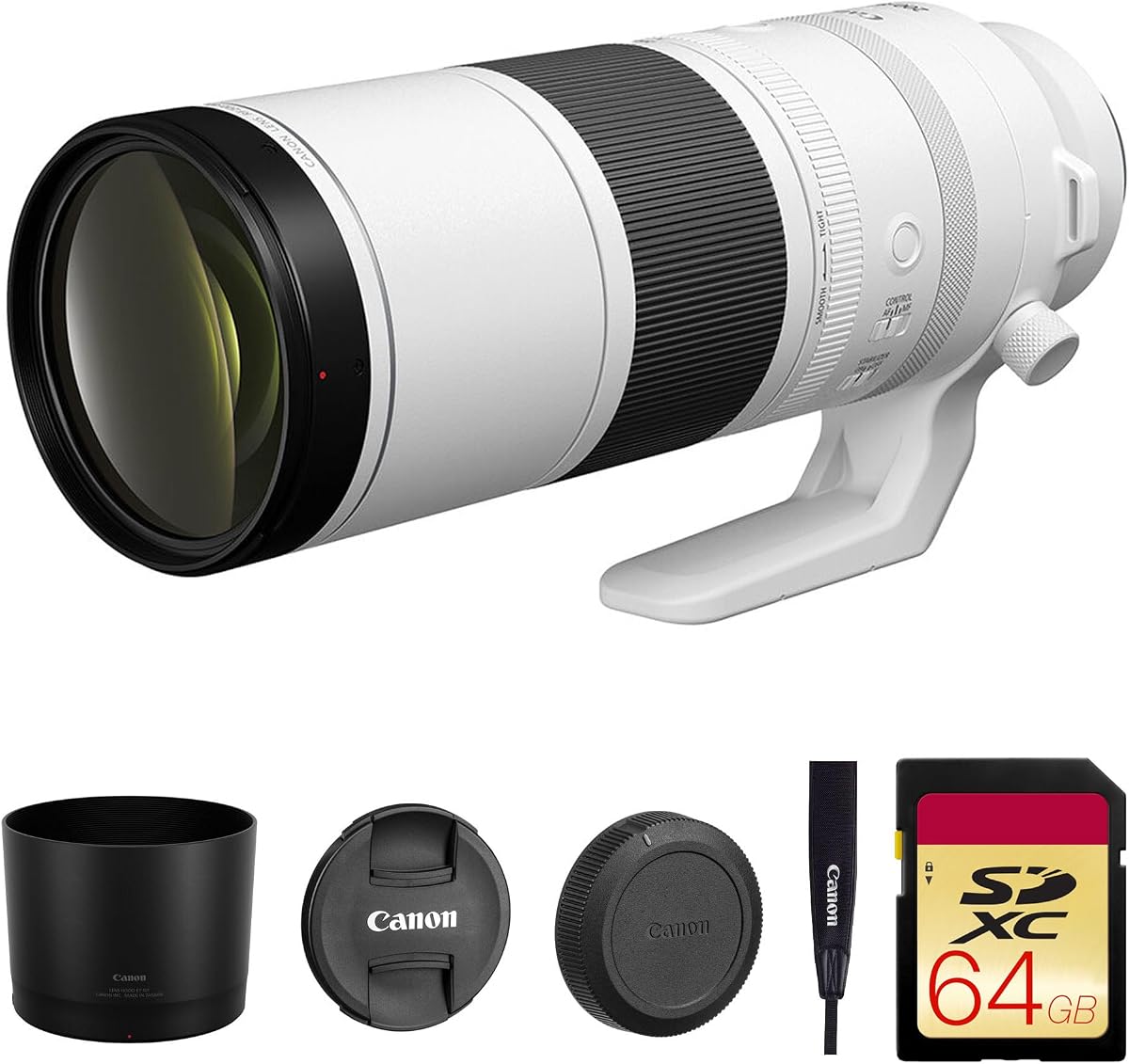
This lens stands out as a top choice for wildlife photographers seeking extreme reach on mirrorless systems. With a 4.7 rating, it balances performance and portability remarkably well.
We may earn a commission when you buy through this link, at no additional cost to you.
The built-in stabilization supports handheld shooting even at full extension. USM autofocus delivers quiet and precise tracking for moving animals in the field.
Trade-offs include a narrower maximum aperture at long focal lengths and a higher cost compared to manual options. These are acceptable given the optical quality and convenience.
Ideal for serious wildlife shooters using RF mount cameras, this bundle offers a reliable solution for capturing distant subjects with clarity and ease.
The range from 200mm to 800mm provides unmatched adaptability for varying distances without changing lenses.
Image stabilization minimizes camera shake, allowing crisp shots even when shooting without a tripod in the field.
We may earn a commission when you buy through this link, at no additional cost to you.
This lens delivers powerful zoom capabilities tailored for modern mirrorless cameras. Its design prioritizes mobility while maintaining strong optical performance for nature subjects.
We may earn a commission when you buy through this link, at no additional cost to you.
The 200mm to 800mm range covers most wildlife scenarios. Compatibility with extenders adds even more reach for distant action shots.
Manual focus is not available and the aperture narrows significantly at 800mm. These constraints are minor compared to the benefits of autofocus and stabilization.
Photographers seeking a lightweight super-telephoto option will find this lens meets professional demands with impressive ease and sharpness.
Extendable compatibility allows users to push focal lengths further for capturing extremely distant wildlife without extra lenses.
The lightweight design ensures comfort during long shoots, reducing fatigue while tracking active animals in natural habitats.
We may earn a commission when you buy through this link, at no additional cost to you.
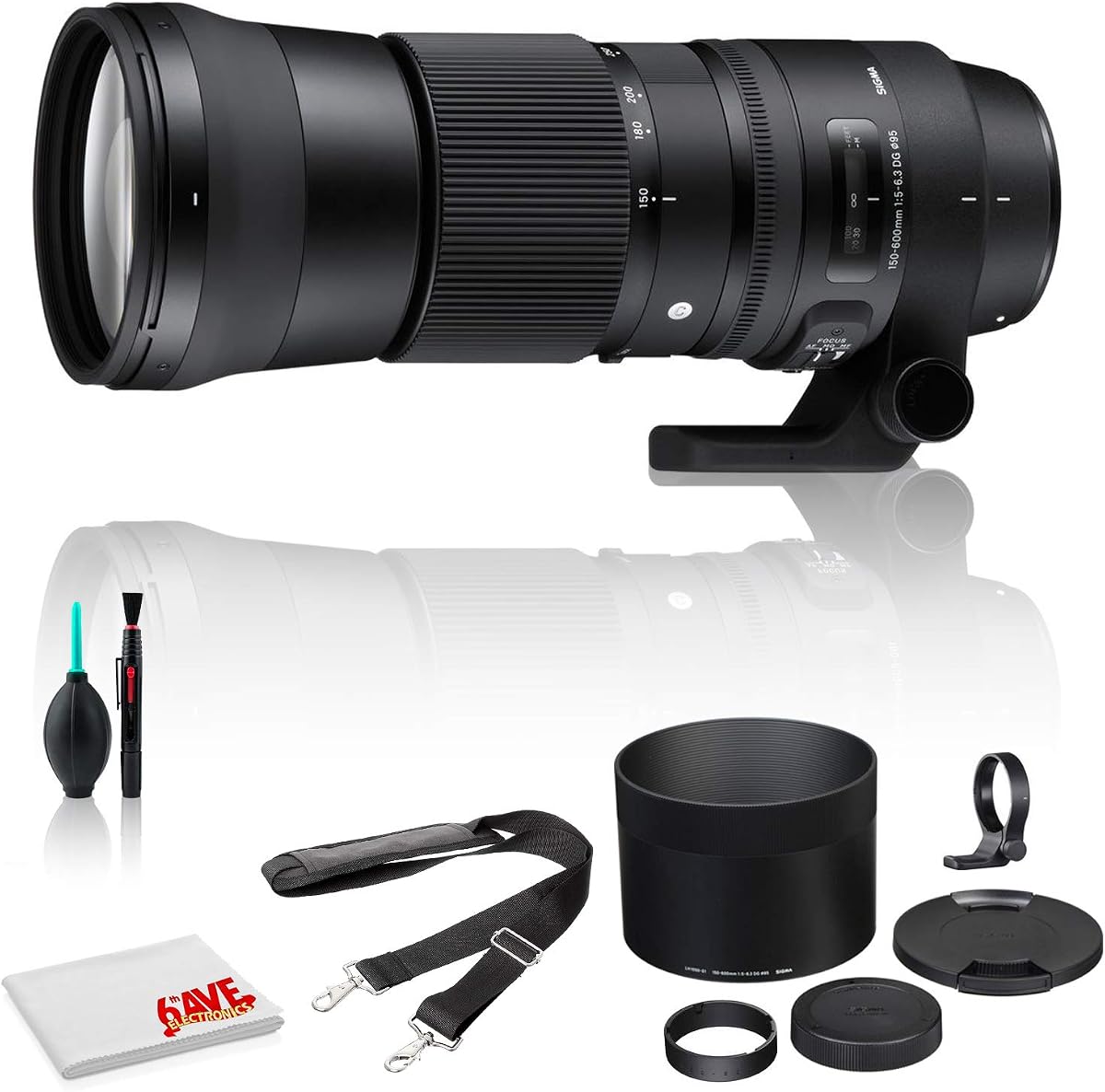
Designed for Canon EF mount users, this lens provides extensive focal range for wildlife and sports. It features robust optical construction to ensure sharp images in varied conditions.
We may earn a commission when you buy through this link, at no additional cost to you.
The 150mm to 600mm zoom spans versatile territory. Optical stabilization helps maintain clarity when shooting handheld in outdoor environments.
Trade-offs include increased weight and limited aperture at long focal lengths. These are standard for telephoto zooms in this class.
For photographers already invested in the EF system, this lens offers reliable performance and value with added cleaning accessories included.
Special low-dispersion glass minimizes chromatic aberrations for cleaner images and better color accuracy across the zoom range.
The optical stabilizer reduces camera shake, improving handheld shooting success even at maximum focal lengths.
We may earn a commission when you buy through this link, at no additional cost to you.
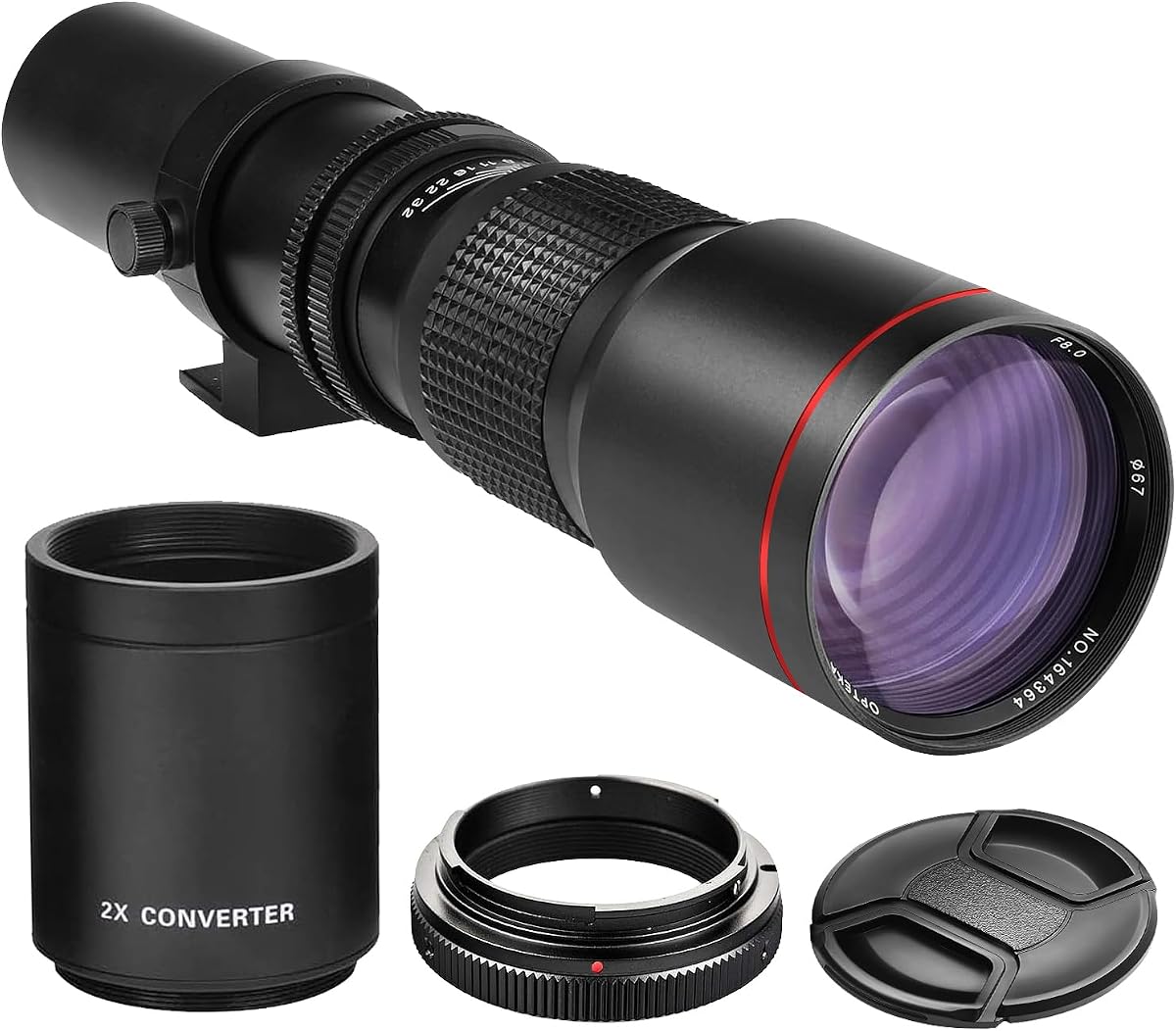
This lens offers extreme magnification at an entry-level price. It suits photographers comfortable with manual focus and seeking maximum reach without high costs.
We may earn a commission when you buy through this link, at no additional cost to you.
The 500mm to 1000mm focal range brings distant subjects closer. A teleconverter included in the bundle extends reach further for challenging shots.
Manual focus demands patience and practice. This can be limiting for fast-moving subjects compared to autofocus alternatives.
Budget-conscious users prioritizing focal length over convenience will appreciate this lens as a practical tool for static wildlife photography.
With up to 1000mm reach, this lens bridges gaps that standard telephoto lenses cannot, ideal for distant animals.
Its low price makes high magnification accessible to beginners without compromising on basic optical clarity.
We may earn a commission when you buy through this link, at no additional cost to you.
A classic choice for DSLR shooters, this L-series lens combines professional optics with versatile focal range. It excels in both wildlife and sports scenarios.
We may earn a commission when you buy through this link, at no additional cost to you.
Fluorite and UD elements reduce aberrations for sharp imagery. Optical stabilization ensures steady shots even when handheld at full zoom.
The price reflects its premium positioning and might not suit casual shooters. Weight also requires sturdy support for extended use.
Prospective buyers needing reliable performance and flexibility will find this lens delivers consistent results and durability in the field.
Advanced elements like fluorite ensure superior sharpness and color fidelity across the zoom range.
Ring-type USM motors provide rapid autofocus tracking crucial for capturing animals in motion without noise.
We may earn a commission when you buy through this link, at no additional cost to you.
This lens offers unmatched zoom reach for its price range. It is designed for users who prioritize magnification over autofocus convenience.
We may earn a commission when you buy through this link, at no additional cost to you.
The 420mm to 1600mm focal range allows for extreme close-ups of distant subjects. HD glass ensures decent clarity despite the manual design.
Manual focus and narrower aperture may slow down workflow in fast conditions. These trade-offs are acceptable given the low entry cost.
Beginners exploring telephoto photography on a tight budget will find this lens a functional option for static nature scenes.
With up to 1600mm reach, this lens captures subjects that appear impossible to photograph without specialized equipment.
The low price point removes financial barriers for those wanting to experiment with long-range photography.
We may earn a commission when you buy through this link, at no additional cost to you.
Tailored for EOS R series mirrorless bodies, this lens balances reach with portability. It serves as a practical daily telephoto tool.
We may earn a commission when you buy through this link, at no additional cost to you.
The 100mm to 400mm range covers many wildlife scenarios. Nano USM ensures smooth and quiet focus tracking during shooting.
Max zoom falls short of 800mm alternatives, and aperture drops at long ends. These limits are offset by its small size and low cost.
Travel-focused wildlife photographers using RF mount will find this lens an efficient companion for capturing distant subjects with ease.
Compact dimensions make it easy to carry for long treks where larger lenses become cumbersome.
Nano USM delivers quick and silent adjustments that are essential for candid animal photography.
We may earn a commission when you buy through this link, at no additional cost to you.
This model is a standard entry-level telephoto for Canon DSLR users. It provides basic zoom capabilities without advanced features.
We may earn a commission when you buy through this link, at no additional cost to you.
The 75mm to 300mm range offers modest reach for wildlife. Lightweight construction ensures comfort during handheld use.
The absence of stabilization can challenge handheld shots at long focal lengths. This is a known limitation at this price point.
For beginners needing a simple telephoto option, this lens offers an accessible way to practice framing distant subjects.
Its small size allows photographers to carry it easily alongside a kit lens for general outdoor trips.
Smooth zoom rings enable quick adjustments to framing when tracking active animals in the field.
We may earn a commission when you buy through this link, at no additional cost to you.
This lens is a favorite among Nikon DSLR owners seeking solid telephoto reach. It balances performance and value for wildlife shooters.
We may earn a commission when you buy through this link, at no additional cost to you.
The 200mm to 500mm range offers flexibility for varied distances. Vibration Reduction helps keep images steady in challenging lighting.
Manual override and extra weight are minor drawbacks. These are standard for super-telephoto zooms of this type.
Nikon users looking for a reliable bundle with filters and accessories will find this lens a practical and effective choice.
VR system stabilizes images, allowing sharper shots when shooting without a tripod in low light.
Includes filters and cleaning kits, offering added convenience for outdoor photography sessions.
We may earn a commission when you buy through this link, at no additional cost to you.
This renewed version provides access to a popular telephoto at a lower cost. It suits budget-focused buyers needing basic zoom performance.
We may earn a commission when you buy through this link, at no additional cost to you.
The DC autofocus motor ensures reasonable focus speed. Smooth zooming improves handling during shooting.
Condition depends on previous use and quality checks. Buyers should verify testing reports before purchase.
For cost-conscious photographers willing to buy pre-owned, this lens delivers solid performance and ease of use.
Renewed units offer significant savings while retaining key functionalities needed for wildlife photography.
The DC autofocus motor provides dependable performance without the noise of older mechanical systems.
We may earn a commission when you buy through this link, at no additional cost to you.
Selecting the right lens involves weighing several critical factors to match your camera system and shooting style.
The focal length determines how close your subjects appear. Wildlife photographers often need 300mm or more to capture distant animals safely.
Choose a zoom range that spans from wide to long for flexibility across various distances in the field.
Ensure the lens fits your camera body mount. RF and EF mounts differ, and using adapters may affect performance.
Select a lens designed for your specific system to avoid compatibility issues during your shoots.
Image stabilization reduces camera shake, crucial for handheld shooting at long focal lengths. Optical stabilization inside the lens is standard.
Prioritize lenses with built-in stabilization for sharper images when using a tripod is not practical.
Fast and quiet autofocus is essential for tracking moving animals. Motors like USM or STM provide quick response times.
Look for autofocus systems that operate smoothly without noise to avoid spooking wildlife.
Long telephoto lenses can be heavy. Consider how much weight you can carry during long treks or outdoor excursions.
Lighter lenses reduce fatigue but may trade-off some optical quality or reach.
A wider aperture allows more light in low-light conditions but increases cost and weight. Most zoom lenses have variable apertures.
Balance aperture needs with budget constraints to suit your typical shooting environment.
Weather-sealed construction protects against dust and moisture during outdoor shoots. Higher-end models often include these features.
Invest in durable builds if you plan to shoot in harsh or variable weather conditions regularly.
Prices range from entry-level manual lenses to premium autofocus options. Determine your budget before comparing features.
Balance cost with necessary features to find a lens that meets your performance requirements.
Always mount your lens securely on the camera and check for proper alignment before starting your shoot. Use a sturdy tripod or monopod for heavy telephoto lenses to reduce shake.
Keep the front and rear elements clean using a soft brush and microfiber cloth. Store the lens in a dry case with silica packs to prevent moisture damage.
Avoid exposing the lens to extreme temperatures or direct sunlight for prolonged periods. Regularly update camera firmware to ensure optimal autofocus and stabilization performance.
A minimum of 300mm is recommended for wildlife photography to ensure subjects appear close. Many professionals prefer 600mm or longer for detailed shots of distant animals.
While stabilization helps handheld use, a tripod is ideal for heavy lenses to reduce fatigue and ensure sharp images. Monopods offer a compromise for mobility.
Manual focus requires practice and is less ideal for rapidly moving animals. However, budget manual lenses work well for static subjects like birds perched on branches.
Yes, EF lenses work on RF mirrorless bodies using an adapter. However, native RF lenses offer better integration and size efficiency for newer camera systems.
Minimize lens changes in dusty environments. Use UV or protective filters to keep the front element clean and reduce exposure of internal components.
Clarity depends on focal length, aperture size, and stabilization quality. Stable camera support and high-quality glass elements also play key roles in sharp images.
This guide highlighted ten lenses with unique strengths for different needs. The RF 200-800mm leads in versatility, while budget options offer accessibility.
Consider your camera mount, desired reach, and handling preferences when making a decision. Balancing performance with practicality ensures better results.
Always check current availability and pricing before purchase since market conditions change frequently. Proper research will help you find the perfect lens for your next wildlife adventure.