
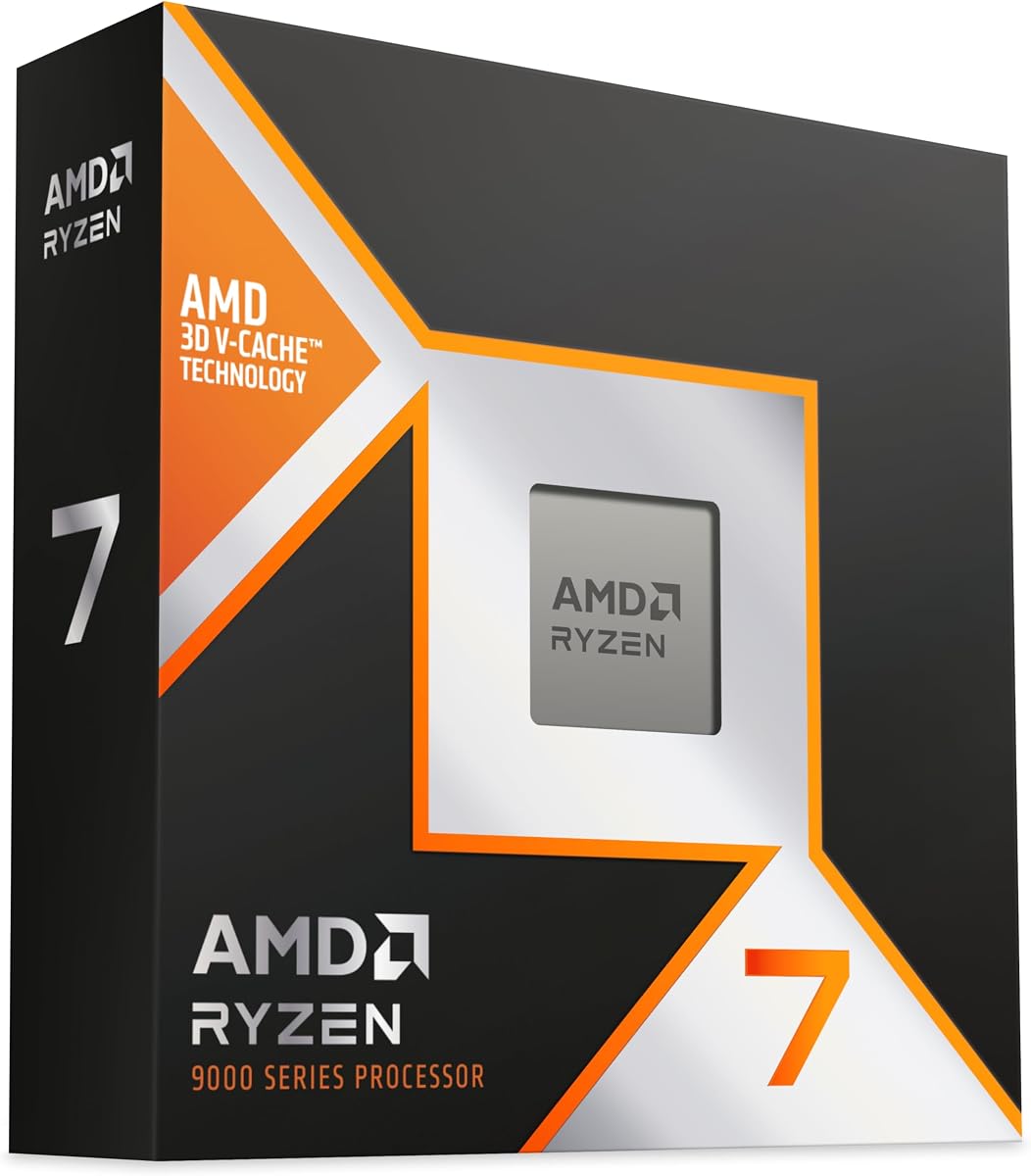
AMD Ryzen 7 7800X3D
4.8Editor score
96MB L3 cache for speed
5nm process technology efficiency
Reliable multitasking performance
This guide compares the top CPUs for Machine Learning, evaluating performance, core counts, and AI acceleration to help you choose the right processor for your
Selecting the right CPUs for Machine Learning is critical for developers who need efficient local training and inference. Modern processors offer specialized cores and large memory bandwidths to handle complex models without relying solely on the cloud.
We evaluated ten top processors based on architectural efficiency, core count, cache size, and compatibility with AI software stacks. Our analysis focuses on how each unit handles heavy workloads like fine-tuning and running large language models locally.
Each pick highlights specific strengths for different use cases, from budget-friendly training to enterprise-grade supercomputer performance. Please note that prices and availability change frequently, so verify current details before making your final purchase decision.
4.8Editor score

5.0Editor score

5.0Editor score
Below is a side-by-side comparison of the ten leading processors evaluated for machine learning tasks. This table highlights key specifications to help you quickly identify which unit fits your specific workload requirements.



This unit represents the pinnacle of local AI computing. With a perfect 5.0 rating, it delivers supercomputer performance directly to your desk using the Grace Blackwell architecture.
We may earn a commission when you buy through this link, at no additional cost to you.
The key strength lies in its ability to handle massive models. Featuring 128GB of unified memory per unit and up to 1 petaFLOP of AI performance, it excels at fine-tuning and inference without cloud latency.
While the cost is significant, the trade-off is justified for professionals needing secure, rapid iteration. The compact design saves space while delivering enterprise-grade throughput.
Buy this if you require maximum local performance for prototyping and deploying AI solutions. It is the ultimate choice for serious developers and data scientists.
The Grace Blackwell architecture ensures you can run inference and training tasks with unprecedented speed on a desktop.
Built-in support for the full NVIDIA AI software stack allows for easy development and deployment workflows.
We may earn a commission when you buy through this link, at no additional cost to you.
This processor is known for its speed but holds strong value for machine learning workloads requiring parallel processing. Its Zen 5 technology brings significant gains in instructions per clock.
We may earn a commission when you buy through this link, at no additional cost to you.
With 96MB of L3 cache and up to 5.2GHz speeds, it handles complex data tasks efficiently. The high cache allows faster access to weights during inference tasks.
The main trade-off is the lack of an included cooler, which requires an additional purchase. However, the power efficiency makes it a smart choice for sustained loads.
Ideal for users who need a balanced CPU for development and testing. It offers top-tier speed without the extreme heat of some competitors.
The 96MB L3 cache ensures that data retrieval for model weights is nearly instantaneous during inference.
Zen 5 architecture allows for high performance while maintaining a manageable thermal profile for standard cases.
We may earn a commission when you buy through this link, at no additional cost to you.
This desktop processor focuses on balancing performance and efficiency for varied computing needs. It utilizes a hybrid architecture to distribute workloads intelligently across P-cores and E-cores.
We may earn a commission when you buy through this link, at no additional cost to you.
The 24 cores and 24 threads provide ample parallelism for data preprocessing tasks. With support for PCIe 5.0, it ensures future-proof connectivity for high-speed storage and accelerators.
One drawback is the lack of a thermal solution in the box. You will need to source a high-end cooler to maintain clock speeds during long training runs.
Perfect for users who need a general-purpose machine learning workstation. It combines raw speed with efficient power management for daily use.
The mix of performance and efficiency cores ensures critical AI tasks get priority while background tasks run smoothly.
PCIe 5.0 support means you can upgrade to next-gen storage or GPUs without replacing your CPU.
We may earn a commission when you buy through this link, at no additional cost to you.
This 16-core processor is built to handle demanding content creation and heavy computational tasks. It leverages the Zen 5 architecture to deliver significant performance over previous generations.
We may earn a commission when you buy through this link, at no additional cost to you.
The boost clock reaches up to 5.7GHz, providing rapid execution for compiled code and simulations. This speed helps reduce the time needed for data preparation and model training.
The trade-off involves power draw and heat. A robust cooling solution is necessary to prevent throttling during extended workloads.
Best for professionals who run multiple environments simultaneously. It offers the core count needed for complex pipelines.
Sixteen cores allow for running multiple containers or virtual environments without performance loss.
The 5.7GHz boost clock ensures single-threaded tasks complete quickly, improving overall system responsiveness.
We may earn a commission when you buy through this link, at no additional cost to you.
This processor strikes a balance between core count and clock speed. With 12 cores and 24 threads, it handles multitasking well for development environments.
We may earn a commission when you buy through this link, at no additional cost to you.
The 76 MB cache and DDR5 support ensure data moves quickly between the CPU and memory. This is crucial for feeding data into models efficiently.
It lacks an included cooler, but the unlocked status allows enthusiasts to push performance further if desired. The PCIe 5.0 readiness is a bonus for future upgrades.
A solid choice for developers who need reliable performance without the highest-end price tag. It fits well into AM5 platforms.
DDR5-5600 support ensures that data transfer rates keep up with the processing speed of the cores.
Being unlocked allows you to adjust clocks to optimize for specific ML workloads.
We may earn a commission when you buy through this link, at no additional cost to you.
As a budget-friendly option, this processor provides dependable performance for standard learning tasks. It is optimized for fast execution of common tasks with high efficiency.
We may earn a commission when you buy through this link, at no additional cost to you.
The 96MB L3 cache improves hit rates, meaning data stays closer to the core. This reduces latency when accessing frequently used datasets or weights.
The main trade-off is that it may struggle with larger batch sizes compared to high-core count chips. However, for prototyping, it is excellent.
Buy this if you are on a budget but still need high performance. It offers excellent value for entry-level developers.
The 5nm process technology delivers power savings that help keep operating costs low.
High cache memory ensures rapid access to data, reducing wait times during iterative testing.
We may earn a commission when you buy through this link, at no additional cost to you.
This platform is purpose-built for local AI development with a Linux OS. It features a massive 128GB unified memory pool to support larger models.
We may earn a commission when you buy through this link, at no additional cost to you.
The AMD Ryzen AI Max+ 395 processor includes a dedicated NPU capable of up to 50 TOPS. This accelerates inference tasks significantly compared to traditional CPUs.
While it is Linux specific, this is standard for most AI development environments. The compact design allows it to fit in any office space.
Ideal for teams or individuals needing a dedicated Linux machine. It is a complete solution rather than just a CPU.
The dedicated NPU offloads AI tasks, freeing up the CPU for other critical processes.
Preloaded tools and workflows ensure you can start developing immediately after setup.
We may earn a commission when you buy through this link, at no additional cost to you.
This processor offers leading clock speeds up to 6.0GHz for rapid responsiveness. It combines 24 cores and 32 threads to handle heavy workloads.
We may earn a commission when you buy through this link, at no additional cost to you.
The high frequency ensures that single-threaded tasks in your pipeline complete quickly. It supports both DDR4 and DDR5, giving you flexibility in building your system.
The trade-off is power consumption. You will need a strong cooling system to maintain these speeds under load.
Best for users who need raw speed for compilation and preprocessing. It is a powerful engine for general work.
Reaching 6.0GHz allows for quick execution of code and faster system responsiveness.
Support for DDR4 and DDR5 lets you choose the memory tier that fits your budget.
We may earn a commission when you buy through this link, at no additional cost to you.
This desktop processor delivers reliable performance using the Zen 5 architecture. It is designed for high efficiency and compatibility with the AM5 platform.
We may earn a commission when you buy through this link, at no additional cost to you.
The efficient energy use helps maintain stable performance during long sessions. This is helpful when running tests that take several hours.
As it is newer, there is less specific data on its behavior for large scale training. However, the architecture suggests high efficiency.
A solid pick for developers who want a balanced desktop experience. It integrates well with current motherboard ecosystems.
The latest architecture brings improvements that benefit both gaming and development workloads.
Socket AM5 support ensures long-term compatibility with future upgrades and motherboards.
We may earn a commission when you buy through this link, at no additional cost to you.
This supercomputer brings enterprise-scale performance to your desk. It is designed from the ground up to build and run AI locally.
We may earn a commission when you buy through this link, at no additional cost to you.
With the Grace Blackwell chip and 128GB unified memory, you can experiment with large models securely. It accelerates your time-to-solution significantly.
The main downside is the high price compared to standard CPUs. However, the ROI from increased productivity often justifies the cost.
Buy this if you need a secure high-performance setting for innovation. It is a top choice for dedicated AI tasks.
Running tasks locally ensures data remains secure while allowing rapid experimentation.
The system design ensures you spend less time waiting and more time solving problems.
We may earn a commission when you buy through this link, at no additional cost to you.
Choosing the right CPU for machine learning involves balancing core counts, cache sizes, and architecture features. Below are the key factors to consider before purchasing.
Higher core counts allow for better parallel processing during data preprocessing. Look for units with at least 12 cores if you run multiple tasks.
Prioritize models with high thread counts to ensure smooth multitasking.
Large L3 cache helps the CPU access data faster without waiting for system memory. For AI tasks, aim for 64MB or more.
A larger cache reduces latency during inference and testing.
Modern architectures like Zen 5 offer better instructions per clock which improves speed. Efficient designs also help manage heat during long runs.
Choose CPUs built on the latest architecture for best results.
High boost clocks ensure single-threaded tasks finish quickly. Look for boost speeds above 5GHz for responsive performance.
High speeds help reduce wait times in interactive environments.
Ensure your CPU fits your motherboard socket. AM5 and LGA1700 are common standards for current platforms.
Check chipset support to avoid update issues.
Cooling requirements are critical for sustained workloads. Ensure you have a cooler capable of handling the thermal design power.
Invest in high-quality cooling for stability.
Some CPUs include NPUs or special cores for AI acceleration. These features offload tasks from the main cores.
Look for specialized cores if you do heavy inference.
PCIe 5.0 support ensures compatibility with next-gen storage. It provides headroom for future upgrades.
Choose newer models to extend the system life.
Install your CPU on the AM5 or LGA1700 motherboard following the manual. Ensure the thermal paste is applied evenly to the integrated heat spreader for optimal contact.
Connect your cooling solution securely to the motherboard headers. Ensure the system has adequate airflow to maintain safe operating temperatures during training.
Monitor your system using tools like HWMonitor to check temperatures under load. If the system throttles, consider adjusting fan curves or checking the thermal paste.
For local inference, high cache and clock speeds are vital. The AMD Ryzen 7 7800X3D and Intel Core i9-14900K offer excellent performance for running models locally.
At least 12 cores are recommended for parallel data processing. More cores allow for faster data loading and better multitasking.
Yes, desktop CPUs generally provide higher sustained performance and better thermal management. Laptops often throttle during long training runs.
Most of these processors do not include a cooler. You should purchase a high-quality air or liquid cooler separately for safe operation.
Most AMD CPUs require an AM5 motherboard while Intel requires LGA1700. Ensure your motherboard supports the latest BIOS updates.
DDR5 provides higher bandwidth which speeds up data transfer. This is critical for feeding large datasets to the processor efficiently.
While CPUs can handle data prep, training usually needs a GPU. Some models support integrated graphics for basic visualization tasks.
Both AMD and Intel offer strong performers. AMD Zen 5 excels in efficiency while Intel offers high clock speeds.
We reviewed ten top processors ranging from budget options to supercomputer grade. The NVIDIA DGX Spark and AMD Ryzen AI Halo lead for dedicated AI work.
Prioritize core count and cache size for your specific workflow. Efficiency and platform compatibility also play major roles in long term success.
Always check current prices and availability before buying to ensure you get the best value for your investment today.