
Donner Amp Attenuator Pedal
4.3Editor score
True bypass design
Mute footswitch included
FX loop compatible
Discover the top attenuators for tube amps to control volume and tone. This guide compares ten reliable units for home and studio recording needs.
Playing a tube amplifier at bedroom volumes often sacrifices the rich tones you crave. An attenuator for tube amp solves this by reducing speaker volume while keeping power tube saturation intact for authentic sound.
We evaluated ten products based on power handling, impedance matching, and tonal preservation. Our selection includes passive units, reactive loads, and advanced digital models for various recording and gigging scenarios.
Each pick highlights specific strengths like silent recording, pedalboard integration, or high wattage handling. Please note that prices change frequently so check current listings before purchasing your preferred model.
4.3Editor score

4.3Editor score

4.4Editor score
The following table presents a side-by-side comparison of all ten attenuators. It highlights core specifications like wattage, impedance options, and unique features to help you choose quickly.



The Bugera POWER SOAK PS1 is a robust passive attenuator rated for 100 watts. It earns a solid 4.3 star rating from users who value its ability to handle high-powered tube amps without coloration.
We may earn a commission when you buy through this link, at no additional cost to you.
Its multi-impedance inputs ensure compatibility with 4, 8, and 16 ohm cabinets. The emulated mic output allows direct recording without needing a microphone in front of a speaker cabinet.
While it lacks a footswitch for real-time bypass changes, the line output provides flexible integration with recording interfaces. Some users find the unit larger than compact pedal alternatives.
This unit is ideal for home studios needing a reliable, high-wattage solution. We recommend it for players who prioritize tone retention over pedalboard convenience.
Supports 4 8 and 16 ohm inputs to match virtually any amplifier setup.
The emulated mic output mimics a speaker cabinet allowing direct DI recording.
We may earn a commission when you buy through this link, at no additional cost to you.
The JHS Little Black Amp Box is a favorite for players wanting to tame loud tube amps. With a 4.6 star rating it is praised for letting you push the front end at lower levels.
We may earn a commission when you buy through this link, at no additional cost to you.
Its passive design means no power supply is required. You can run it through the effects loop to control signal sent to the power section retaining response and tone.
While it lacks a bypass switch and fixed attenuation options it keeps your tone clear. Some users find it difficult to switch on and off quickly during live sets.
This unit is perfect for pedalboard integration where space is tight. We recommend it for home players needing a simple and effective volume controller.
A passive design keeps your tone clear and pure without requiring power.
Designed to be compact and sturdy for easy mounting underneath pedalboards.
We may earn a commission when you buy through this link, at no additional cost to you.
The Universal Audio Ox Amp Top Box stands out as a premium recording system for tube amps. It holds a 4.4 star rating for delivering instant album-quality tones without a microphone in front of speakers.
We may earn a commission when you buy through this link, at no additional cost to you.
Five finely-tuned attenuation levels let you switch from silent to full band volume. UA Dynamic Speaker Modeling emulates drive and breakup for realistic sound at any level.
The high price is justified by its advanced features but it requires AC power. It is not a simple device and might be overkill for basic bedroom practice needs.
Ideal for professionals seeking studio-ready sounds quickly. We recommend this for serious recording engineers who need flexibility and top-tier quality.
Get record-ready sounds with expertly-placed virtual mics and cabs.
UA Dynamic Speaker Modeling emulates speaker drive breakup and cone cry.
We may earn a commission when you buy through this link, at no additional cost to you.
The Tone King Ironman II Mini offers reactive attenuation in a compact form. Rated 4.6 stars it is designed for smaller amps and players who need a footswitchable boost feature.
We may earn a commission when you buy through this link, at no additional cost to you.
Its 30 watt limit means it works well with lower powered heads. The reactive load ensures natural feel and dynamics while the line output sends signal to recording gear.
The boost function allows dynamic expression without changing amp settings. However the wattage limit restricts use with high power amplifiers and it is pricier than passive units.
Best for small stage setups or low wattage tube amps. We recommend it for players who value responsiveness and need a boost option on the fly.
Passive 30W design retains amp feel and dynamics at lower volumes.
A footswitchable Boost allows dynamic changes during performance.
We may earn a commission when you buy through this link, at no additional cost to you.
The Donner Amp Attenuator Pedal brings affordable signal control to your rig. With a 4.3 star rating it is praised for keeping tone clear and pure while running through the FX loop.
We may earn a commission when you buy through this link, at no additional cost to you.
A mute footswitch lets you silence output immediately with a tap. True bypass ensures your signal chain remains unaffected when the unit is not engaged.
Power is required for operation so ensure you have an adapter. The build feels lighter than metal alternatives but it delivers clear sound and flexible character controls.
Ideal for budget-conscious pedalboard users needing a mute switch. We recommend it for beginners or hobbyists seeking essential features without high cost.
True bypass design keeps your tone clear and pure when off.
Mute footswitch allows immediate silence by tapping on the board.
We may earn a commission when you buy through this link, at no additional cost to you.
The Two Notes Torpedo Captor serves as a reactive loadbox and attenuator. It holds a 4.5 star rating and is popular for its speaker simulation and DI capabilities.
We may earn a commission when you buy through this link, at no additional cost to you.
The Direct Box output allows connection to recording interfaces. As a load box it protects your amplifier while attenuator mode reduces speaker volume for quiet practice.
While powerful it operates best with Two Notes software for full features. The fixed 8 Ohm load may limit compatibility with some multi-tap transformers.
Great for home recording needing speaker simulation. We recommend it for guitarists who want a versatile tool combining load box and attenuator.
Speaker Simulator function allows direct recording without mic placement.
Acts as a Load Box to safely terminate amplifier output.
We may earn a commission when you buy through this link, at no additional cost to you.
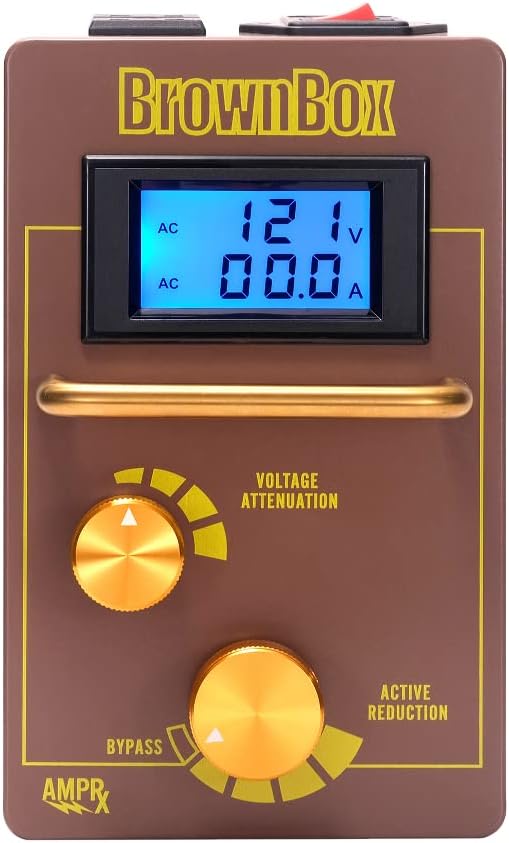
The BrownBox Tube Amplifier Input Voltage Attenuator regulates power for full-sized tube amplifiers. It has a perfect 5.0 star rating for helping users achieve specific voltage settings safely.
We may earn a commission when you buy through this link, at no additional cost to you.
With an LCD Voltmeter you can precisely select output voltages. The 5A input handles significant loads and ensures stability during long recording sessions.
It is not a speaker attenuator but an AC voltage regulator. The bulky design requires outlet access and it is not suitable for pedalboard integration.
Best for studios needing stable tube amp power. We recommend it for owners of vintage amps requiring specific voltage management.
5A Input AC Voltage Attenuator for full-sized Tube Amplifiers.
LCD Voltmeter shows precise voltage levels for safe operation.
We may earn a commission when you buy through this link, at no additional cost to you.
The Warm Audio Reamper Routing Hub is a versatile analog studio tool. While not strictly a speaker attenuator it includes a silent 50W power soak and variable impedance control.
We may earn a commission when you buy through this link, at no additional cost to you.
Independent Preamp Re-Amp signal paths allow creative recording techniques. Variable Impedance Control helps match the load to your amplifier for tone shaping.
Its primary role is routing and signal processing rather than pure volume reduction. It is designed for studio environments with power access.
Great for studios needing routing and soak. We recommend it for professionals requiring flexible signal paths and impedance control.
Analog Studio Routing Hub with Independent Preamp Re-Amp paths.
Variable Impedance Control allows precise load matching.
We may earn a commission when you buy through this link, at no additional cost to you.
The Tone King Ironman II 100-Watt handles high-powered tube heads. It holds a 4.2 star rating and features analog cabinet simulation alongside precision-compensated reactive power attenuation.
We may earn a commission when you buy through this link, at no additional cost to you.
Dual Impedance Controls and a Presence Switch offer tone flexibility. The DI Output sends recorded signal directly to interfaces. Bypass Mode ensures full signal path when needed.
It is a heavy and expensive unit for high-powered rigs. Some users prefer smaller units for practice but this is built for power.
Best for high-wattage stage amps. We recommend it for players needing precise control over powerful tube setups.
100-watt Precision-compensated Reactive Power Attenuator.
Includes Analog Cabinet Simulation for direct recording options.
We may earn a commission when you buy through this link, at no additional cost to you.
The Boss WAZA Tube Amp Expander is a command center for tube amps. With a 4.3 star rating it supports up to 150 watts and offers ten recallable rig settings.
We may earn a commission when you buy through this link, at no additional cost to you.
A built-in 100-watt Class AB power amplifier allows silent practice. User-adjustable impedance tuning retains natural tone and dynamic feel for any setup.
It is complex and expensive requiring MIDI footswitches for full control. The Tube Logic design approach is advanced but may be too much for casual users.
Ideal for pros needing advanced control. We recommend it for serious players wanting a complete command center for tube amp management.
Deep real-time performance control via GA-FC/FS-series footswitches.
Ten recallable rig settings for storing favorite setups.
We may earn a commission when you buy through this link, at no additional cost to you.
Choosing the right attenuator requires considering your amp's wattage and your intended use. Here are key factors to evaluate before purchasing a unit.
Ensure the attenuator's wattage rating meets or exceeds your amplifier's maximum output. Using a unit rated too low can cause damage to the device or your tone.
Always verify the wattage match before connecting your amplifier to any attenuator.
Check that the unit supports your speaker cabinet's impedance. Most units offer 4, 8, and 16 ohm inputs but some may only support specific values.
Matching impedance prevents potential damage to the amp and ensures clean signal transfer.
Passive units use resistors and are simple but may slightly alter frequency response. Reactive units mimic speaker loads to maintain natural feel and dynamics.
Choose reactive if tone preservation is your top priority for live or recording use.
If you plan to record directly check for line or DI outputs. Some units include emulated mic outputs or speaker simulation for studio convenience.
A direct output saves time by removing the need for microphone placement.
Pedalboard models are compact but may lack high wattage support. Rack or pedal units are heavier but handle more power and features.
Consider where the unit will live to balance weight and performance needs.
Footswitchable bypass or mute options add convenience during performance. Check if the unit needs external power or runs passively.
A footswitch helps you toggle attenuation on and off quickly during live shows.
Look for reputable brands offering warranties on electronic components. Good support ensures you can resolve issues if the unit fails.
A longer warranty period reflects confidence in build quality and reliability.
Prices range from simple pedals to advanced digital controllers. Determine your must-have features and prioritize those within your budget.
Spending more often buys better sound quality but budget units can still serve well.
Connect the speaker output from your amplifier to the attenuator input. Ensure all impedance settings match before powering on the unit.
Plug the speaker cabinet into the attenuator output to complete the loop. If recording adjust the line output level on your interface to avoid distortion.
Turn off the amplifier before unplugging any cables to prevent damage. Store the unit in a dry place to protect internal components from moisture.
No when used correctly it protects your speaker and reduces volume without damage. Ensure you match impedance and wattage ratings to avoid issues.
Passive units use resistors while reactive mimic speaker impedance. Reactive units preserve feel better but cost more than passive.
Many units have line or DI outputs for direct recording. Check for speaker emulation to skip needing a microphone in front of speakers.
Not always but it helps toggle mute or bypass during play. Look for built-in footswitches if you plan to perform live.
Attenuators change the load on your amp affecting frequency response. High-quality reactive units reduce this change but some coloration is normal.
Match the output setting to your speaker cabinet impedance label. Most units support 4 8 and 16 ohm but check your manual.
The ten options reviewed cover needs from budget to premium. The Bugera POWER SOAK PS1 stands out for versatility while the Donner pedal offers affordability.
Prioritize power handling and impedance matching to ensure safety. Consider recording features if you plan to capture your sound directly.
Check current listings to confirm pricing and availability. Investing in the right attenuator allows you to enjoy tube tones at any volume.