
Handheld Fish Finder Portable Fishing Kayak
4.2Editor score
Portable and lightweight design
Battery powered for easy use
Works in fresh and salt water
Finding an affordable depth finder is essential for anglers who want accurate water readings without breaking the bank. Whether you are kayaking or fishing from a small boat, the right tool helps you locate fish and avoid hazards efficiently.
We compared ten top-rated models based on sonar quality, display clarity, and ease of use. Each option was evaluated for its specific to freshwater and saltwater environments, ensuring you get reliable performance regardless of where you cast your line.
Every pick includes detailed specs, pros, and cons to simplify your decision. Prices fluctuate often, so check the latest deals before buying. Our goal is to help you choose a device that balances cost with the features you need most.
4.2Editor score
4.6Editor score
4.2Editor score
As an Amazon Associate we earn from qualifying purchases.
This side-by-side comparison highlights the key specifications of each model to help you decide quickly. Look at the display size, depth range, and specific features to match your fishing style and budget.


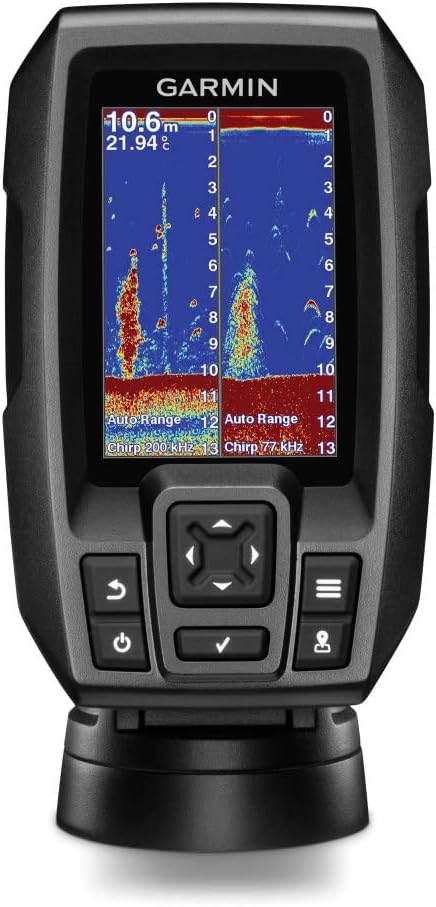
The Garmin Striker 4 is a top pick for anglers seeking reliable performance at a reasonable price. With a 4.6 star rating, it offers ClearVu scanning sonar that provides near photographic images of underwater objects.
We may earn a commission when you buy through this link, at no additional cost to you.
This device simplifies fishing with its keyed interface and dedicated buttons, making it easy to navigate even while moving. The built-in GPS allows you to mark locations like brush piles and docks for future visits.
While the screen is smaller than some competitors, the high-frequency sonar delivers crisp fish arches and detailed structure views. It is rated IPX7 for water resistance, ensuring durability in various weather conditions.
Buyers should choose this if they want a balance of advanced features and usability without spending a fortune. It is ideal for both freshwater and saltwater fishing, offering versatility for serious anglers on a budget.
The high-frequency sonar produces detailed images of fish and structure, helping you identify targets quickly.
Mark and navigate to specific spots like docks or stumps with the integrated waypoint map feature.
We may earn a commission when you buy through this link, at no additional cost to you.
This portable fish finder is designed for anglers who need a simple, budget-friendly tool for quick trips. It detects water depth and fish location using sonar, making it suitable for kayaks, docks, and ice fishing.
We may earn a commission when you buy through this link, at no additional cost to you.
The device includes a neck strap for convenience and can be easily stored in a tackle box. It operates on four AAA batteries, which provide continuous use for several hours without needing a recharge.
While it lacks advanced GPS or large screens, its accurate depth reading and fish alarm are perfect for casual fishing. The 200 kHz sonar frequency provides a reliable beam angle for most freshwater and saltwater conditions.
Choose this if you want an affordable option that delivers essential depth and fish location data. It is a practical choice for those who fish from shore or small boats without complex installation needs.
With a neck strap and small size, you can wear it or store it easily while fishing from a kayak.
Using standard AAA batteries means you can quickly swap them out for extended fishing sessions.
We may earn a commission when you buy through this link, at no additional cost to you.
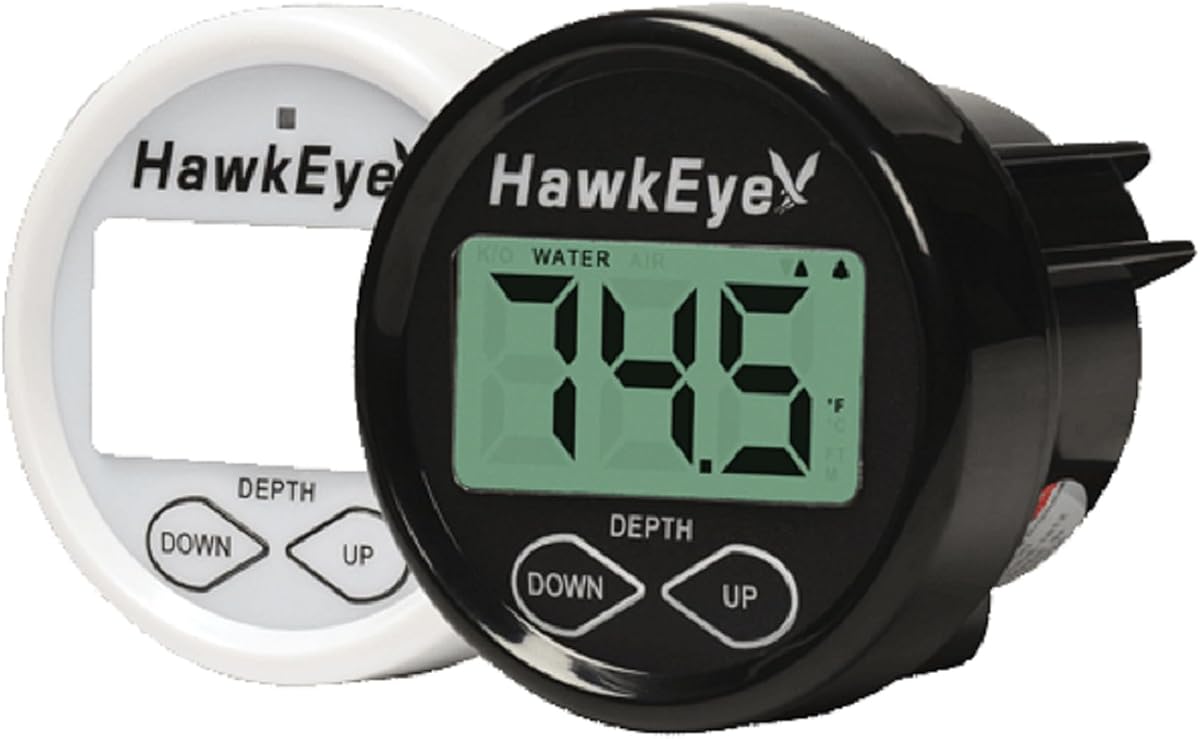
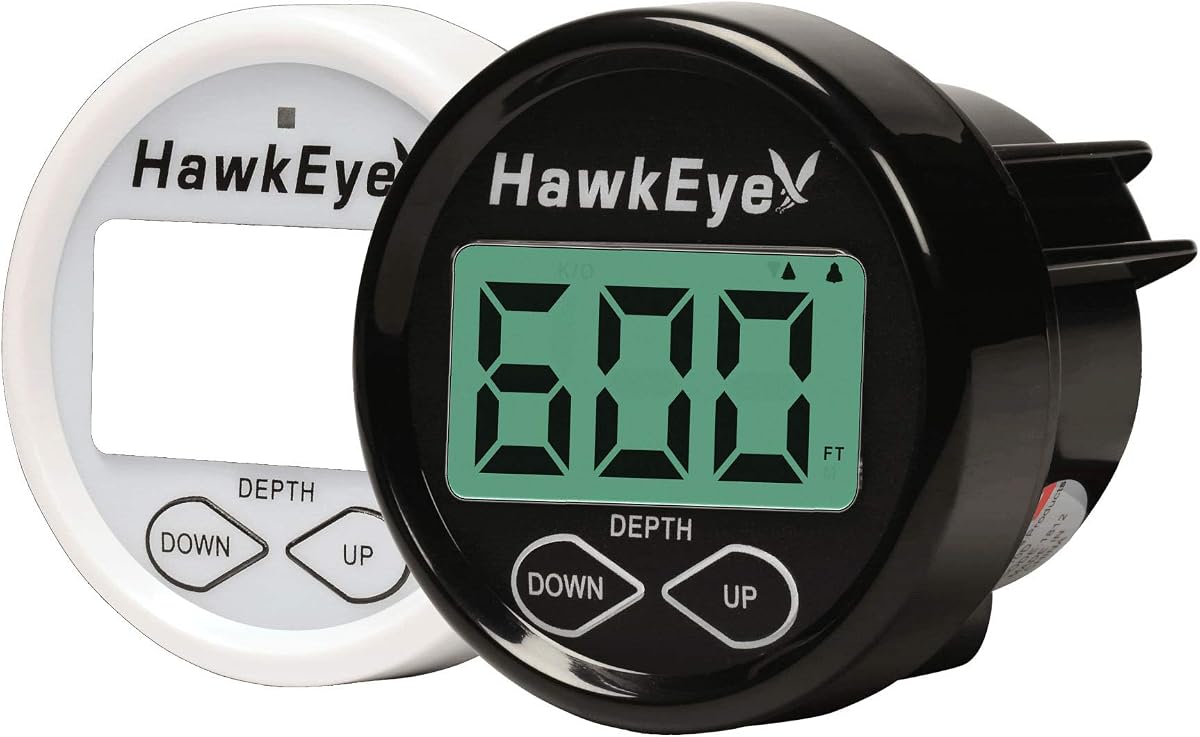
The HawkEye DT2BX-TM is a robust option for boat owners wanting a larger, permanent display solution. It provides uninterrupted depth readings up to 600 feet and includes temperature sensors for comprehensive water data.
We may earn a commission when you buy through this link, at no additional cost to you.
This model features a 3-stage advanced warning system that uses audible alarms and LEDs to signal depth issues. The polarized LCD ensures clear viewing even with sunglasses or in bright sunlight.
Installation requires a 2-inch hole for flush mounting, which is more involved than handheld units. However, the large display and durable construction make it a worthwhile investment for regular boaters.
Select this if you need a durable, high-performance unit with extensive depth and temperature monitoring. It is ideal for those willing to install a permanent device for reliable navigation and fishing.
Audible alarms and LED lights alert you to shallow water or dangerous depth changes instantly.
The polarized LCD remains clear in bright conditions, ensuring you never lose sight of depth data.
We may earn a commission when you buy through this link, at no additional cost to you.
The LUCKY Kayak Portable Fish Depth Finder is a versatile tool for anglers who need flexibility. It displays fish location and water depth with an LCD screen that shows weeds and rocks on the bottom.
We may earn a commission when you buy through this link, at no additional cost to you.
This unit includes a neck strap and allows for five levels of sensitivity adjustment to adapt to water conditions. The backlight feature ensures visibility in both sunshine and darkness for round-the-clock fishing.
While it does not have advanced GPS, it covers depths from 3 feet to 328 feet effectively. The battery save mode helps extend usage during long fishing trips without frequent changes.
Opt for this if you want a simple, versatile unit for kayaks or shore fishing. It is a reliable choice for those seeking essential data without complex setup or high costs.
Cast the sensor into the water and read results on the handheld unit for shore or boat use.
Adjust five levels of sensitivity to filter noise in turbid water or maximize detail in clear water.
We may earn a commission when you buy through this link, at no additional cost to you.
The DepthTrax 2B is designed for boat owners who need reliable depth readings at high speeds. It delivers uninterrupted readings up to 600 feet and features a large display for clear viewing while underway.
We may earn a commission when you buy through this link, at no additional cost to you.
Algorithmic programming helps reduce false readings, ensuring you get precise data. The dual mount options let you choose between transom or glue-in installation depending on your hull type.
The polarized LCD minimizes glare, making it easy to read even in bright sunlight. However, it lacks GPS mapping, focusing instead on pure depth and structure detection for fishing and navigation.
Choose this if you need a durable device for faster boats. It provides accurate depth info and a large display, making it a solid choice for performance fishing enthusiasts.
The device maintains accuracy even at speeds up to 60 mph, perfect for power boating.
Audible alarms and LED lights alert you to shallow water or depth changes quickly.
We may earn a commission when you buy through this link, at no additional cost to you.
The Humminbird PiranhaMAX 4 is a compact unit ideal for small boats or kayaks. It offers dual beam sonar to switch between narrow and wide beams, providing detailed views or broader coverage.
We may earn a commission when you buy through this link, at no additional cost to you.
Its tilt and swivel mount allows easy adjustment of the viewing angle. The unit includes a transom mount transducer and comes with a 1-year limited warranty for peace of mind.
While it lacks GPS, it excels at identifying fish, structure, and contours with precision. The display is clear and easy to read, making it a reliable choice for focused fishing.
Select this if you need a portable yet powerful sonar. It balances performance and size well for anglers who want detailed underwater data without complex features.
Switch between narrow and wide beams to choose between detail and coverage based on your needs.
The tilt and swivel mount lets you position the display for the best viewing angle while on the water.
We may earn a commission when you buy through this link, at no additional cost to you.
The Lowrance Eagle Fish Finder features a 4-inch IPS portrait screen that stays clear in bright sunlight. Auto-Tuning Sonar automatically optimizes settings so you can focus on finding fish.
We may earn a commission when you buy through this link, at no additional cost to you.
The included 200 kHz Bullet Skimmer provides broad coverage for kayaks and small boats. Its simple fish identification icons help you view fish depth and zoom in without loud alarms.
Installation is fast with twist-lock connectors that make connecting the display simple. The compact portrait design fits well in limited spaces on smaller boats.
Choose this if you value display clarity and ease of use. It offers a modern solution with reliable sonar and a clear interface for all-day fishing comfort.
The IPS technology ensures the screen remains visible from wide angles even in direct sunlight.
Auto-tuning optimizes sonar settings automatically, reducing the need for manual adjustments while fishing.
We may earn a commission when you buy through this link, at no additional cost to you.
This portable depth finder is excellent for ice fishing and lake fishing with its temperature and contour readout. It updates data four times per second to provide current depth from 2.5 to 300 feet.
We may earn a commission when you buy through this link, at no additional cost to you.
The device is designed for durability with water-resistant construction suitable for splashing. It also includes an attracting fish lamp for light-sensitive fish in deeper waters.
Its lightweight and stylish design make it perfect for carrying as a gift or accessory. The contour readout helps you visualize the underwater terrain better than basic depth numbers.
Opt for this if you need a simple unit for ice or lake fishing. It provides essential temperature and contour data without the complexity of larger sonar units.
Monitor water temperature to find optimal spots for fish, especially in cold weather fishing.
Visualize the underwater shape of the lakebed to better understand where fish might be hiding.
We may earn a commission when you buy through this link, at no additional cost to you.
The LUCKY Wireless Sonar offers massive range up to 853 feet without wires. Its sensor casts like a bobber and reveals exact fish depth and location relative to structure.
We may earn a commission when you buy through this link, at no additional cost to you.
The display features a 3.5 inch horizontal screen with scrolling history to track fish movement. It is lightweight and rechargeable, making it perfect for spontaneous fishing trips.
Wireless operation means no complex wiring or drilling is needed. The battery life supports continuous use, and it works in almost all kinds of fishing from shore to ice.
Choose this if you want freedom from wires and precise fish depth data. It is an advanced solution for those who value portability and wide operational range.
Cast the sensor and receive data wirelessly up to 853 feet away for true portable fishing.
The screen scrolls right to left, showing a history of what passed under the sensor to track structure.
We may earn a commission when you buy through this link, at no additional cost to you.
The Hawkeye DT1H is a simple handheld device for those needing basic depth and temperature. It is easy to use and perfect for quick trips without complex setup.
We may earn a commission when you buy through this link, at no additional cost to you.
With a 300-foot depth range, it covers most shallow water scenarios. The handheld design makes it easy to carry in a tackle box or pocket for shore fishing.
While it lacks advanced scanning, it provides reliable data for casual anglers. The price is very affordable for anyone just starting out or needing a backup unit.
Opt for this if you need a simple, reliable depth and temperature read. It is a practical choice for small boats or shore fishing where basic info is enough.
No complex menus or GPS, just turn it on and read the depth data instantly.
The small size allows you to carry it anywhere for spontaneous fishing without extra gear.
We may earn a commission when you buy through this link, at no additional cost to you.
Choosing the right depth finder depends on your boat size, fishing location, and budget. We break down the key factors to help you select a model that fits your needs.
The display size affects how easy it is to read depth data in bright sunlight. Larger screens like 3.5 inches or 4 inches provide better visibility and more detail.
Look for IPS or polarized screens that remain clear in various lighting conditions to avoid eye strain.
Sonar frequency determines the detail of your underwater images. Higher frequencies like 200 kHz offer better target separation and structure detail.
Choose a model with 200 kHz for clearer fish arches and bottom structure in both fresh and salt water.
Depth range indicates how deep the device can measure. For shallow fishing, 300 feet may suffice, but deeper waters require 600 feet or more.
Ensure the model covers the maximum depth of your fishing spots to avoid losing data in deep areas.
Portability allows you to use the device on multiple boats or from shore. In-dash models provide a permanent solution for dedicated boats.
Choose handheld or castable units for flexibility, and in-dash units for a clean installation on larger vessels.
Battery life impacts how long you can fish before needing a recharge or swap. Some units use AAA batteries while others are rechargeable.
Look for battery save modes or longer life if you spend full days on the water.
Installation ranges from simple transom mounts to drilling holes for flush mounts. Consider your boat hull material and available mounting space.
Transom or castable options are easier and require no permanent changes to the boat.
Features like GPS waypoint maps, temperature sensors, and fish alarms add value to your device.
Focus on features that match your fishing style, such as GPS for navigation or alarms for shallow water.
Prices vary widely based on features and display size. Budget options provide essential depth data while premium models offer advanced scanning.
Set a budget based on your needs to avoid overspending on features you may not use.
To use your depth finder, install the transducer on the transom or toss it in the water for handheld models. Ensure it is horizontal and fully submerged for accurate readings.
Turn on the display unit and adjust sensitivity settings based on water conditions. Use backlight for low light and alarms to stay aware of depth changes.
Rinse the transducer and display with fresh water after saltwater use to prevent corrosion. Store in a dry place and replace batteries as needed for consistent performance.
A depth finder only shows water depth, while a fish finder includes sonar to detect fish and structure. Many cheap models combine both features for better value and versatility.
Yes, many models are designed for both fresh and salt water. Always check the IP rating to ensure water resistance for salt water use.
Install the transducer on the transom or hull following the manual. For handheld units, simply attach the neck strap and toss the sensor into the water.
Most modern sonar depth finders are accurate within a few feet. Adjusting sensitivity and ensuring proper transducer placement improves accuracy further.
GPS is useful for marking spots but not essential for basic fishing. Budget models often omit GPS to keep costs low while focusing on sonar data.
Many use standard AAA batteries or rechargeable lithium-ion. Check the specs to ensure you can easily find replacements or charging cables for trips.
These top picks offer reliable depth detection across various budgets. The Garmin Striker 4 leads in versatility, while handheld models like the LUCKY and Hawkeye provide excellent portability.
Focus on display size, depth range, and installation type to match your fishing needs. Whether you are on a kayak or a large boat, there is a model that fits your setup.
Prices and availability change frequently. Always verify the latest details and check for current offers before buying to secure the best value for your gear.